Enclosed Trailers for Sale in Georgia | Factory Direct
Make My Trailer, Award-Winning Service 🏆 Trailer Dealer of the Year: More Than Just Low Prices. From stock units to custom builds, our enclosed trailers for sale come with strength, savings and a long-term peace of mind included.
Over 8000 Sold Trailers

2-Weeks | Limited Time Offer
All our enclosed trailer sizes are discounted for the next 2 weeks
Shop Enclosed Trailers for Sale by Size

4' Wide Enclosed Trailers for Sale
Compact power for tight spaces and quick hauls.
Available Sizes (4' Wide)
5' Wide Enclosed Trailers for Sale
Small footprint, big hauling capability.
Available Sizes (5' Wide)
6' Wide Enclosed Trailers for Sale
Versatile size for work, play, and everything in between.
Available Sizes (6' Wide)
7' Wide Enclosed Trailers for Sale
Spacious, stable, and built for serious jobs.
Available Sizes (7' Wide)
8.5' Wide Enclosed Trailers for Sale
Maximum width for maximum capacity and performance.
Available Sizes (8.5' Wide)
Make My Trailer
Award-Winning Service 🏆 Trailer Dealer of the Year
How Do I Choose the Right Enclosed Trailer?
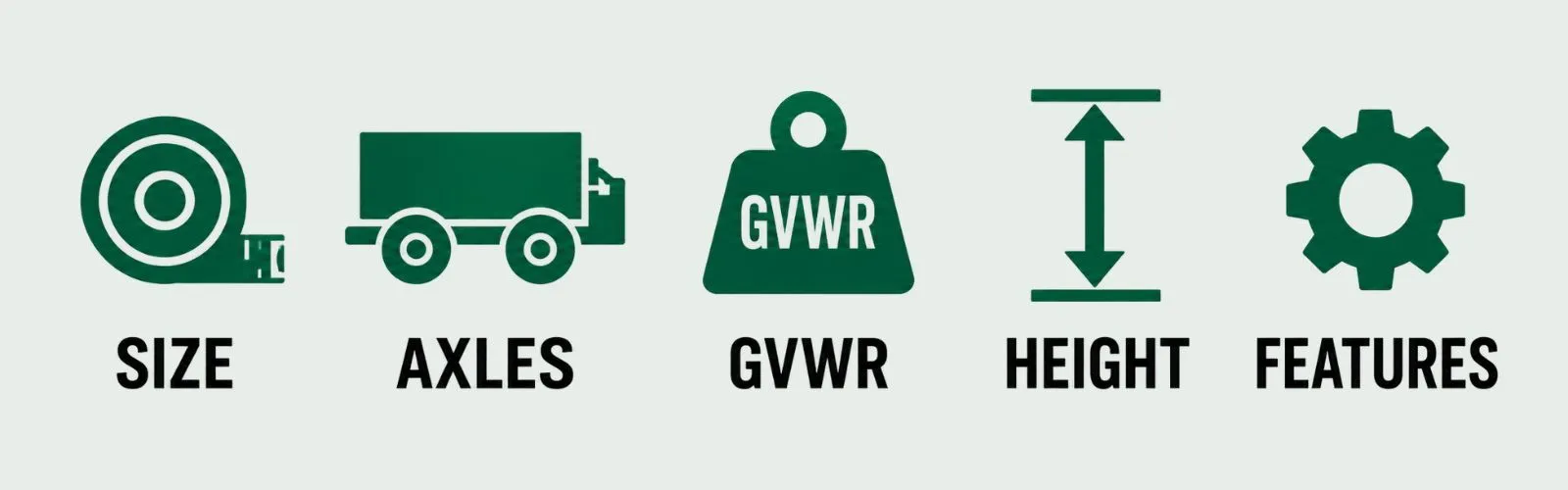
Choosing the right enclosed trailer depends on what you plan to haul, how much weight you need to carry, your tow vehicle, and the features you need.
Before making your purchase, consider the following questions:
What Size Enclosed Trailer Do I Need?
Choose an enclosed trailer size by first measuring the largest equipment, vehicle, tools, or cargo you expect to haul. Then allow additional room for loading and unloading, walking around the cargo, securing it with tie-downs, and opening doors or equipment inside the trailer. Finally, consider whether your business, equipment, or hauling needs are likely to grow so you do not outgrow the trailer too quickly.
Do not choose a trailer based only on its advertised exterior size. Interior dimensions, ceiling height, wheel-well placement, and rear and side door openings can vary by model and manufacturer, so compare the actual specifications before ordering.
For example, a smaller enclosed trailer may be ideal for tools, light equipment, or occasional hauling, while larger sizes provide more room for landscaping equipment, motorcycles, ATVs, business inventory, or multiple pieces of equipment.
For a more detailed comparison of common trailer dimensions and their typical uses, see our Enclosed Trailer Size Guide.
Should I Choose a Single Axle or Tandem Axle Trailer?
A single axle enclosed trailer is generally the better choice for lighter loads, lower purchase cost, easier maneuverability, and buyers who do not regularly need higher payload capacity. A tandem axle enclosed trailer is typically better for heavier cargo, greater highway stability, more frequent towing, and applications that require a higher GVWR or payload capacity.
Single axle trailers are often easier to move around tight spaces and have fewer tires, hubs, and axle components to maintain. Tandem axle trailers use two axles, which can provide a more stable towing platform and distribute the trailer and cargo weight across additional wheels.
The right choice should ultimately be based on the actual weight of the cargo you plan to carry and the GVWR of the specific trailer , not size alone. A tandem axle does not automatically mean every trailer can carry the same amount of weight, so always compare the manufacturer specifications.
For a complete breakdown of the advantages, disadvantages, and best uses of each configuration, see our Single Axle vs Tandem Axle Enclosed Trailers Guide .
What GVWR and Payload Capacity Do I Need?
Choose a GVWR and payload capacity that can safely handle the combined weight of everything you plan to put inside the trailer. GVWR, or Gross Vehicle Weight Rating, is the maximum allowable loaded weight of the trailer, while payload capacity is the amount of cargo the trailer can carry after accounting for the trailer's empty weight.
A simple way to understand payload is:
Payload Capacity = GVWR − Empty Trailer Weight
For example, if a trailer has a 7,000-pound GVWR and weighs 2,000 pounds empty, its theoretical payload capacity would be approximately 5,000 pounds. The actual allowable payload should always be confirmed using the specifications and ratings provided for that particular trailer.
When estimating the capacity you need, include the weight of everything that will travel inside the trailer—not just your largest piece of equipment. Tools, shelving, spare tires, generators, fuel, accessories, inventory, and permanent upgrades all add weight.
Before purchasing, review the GVWR, empty weight, axle rating, and stated payload capacity on the actual trailer or product specifications rather than relying on a general estimate for that trailer size.
Can My Truck or SUV Tow an Enclosed Trailer?
A truck or SUV can tow an enclosed trailer only when the vehicle, trailer, hitch system, and braking setup are properly rated for the weight being towed. Check your vehicle manufacturer's towing specifications and compare them with the trailer's expected loaded weight—not simply its empty weight .
Important factors include your vehicle's maximum tow rating, the trailer's GVWR and actual loaded weight, tongue weight, hitch and ball rating, Gross Combined Weight Rating where applicable, and whether the trailer requires electric brakes and a compatible brake controller.
The trailer should also be loaded correctly so the weight is distributed safely and the tow vehicle remains within all of its manufacturer-rated limits. Adding cargo, passengers, equipment, or accessories to the tow vehicle can affect how much towing capacity remains available.
Because towing limits vary significantly between vehicles—even between different engines, drivetrains, axle ratios, and trim levels of the same model—always verify the specifications for your exact vehicle before purchasing or towing an enclosed trailer.
For a deeper explanation of tow ratings, trailer weight, hitch requirements, braking systems, and safe vehicle-to-trailer matching, see our Enclosed Trailer Towing Guide.
Popular Enclosed Trailer Sizes (Comparison Table)
Enclosed trailers come in a wide range of sizes, and the right choice depends on what you plan to haul, how much cargo space you need, and the towing capacity of your vehicle. Compare some of the most popular enclosed trailer sizes below to find the option that best fits your work, business, or recreational needs.
Compare Popular Enclosed Trailer Sizes

The right enclosed trailer size depends on what you plan to haul, how much floor space you need, the weight of your cargo, and the towing capacity of your vehicle. Use the comparison below to narrow your options, then review the individual trailer page for the exact dimensions, GVWR, payload capacity, standard features, and available upgrades for the configuration you are considering.
| Trailer Size | Common Uses | Best Fit For | Available Axle Setup | Learn More |
|---|---|---|---|---|
| 5x8 | Tools, small business inventory, recreational gear, light cargo | Homeowners, tradespeople, small businesses | Single axle | 5x8 Enclosed Cargo Trailer → |
| 6x10 | Commercial mowers, tools, motorcycles, equipment, general cargo | Contractors, landscapers, mobile service professionals, homeowners | Single or tandem axle | 6x10 Enclosed Cargo Trailer → |
| 6x12 | Tools, landscaping equipment, motorcycles, business inventory, moving and general cargo | Contractors, landscapers, small businesses, recreational users | Single or tandem axle | 6x12 Enclosed Cargo Trailer → |
| 7x14 | Tools, larger equipment, ATVs, motorcycles, inventory, mobile-business setups | Contractors, landscapers, mobile businesses, frequent haulers | Single or tandem axle | 7x14 Enclosed Trailer → |
| 7x16 | Equipment, machines, ATVs, motorcycles, inventory, larger work or recreational loads | Contractors, small businesses, commercial and recreational users | Tandem axle | 7x16 Enclosed Trailer → |
| 8.5x20 | Cars, UTVs, large tool inventories, equipment, cargo and mobile-workshop builds | Automotive users, contractors, businesses, motorsports users | Tandem axle standard | 8.5x20 Enclosed Trailer → |
| 8.5x24 | Full-size vehicles, tools, parts, race gear, larger equipment and high-volume cargo | Car haulers, contractors, motorsports teams, commercial mobile operations | Tandem axle standard | 8.5x24 Enclosed Trailer → |
Which Enclosed Trailer Size Is Best for Me?
For lighter loads and easier maneuverability, a 5x8 or 6x10 enclosed trailer may provide enough cargo space without moving into a larger towing footprint. Buyers who need more room for tools, motorcycles, landscaping equipment, or business inventory often move into a 6x12 or 7x14, while a 7x16 provides additional floor space for larger equipment and higher-volume hauling.
The 8.5-foot-wide trailers, including the 8.5x20 and 8.5x24, are better suited to buyers who need full-width cargo space for vehicles, larger equipment, motorsports setups, or more complex commercial builds.
Trailer size alone should not determine your purchase. Before ordering, compare the actual cargo dimensions, empty trailer weight, GVWR, payload capacity, axle configuration, interior height, and door opening dimensions of the specific trailer you are considering.
How Much Do Enclosed Trailers Cost?
The cost of an enclosed trailer can vary based on its size, axle configuration, construction, features, and customization options. Comparing these factors will help you understand what affects the final price and choose a trailer that fits both your hauling needs and your budget.
Before making your purchase, consider the following questions:

What Affects the Price of an Enclosed Trailer?
The biggest factors affecting enclosed trailer price are size, axle configuration, GVWR, construction materials, interior height, door configuration, wheels and tires, and optional upgrades .
Size is one of the most obvious factors because a larger trailer requires more frame material, flooring, wall material, roofing, and exterior metal. Axle configuration also matters: moving from a single axle to a tandem axle adds another axle, additional wheels and tires, and may include electric brakes and heavier structural components.
GVWR and load capacity can also affect price because trailers designed for heavier cargo may require upgraded axles, frames, suspension components, tires, couplers, or braking systems.
Customization can change the final price substantially. Depending on the trailer and manufacturer, available upgrades may include:
- Extra interior height
- Ramp doors, barn doors, or specialty side doors
- E-track and additional tie-down points
- Insulation and finished interiors
- Ladder racks and shelving
- Electrical packages, outlets, lighting, and air conditioning
- Blackout packages and exterior trim upgrades
- Windows, vents, cabinets, concession equipment, or other specialty features
- Wheel, tire, axle, and suspension upgrades
That is why the most useful way to compare enclosed trailer prices is to compare the same size with the same axle rating, construction, standard equipment, and options rather than choosing based on advertised price alone.
Is Factory-Direct Pricing Cheaper Than Buying From a Dealer?
Factory-direct pricing can reduce the cost of an enclosed trailer because Make My Trailer works directly with trailer manufacturers in Georgia and the trailer is purchased through a shorter sales chain rather than passing through an additional traditional retail dealer network.
The savings come primarily from avoiding unnecessary layers of dealer markup and some of the overhead associated with large retail showrooms and dealer lots. With a built-to-order trailer, you can also choose the options you actually need instead of paying for upgrades already installed on a dealer-stocked trailer that may not match your intended use.
Make My Trailer's process is straightforward: you select the size and configuration, choose the options you need, approve the quote, and the trailer is built or prepared for pickup in Georgia. That factory-direct model is designed to put more of the purchase price into the trailer itself rather than additional retail markup.
Factory-direct does not mean every trailer will automatically be cheaper than every trailer sold by every dealer. Final price still depends on the manufacturer, specifications, options, current promotions, pickup or delivery costs, and the exact trailer being compared. The best comparison is always the final price of equivalently equipped trailers .
Are Stock Trailers Less Expensive Than Custom Trailers?
Not necessarily. An in-stock enclosed trailer can cost less than a custom trailer when it has a standard configuration, is already completed, or is being offered at a promotional or sale price. However, stock trailers can also include upgrades that increase their price, while a simple custom build with only the features you need may cost less than a highly optioned stock unit.
The main difference is how the trailer is configured and when it is available , not simply whether it is stock or custom.
An in-stock trailer is already built, so you can see its exact unit number, manufacturer, size, axle configuration, color, installed options, and current price before reserving it. This makes stock inventory especially useful for buyers who need a trailer quickly or want to compare completed units without waiting for production.
A custom-built trailer starts with the base configuration and allows you to select the options that matter to your specific application. Adding extra height, upgraded axles, insulation, electrical systems, specialty doors, E-track, cabinets, A/C, or other equipment will increase the final price, but customization can also prevent you from paying for features you do not need.
For the most accurate comparison, review our Current Stock Trailers and Prices to see ready-to-go units, then compare those trailers with a custom quote built around your exact requirements.
What Are Enclosed Trailers Used For?
Enclosed trailers are used to transport and protect tools, equipment, vehicles, inventory, and other cargo from weather, road debris, and theft. Their versatility makes them a practical choice for contractors, small businesses, landscapers, motorsports users, mobile service providers, and anyone who needs secure, dependable cargo space.
Consider the following options:

Enclosed Trailers for Contractors and Trades
Enclosed trailers are widely used by contractors and tradespeople to transport tools, equipment, materials, and jobsite supplies while also providing secure mobile storage between jobs. Carpenters, electricians, plumbers, HVAC technicians, roofers, remodelers, handymen, and other trades can organize the trailer around the equipment they use every day.
A contractor trailer can be configured with shelving, cabinets, ladder racks, E-track, tool storage, interior lighting, electrical outlets, and work surfaces. This makes it possible to use the trailer as more than a way to move equipment—it can also function as a mobile workshop or organized jobsite storage space.
An enclosed design also helps protect expensive tools and supplies from rain, sun, road debris, and casual visibility while the trailer is being transported or parked.
When choosing a trailer for contractor use, consider the size and weight of your largest equipment, the amount of shelving or storage you plan to install, and whether you need additional interior height or payload capacity for future equipment.
Enclosed Trailers for Landscaping
Landscaping and lawn-care businesses use enclosed trailers to transport mowers, blowers, string trimmers, edgers, hand tools, maintenance equipment, and other daily work gear between properties.
A rear ramp door is particularly useful for loading wheeled equipment such as commercial mowers, while wall-mounted racks, shelving, and tie-down systems can help keep smaller tools organized and secured during transport. Side-door access can also make it easier to reach frequently used equipment without unloading the entire trailer.
Trailer size should be based on the dimensions of the mowers and equipment you intend to carry, along with enough room to safely load, secure, and access them. The combined weight of the equipment, storage systems, supplies, and other cargo must also remain within the trailer's rated payload capacity.
If gasoline, chemicals, batteries, or other regulated materials are transported, they should be carried and stored in accordance with applicable manufacturer instructions and safety requirements.
Enclosed Trailers for Motorcycles, ATVs and Powersports
Enclosed trailers are a popular option for transporting motorcycles, ATVs, dirt bikes, and other powersports equipment because they provide a protected cargo area and can be equipped for easier loading and securement.
Before selecting a trailer, measure the length, width, and height of the actual vehicle or vehicles you plan to haul . Compare those measurements with the trailer's usable interior dimensions as well as the width and height of the rear door opening. Exterior trailer dimensions alone do not tell you whether a motorcycle, ATV, or other machine will fit through the door and inside the cargo area.
A ramp door can make rolling equipment into the trailer easier, while properly positioned tie-down points, E-track, wheel chocks, or other cargo-control systems can help keep the vehicle secured during transport.
Also consider the combined weight of the powersports vehicle, fuel, riding gear, tools, spare parts, and any permanent trailer upgrades when calculating required payload capacity.
Enclosed Trailers for Small Businesses
An enclosed trailer can serve as a mobile platform for many types of small businesses, allowing owners to transport equipment, inventory, and supplies while keeping business assets organized in one dedicated space.
Common applications include:
- Mobile detailing
- Pressure washing
- Cleaning and maintenance services
- Vending and concession operations
- Event and rental businesses
- Repair and service businesses
- Delivery and inventory transport
- Mobile workshops
- Market and trade-show equipment
Depending on the business, a trailer can be customized with shelving, cabinets, water tanks, generators, electrical packages, lighting, ventilation, workbenches, signage, and specialized storage.
For a mobile-business build, pay particular attention to payload capacity and weight distribution. Water tanks, generators, batteries, shelving, equipment, and inventory can add substantial weight, so the trailer's GVWR and actual payload rating should be considered before selecting a size or installing permanent equipment.
A properly configured enclosed trailer can allow a small business to keep tools and inventory together, travel directly to customers or events, and operate without needing a permanent workspace for every part of the business.
Enclosed Trailers for Moving and Personal Storage
Enclosed trailers are also useful for moving furniture, boxes, household goods, recreational equipment, seasonal items, and other general-purpose cargo.
Unlike an open trailer, the enclosed body provides additional protection from rain, sun, wind, and road debris while cargo is in transit. It can also keep personal belongings out of direct view while traveling or parked.
For moving, choose a trailer based on the volume and dimensions of the items you need to transport rather than size alone. Large furniture, appliances, and bulky objects may require additional interior height, wider door openings, or a ramp door for easier loading.
An enclosed trailer can also provide temporary mobile storage for tools, equipment, household items, or recreational gear. However, it should not automatically be treated as permanent climate-controlled storage. Temperature, humidity, ventilation, and condensation should be considered when storing items that are sensitive to heat or moisture.
Single Axle vs Tandem Axle Enclosed Trailers
Choosing between a single axle and tandem axle enclosed trailer depends on how much weight you plan to haul, how often you tow, and the type of driving you expect to do. Single axle trailers are typically lighter and easier to maneuver, while tandem axle trailers are generally better suited for heavier loads, added stability, and more frequent towing.
Before making your purchase, consider the following questions:

When Is a Single Axle Trailer Better?
A single axle enclosed trailer is often the better choice for lighter loads, occasional towing, smaller trailer sizes, and buyers who value easier maneuverability and a lower purchase cost. With fewer tires, hubs, brakes, and suspension components, single axle trailers can also have lower maintenance requirements.
They are commonly used for tools, motorcycles, lawn equipment, light business inventory, and general-purpose hauling when the cargo remains within the trailer's rated payload capacity.
When Is a Tandem Axle Trailer Better?
A tandem axle enclosed trailer is generally better when you need to carry heavier cargo, tow frequently, or require a higher GVWR and payload capacity. Two axles distribute the trailer's weight across additional wheels and can provide improved stability, load support, and ride characteristics.
Tandem axle configurations are commonly chosen for larger equipment, commercial use, landscaping setups, multiple motorcycles or ATVs, and other heavier hauling applications.
Which One Is Better for Highway Towing?
For frequent highway towing, a properly matched tandem axle trailer is often preferred because the additional axle can provide greater stability and better weight distribution, particularly with heavier loads. Many tandem axle configurations also include braking systems appropriate for their weight ratings.
However, axle count alone does not determine safe towing. The trailer must be correctly loaded, remain within its GVWR and payload limits, and be matched to a tow vehicle, hitch, tires, and braking system that are properly rated for the loaded trailer.
Read the complete Single Axle vs Tandem Axle Enclosed Trailer Guide →
Ramp Door vs Barn Doors
Choosing between a ramp door and barn doors depends on what you plan to load, how often you load and unload, and where you typically use your trailer. Ramp doors are convenient for rolling equipment such as mowers, motorcycles, and ATVs, while barn doors can be a practical choice for boxed cargo, tools, materials, and situations where rear clearance is limited.
Which Should I Choose?

Choose a Ramp Door When…
Choose a ramp door if you regularly load motorcycles, ATVs, lawn mowers, carts, rolling toolboxes, or other wheeled equipment . The ramp allows equipment to roll directly between the ground and trailer floor, which can make frequent loading and unloading faster and easier.
Ramp doors are especially useful for landscaping, powersports, contracting, and other applications where heavy or wheeled equipment is moved in and out often.
Choose Barn Doors When…
Choose barn doors when you primarily carry boxes, tools, supplies, inventory, or hand-loaded cargo , or when you often work in locations where there is not enough room to lower a full ramp.
Barn doors can also provide convenient access for certain loading-dock or pallet-handling situations, provided the trailer's door opening, floor height, payload rating, and loading method are appropriate for the cargo.
Read the complete Ramp Door vs Barn Doors Enclosed Trailer Guide →
Custom Enclosed Trailer Options
An enclosed trailer can be customized to better match the way you plan to use it. Depending on the trailer size and configuration, available options may include extra height, different door styles, interior upgrades, shelving and storage, electrical packages, ventilation, flooring, exterior finishes, and cargo-control systems.
Our Most Popular Options:

Extra Interior Height
Extra interior height increases the usable vertical space inside an enclosed trailer beyond the standard build height. It can provide more headroom for people working inside the trailer and additional clearance for tall equipment, shelving, stacked cargo, motorcycles, ATVs, or specialty business setups.
This upgrade is most useful for contractors, mobile-service businesses, taller equipment owners, and anyone planning to spend significant time standing or working inside the trailer.
Extra height is worth paying for when your equipment approaches the standard interior or door-opening height, when you plan to install tall shelving or cabinetry, or when the trailer will function as a mobile workspace. It may be unnecessary if you only haul low-profile cargo and do not need additional headroom.
Side Doors and Door Configurations
Side doors provide an additional entry point so you can access the trailer without opening the rear doors or unloading cargo that may be blocking the back. Depending on the build, buyers may also be able to choose between rear ramp doors, barn doors, or other door arrangements.
Side-door upgrades are especially useful for contractors, landscapers, mobile businesses, and anyone who needs frequent access to tools, equipment, or supplies while the trailer is loaded.
A side door is worth the added cost when you regularly need quick access to items near the front or middle of the trailer. Door configuration upgrades are also worth considering when your cargo has specific loading requirements, such as rolling equipment that benefits from a ramp door or general cargo that is easier to access through barn doors.
E-Track and Tie-Down Systems
E-track and other tie-down systems provide fixed attachment points inside the trailer for straps, hooks, wheel chocks, cargo bars, and other securement equipment. They make it easier to restrain cargo and adjust tie-down locations for different loads.
These systems are especially useful for motorcycles, ATVs, rolling equipment, tools, furniture, mobile-business equipment, and loads that change frequently.
E-track is worth paying for when cargo needs to be secured in multiple positions or when you regularly haul different types of equipment. It can also be a smart upgrade when organization and repeatable loading matter. If you only carry lightweight cargo that is easily secured using standard tie-down points, a more elaborate track system may not be necessary.
Insulation and Interior Finishes
Insulation helps reduce heat transfer through the trailer walls and roof, while interior finishes can provide a cleaner, more durable, or more functional workspace. Depending on the build, interior upgrades may include finished walls, ceilings, flooring, trim, or other specialty materials.
These upgrades are commonly considered by mobile detailing businesses, contractors, vending operations, event businesses, mobile workshops, and owners who spend extended periods working inside the trailer.
Insulation is worth paying for when temperature control, condensation reduction, interior comfort, or protection of sensitive equipment is important. Interior finishes are worth considering when the trailer will be customer-facing, used as a workspace, or needs a more durable or professional interior. For simple cargo hauling, basic unfinished interiors may be sufficient.
Ladder Racks and Contractor Packages
Ladder racks provide exterior or roof-mounted storage for ladders, lumber, conduit, pipe, and other long materials that may be difficult to carry inside the trailer. Contractor packages may combine racks with shelving, storage systems, tie-downs, lighting, or other work-focused upgrades.
These options are most useful for roofers, electricians, plumbers, carpenters, HVAC technicians, remodelers, handymen, and other trades that transport long materials and specialized tools.
A ladder rack or contractor package is worth paying for when it saves usable interior space, improves organization, or reduces the time spent loading and unloading equipment at each job. For occasional personal hauling or buyers who do not transport long materials, these upgrades may provide little practical benefit.
Lighting, Wheels, Tires and Exterior Packages
Lighting upgrades can improve visibility inside or around the trailer, while upgraded wheels and tires may be selected for appearance, durability, load requirements, or specific towing needs. Exterior packages can include trim changes, blackout styling, upgraded finishes, or other appearance-focused options.
Additional lighting is useful for contractors, mobile businesses, event operators, and anyone who frequently loads or works after dark. Wheel and tire upgrades are more important when they are required for the trailer's weight rating or intended use, while appearance packages are primarily chosen for branding or personal preference.
These upgrades are worth paying for when they provide a clear functional benefit, support the trailer's required load rating, or help a business present a more professional appearance. Cosmetic upgrades alone do not increase hauling capacity, so buyers should prioritize structural, safety, and usability improvements before spending heavily on appearance.
In-Stock vs Custom-Built Enclosed Trailers
Choosing between an in-stock and a custom-built enclosed trailer depends on how quickly you need your trailer and how specific your configuration needs are. In-stock trailers are typically ready for faster pickup, while custom-built trailers give you more flexibility to select the size, features, doors, colors, and upgrades that best fit how you plan to use your trailer.
Before making your purchase, consider the following questions:

When Should I Buy an In-Stock Trailer?
Choose an in-stock enclosed trailer when you need a trailer quickly and an existing unit already has the size, axle configuration, GVWR, doors, and features you need.
The biggest advantage is certainty. Because the trailer has already been built, you can evaluate the actual unit, manufacturer, specifications, installed options, color, axle setup, and current price before making your decision.
An in-stock trailer is especially useful when:
- You need a trailer as soon as possible.
- Your requirements are relatively standard.
- You find an available unit that already includes the options you want.
- You prefer to know the exact configuration and price before reserving the trailer.
- Waiting for a custom production schedule would interfere with work, travel, or another deadline.
Stock does not necessarily mean basic. Some in-stock trailers may already include upgrades such as extra height, upgraded doors, E-track, blackout packages, interior equipment, or other options.
The best approach is to compare the available unit against your actual requirements rather than purchasing it simply because it is ready.
View Stock Trailers →
When Should I Order a Custom Trailer?
Order a custom-built enclosed trailer when the way you plan to use the trailer requires features that are not available together on an existing stock unit.
Custom builds are especially valuable for contractors, landscapers, mobile-service companies, motorsports users, vending businesses, detailing operations, pressure-washing businesses, and other buyers who need the trailer to support a specific workflow.
A custom trailer may be the better choice when you need:
- Extra interior height or a specific door-opening height
- A particular rear or side-door configuration
- E-track, tie-down systems, shelving, racks, or cabinets
- Insulation or finished walls and ceilings
- Electrical systems, lighting, outlets, generators, or air conditioning
- Specialized equipment or interior layouts
- Particular wheels, tires, colors, trim, or blackout packages
- Branding or a professional appearance for a business
- A combination of options that is difficult to find in existing inventory
Customizing the trailer before it is built can also be more practical than purchasing a stock trailer and modifying it afterward.
The tradeoff is timing: a custom trailer must be configured and produced before it is ready for pickup, and production time can vary based on the manufacturer, options selected, and current factory schedule.
If the trailer will become an important part of your business or you expect to use it for years, waiting for the configuration that matches your exact needs may be worth it.
Build Your Trailer / Get a Custom Quote →Why Buy an Enclosed Trailer Factory-Direct From Make My Trailer?
Buying an enclosed trailer factory-direct from Make My Trailer can give you more control over the trailer you purchase while helping you avoid unnecessary dealer markups. Buyers can compare sizes, configurations, and available upgrades, then arrange pickup in Georgia once the trailer is ready.
Why Buy from Us:

Factory-Direct Pricing
Factory-direct pricing works by shortening the sales chain between the trailer manufacturer and the buyer.
Instead of purchasing a trailer after it has passed through additional layers of distributors, retail dealer inventory, and associated markups, Make My Trailer works directly with enclosed trailer manufacturers in Georgia. You choose the trailer size and configuration, select the options you need, receive a quote, and purchase through Make My Trailer for factory pickup.
That does not mean every factory-direct trailer will automatically cost less than every dealer trailer. The meaningful comparison is the final price of trailers with equivalent specifications and equipment.
The advantage is that you can compare the actual build—size, axles, GVWR, doors, height, materials, and options—without paying for unnecessary upgrades simply because they were already installed on a dealer-stocked trailer.
Stock and Custom Builds
Make My Trailer gives buyers two purchasing paths: choose a completed in-stock trailer or order a trailer configured around your requirements .
Stock trailers are best for buyers who prioritize speed and find an available unit that already matches their needs. Current inventory identifies individual trailers by unit number, manufacturer, size, axle configuration, color, installed options, and price, so you can evaluate a specific completed trailer before reserving it.
Custom builds are designed for buyers who need a particular combination of size, axle setup, interior height, doors, E-track, insulation, electrical equipment, racks, exterior packages, or other specialized features.
This means you do not have to force your application into one purchasing model: choose stock when an available trailer already fits, or build around your requirements when it does not.
Georgia Pickup
Make My Trailer is located at 91 Harvey Vickers Road, Douglas, GA 31535 , where trailer pickup is available after your unit is ready and your pickup has been scheduled.
Current posted pickup hours are Monday through Friday from 9:00 AM to 3:00 PM Eastern and Saturday from 9:00 AM to 11:00 AM Eastern .
For built-to-order trailers, the process begins after your quote is approved and the required deposit is received. Once production is complete, Make My Trailer sends the buyer confirmation, pickup instructions, remaining-balance information, and photos of the finished trailer before pickup.
Buyers who cannot pick up in Georgia can also ask about delivery availability, which depends on the order, destination, and current delivery arrangements.
Manufacturer Warranty
Warranty coverage should be verified for the specific manufacturer, model, and trailer you are purchasing rather than assuming every enclosed trailer carries identical coverage.
Make My Trailer works with multiple manufacturers, and their published warranty periods vary.
- Diamond Cargo: Listed with a 5-year manufacturer warranty.
- Rolling Vault Trailers: Models may carry approximately 3–5 years, depending on the model.
- Anvil Cargo: Lists 5 years on standard models and 6 years on certain Pro Series models.
- Quality Cargo: Warranty coverage may vary by unit.
- South Georgia Cargo: Warranty terms should be confirmed for the specific VIN.
Before completing your purchase, ask which manufacturer built the trailer, how long the warranty lasts, what components or structural items are covered, what is excluded, and what process must be followed if a warranty claim is needed.
That is more useful than simply seeing the words "5-year warranty" without knowing which warranty applies to the trailer you are actually buying.
Real Trailer Specialists
Make My Trailer focuses on enclosed trailers and works with multiple manufacturers, including Diamond Cargo, Rolling Vault Trailers, Anvil Cargo, Quality Cargo, and South Georgia Cargo .
That gives the team firsthand exposure to different construction styles, warranty programs, axle configurations, materials, and customization options rather than experience with only one trailer line.
That experience matters when you are deciding between questions that cannot be answered by price alone: whether you need single or tandem axles, how much payload capacity is appropriate, whether extra height is worth adding, which rear door works best for your equipment, or whether an in-stock unit will work better than a custom build.
Make My Trailer currently presents 10 years in business and more than 500 positive reviews on its homepage, alongside its trailer-sales history and dealer recognition.
Those first-party signals are most valuable when they are backed by the same practical guidance buyers receive before and after the sale.
Financing, Pickup and Delivery
Once you’ve selected the right enclosed trailer, the next step is deciding how you’ll complete the purchase and receive it. Understanding your financing options, factory pickup process, and available delivery arrangements can help you plan your purchase, budget, and timeline with fewer surprises.
Before making your purchase, consider the following questions:

Can I Finance an Enclosed Trailer?
Yes. Make My Trailer works with third-party financing companies for both personal and commercial enclosed trailer purchases.
For personal financing, Make My Trailer currently works with Trailer Solutions Financial. For commercial financing, Make My Trailer works with MAZO Capital.
We recommend first creating and approving a quote for the enclosed trailer you want to purchase. That gives you the actual trailer price and configuration to use when discussing financing with the appropriate financing company.
Financing approval, interest rates, loan terms, down-payment requirements, and other credit conditions are determined by the third-party financing provider rather than Make My Trailer. Available programs may also change, so buyers should review the current financing requirements before making a purchase decision.
If you plan to finance your trailer, let us know while requesting your quote so you can follow the appropriate financing process for either a personal or commercial purchase.
View Enclosed Trailer Financing Options →
Where Do I Pick Up My Trailer?
Enclosed trailer pickup is available at Make My Trailer in Douglas, Georgia:
Make My Trailer 91 Harvey Vickers Road Douglas, GA 31535Current trailer pickup hours are:
- Monday–Friday: 9:00 AM–3:00 PM Eastern
- Saturday: 9:00 AM–11:00 AM Eastern
Once your trailer is completed and ready, you will receive the information needed to arrange your pickup. Buyers should confirm their pickup date and time before traveling, especially if they are coming from outside Georgia.
Before making the trip, also make sure your tow vehicle, hitch, ball size, electrical connection, and any required brake-controller equipment are appropriate for the specific enclosed trailer you are purchasing.
Can My Trailer Be Delivered?
Yes, delivery can be arranged in many cases, but Make My Trailer does not directly transport the trailers . Delivery is handled through third-party transportation companies.
You can request assistance connecting with a transportation provider or arrange shipping with a carrier of your choice. Delivery cost and availability depend on factors such as your destination, trailer size and configuration, carrier availability, distance, and current scheduling.
To request a delivery quote, provide the delivery address or ZIP code along with the trailer manufacturer, size, axle configuration, and any relevant instructions. A transportation provider can then provide the actual delivery price.
In some situations, a carrier may also be able to arrange a halfway meeting point, which can reduce transportation costs.
Shipping charges are separate from the trailer purchase price and are the customer's responsibility.
If a third-party carrier is picking up the trailer, the trailer must be paid in full before it leaves the factory , and Make My Trailer currently requires final payment by cashier's check or bank wire for third-party shipment rather than credit-card payoff.
Because delivery availability and pricing vary by destination and carrier, request a delivery quote for your specific trailer rather than relying on a general shipping estimate.
Request an Enclosed Trailer Delivery Quote →Financing, Pickup and Delivery
Once you’ve selected the right enclosed trailer, the next step is deciding how you’ll complete the purchase and receive it. Understanding your financing options, factory pickup process, and available delivery arrangements can help you plan your purchase, budget, and timeline with fewer surprises.
Before making your purchase, consider the following questions:
Can I Finance an Enclosed Trailer?
Yes. Make My Trailer works with third-party financing companies for both personal and commercial enclosed trailer purchases.
For personal financing, Make My Trailer currently works with Trailer Solutions Financial. For commercial financing, Make My Trailer works with MAZO Capital.
We recommend first creating and approving a quote for the enclosed trailer you want to purchase. That gives you the actual trailer price and configuration to use when discussing financing with the appropriate financing company.
Financing approval, interest rates, loan terms, down-payment requirements, and other credit conditions are determined by the third-party financing provider rather than Make My Trailer. Available programs may also change, so buyers should review the current financing requirements before making a purchase decision.
If you plan to finance your trailer, let us know while requesting your quote so you can follow the appropriate financing process for either a personal or commercial purchase.
View Enclosed Trailer Financing Options →
Where Do I Pick Up My Trailer?
Enclosed trailer pickup is available at Make My Trailer in Douglas, Georgia:
Make My Trailer 91 Harvey Vickers Road Douglas, GA 31535Current trailer pickup hours are:
- Monday–Friday: 9:00 AM–3:00 PM Eastern
- Saturday: 9:00 AM–11:00 AM Eastern
Once your trailer is completed and ready, you will receive the information needed to arrange your pickup. Buyers should confirm their pickup date and time before traveling, especially if they are coming from outside Georgia.
Before making the trip, also make sure your tow vehicle, hitch, ball size, electrical connection, and any required brake-controller equipment are appropriate for the specific enclosed trailer you are purchasing.
Can My Trailer Be Delivered?
Yes, delivery can be arranged in many cases, but Make My Trailer does not directly transport the trailers . Delivery is handled through third-party transportation companies.
You can request assistance connecting with a transportation provider or arrange shipping with a carrier of your choice. Delivery cost and availability depend on factors such as your destination, trailer size and configuration, carrier availability, distance, and current scheduling.
To request a delivery quote, provide the delivery address or ZIP code along with the trailer manufacturer, size, axle configuration, and any relevant instructions. A transportation provider can then provide the actual delivery price.
In some situations, a carrier may also be able to arrange a halfway meeting point, which can reduce transportation costs.
Shipping charges are separate from the trailer purchase price and are the customer's responsibility.
If a third-party carrier is picking up the trailer, the trailer must be paid in full before it leaves the factory , and Make My Trailer currently requires final payment by cashier's check or bank wire for third-party shipment rather than credit-card payoff.
Because delivery availability and pricing vary by destination and carrier, request a delivery quote for your specific trailer rather than relying on a general shipping estimate.
Request an Enclosed Trailer Delivery Quote →How to Buy an Enclosed Trailer From Make My Trailer
Buying an enclosed trailer from Make My Trailer is a straightforward process designed to help you choose the right size, configuration, and options before finalizing your order. From selecting your trailer and reviewing available upgrades to placing your deposit and arranging pickup or delivery, each step is meant to make the buying process clear and easy to follow.
Before making your purchase, consider the following steps:

1. Choose Your Trailer Size
Start by selecting the enclosed trailer size that fits your cargo, equipment, business, or recreational needs.
2. Select the Axle Configuration and Options
Choose the appropriate single- or tandem-axle configuration when available, then select any options or upgrades you want for your trailer.
3. Request and Approve Your Quote
Request a quote based on your selected trailer and options. Review the specifications and pricing carefully before approving the order.
4. Reserve Your Trailer or Enter the Production Schedule
If you are purchasing an available stock trailer, reserve the specific unit. If you are ordering a custom or built-to-order trailer, complete the required reservation or deposit so the trailer can enter the production schedule.
5. Complete Pickup or Delivery and Final Payment
Once the trailer is ready, complete the remaining payment and arrange pickup in Georgia or delivery through an available transportation provider.
FAQ About Our Enclosed Trailers for Sale
Buying an enclosed trailer often comes with questions about size, weight, towing capacity, pricing, customization, financing, warranties, and pickup or delivery. The answers below cover some of the most common questions buyers ask when comparing enclosed trailers for sale and deciding which option best fits their needs.
Before making your purchase, consider the following questions:

What Is the Most Popular Enclosed Trailer Size?
The 6x12 enclosed trailer is one of the most popular and versatile sizes because it offers useful cargo space without becoming difficult to maneuver for many buyers. It is commonly chosen by contractors, landscapers, motorcycle owners, mobile-service businesses, and buyers who need general-purpose cargo space. Buyers needing more room often step up to a 7x14, another popular all-around size.
The best size for you should still be based on your cargo dimensions, weight, loading requirements, and tow vehicle—not popularity alone.
How Much Does an Enclosed Trailer Weigh?
An enclosed trailer can weigh anywhere from several hundred pounds to several thousand pounds empty, depending on its size, axle configuration, frame, materials, and installed options.
For example, current Make My Trailer specifications show compact models around 700–1,000 pounds empty, while larger trailers can weigh considerably more. Always use the empty weight listed for the specific trailer you are considering rather than assuming that every trailer of the same size weighs the same.
How Much Weight Can an Enclosed Trailer Carry?
An enclosed trailer's cargo capacity depends on its GVWR and empty weight.
The basic calculation is:
For example, a trailer rated at 2,990 pounds GVWR that weighs 1,200 pounds empty would have an estimated payload capacity of about 1,790 pounds. Actual payload should always be confirmed from the specifications of the individual trailer before loading it.
Are Enclosed Trailers Waterproof?
Enclosed trailers are designed to provide weather protection, but they should not be treated as completely waterproof . A properly built and maintained enclosed trailer helps protect cargo from rain, sun, wind, and road debris, but water can still enter if roof seams, doors, vents, windows, fasteners, or seals become damaged or worn.
Inspect seals and exterior joints regularly, especially if you carry tools, electronics, inventory, or other moisture-sensitive cargo.
How Long Do Enclosed Trailers Last?
There is no single lifespan that applies to every enclosed trailer. A well-built trailer that is properly loaded, maintained, stored, and repaired can provide many years of service, while corrosion, water intrusion, overloading, neglected bearings, worn tires, damaged flooring, and poor maintenance can shorten its useful life.
For long-term ownership, regularly inspect the frame, roof and seals, tires, wheel bearings, brakes, suspension, lights, doors, and flooring.
Do Enclosed Trailers Have Brakes?
Some enclosed trailers have electric brakes and some do not. Brake equipment depends on the trailer's axle configuration, weight rating, manufacturer specifications, and applicable towing requirements.
For example, Make My Trailer currently lists electric brakes on various tandem-axle configurations, while brake and electrical setups differ across smaller trailers. Never assume a trailer has brakes based only on its size; check the specifications of the exact trailer and make sure your tow vehicle has the required brake-controller equipment when applicable.
What Size Ball Does an Enclosed Trailer Use?
The correct trailer-ball size depends on the coupler installed on the specific trailer. Many smaller Make My Trailer configurations use a 2-inch coupler, while larger or heavier configurations may use a 2-5/16-inch coupler.
Always read the size stamped or labeled on the trailer coupler and use a hitch ball and ball mount with adequate weight ratings. Never assume the ball size based only on trailer dimensions.
Can an SUV Tow an Enclosed Trailer?
Yes, many SUVs can tow an enclosed trailer when the trailer's loaded weight and tongue weight remain within the vehicle manufacturer's ratings. Whether a particular SUV can safely tow a particular trailer depends on its tow rating, payload capacity, hitch rating, Gross Combined Weight Rating where applicable, and the actual loaded trailer weight.
Different versions of the same SUV can have very different towing capacities, so verify the specifications for your exact model, engine, drivetrain, and equipment package before purchasing a trailer.
How Long Does a Custom Enclosed Trailer Take to Build?
Custom trailer build time varies by manufacturer, current demand, season, trailer size, and the complexity of your selected options. A heavily customized trailer may require a different production schedule than a standard configuration.
Make My Trailer provides an estimated build time for the specific trailer when the order or quote is prepared, so buyers should use the current production estimate rather than relying on a fixed number of days published online.
Are Enclosed Trailers Available in Stock?
Yes. Make My Trailer carries in-stock enclosed trailers in addition to built-to-order trailers. Stock inventory can include different manufacturers, sizes, axle configurations, colors, options, and prices, but individual units can sell or be reserved, so availability changes.
If you need a trailer quickly, check the current stock trailer inventory before placing a custom order.
Can I Customize an Enclosed Trailer?
Yes. Enclosed trailers can be customized with options that change access, cargo control, interior functionality, appearance, comfort, and carrying capability.
Depending on the trailer and manufacturer, available options can include extra height, E-track, D-rings, insulation, finished interiors, electrical packages, windows, air conditioning, ladder racks, axle upgrades, cabinets, special doors, blackout packages, lighting, and other equipment.
Choose upgrades based on how you will actually use the trailer rather than adding features simply because they are available.
Do New Enclosed Trailers Include a Warranty?
New enclosed trailers may include a manufacturer warranty, but the coverage period and terms vary by manufacturer and model. Buyers should confirm the warranty for the specific trailer before purchase rather than assuming that every trailer carries the same warranty.
For example, Make My Trailer currently lists a 5-year manufacturer warranty for Diamond Cargo, approximately 3–5 years depending on the Rolling Vault model, 5 years on standard Anvil Cargo models and 6 years on certain Pro Series models, while coverage for Quality Cargo and South Georgia Cargo should be confirmed for the specific unit or VIN.
Before buying, verify how long the warranty lasts, what components are covered, what is excluded, and how a warranty claim must be submitted .
Ready to Find Your Enclosed Trailer?

Looking for Another Size?
Our Experts
Choosing the Right Material & Build Quality
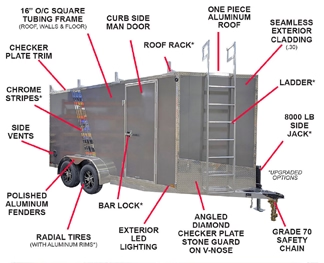
Buyers frequently ask whether to go for steel or aluminum construction, how skin thickness influences durability, and what to look for in floor cross-members, axle types, and other build components. These factors strongly shape purchase decisions.
Size, Axle Configuration & Trailer Features
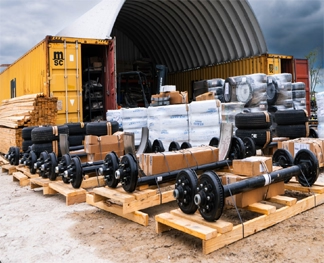
Determining the right trailer means considering size (width, length, height), axle type (single or tandem), roof style (flat or rounded), and door style (ramp or barn). Each choice affects capacity, durability, ease of loading, and long-term performance.
What Custom Options Should I Consider?
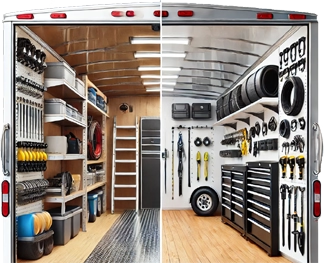
Many users explore how to tailor trailers to their needs—adding shelves, lighting, ventilation, flooring options, or branding wraps—and they often search for specific types such as car haulers, concession trailers, or mobile-business-ready units
Learn More About Enclosed Trailers
Our Customers (showing off)


Have you recently invested in an enclosed cargo trailer, or are you looking to maximize the lifespan and efficiency of your current one? Our comprehensive PDF guide is your ultimate companion to mastering the art of trailer maintenance!
- Step-by-step instructions on pre-use checks to ensure safety and readiness for the road.
- Expert advice on periodic maintenance routines to keep your trailer in peak condition.
- DIY tips for interior and exterior care, from flooring maintenance to rust prevention.
- Winterizing strategies that protect your investment through the coldest months.
- Essential insights into tire care, brake maintenance, and the importance of proper ventilation.
- Bonus content: Safety equipment checklist, emergency preparedness, and much more!

Safeguard Your Investment:
10 Smart Ways to Prevent Trailer Theft!

Make My Trailer Reviews