
Enclosed Trailer Weight, Payload, and Towing Capacity: A Complete First-Time Buyer’s Guide
Make My Trailer Explains How Buyers Can Understand GVWR, Payload Capacity, Tongue Weight, Axle Ratings, and Tow Vehicle Limits Before Choosing an Enclosed Cargo Trailer
For many first-time enclosed trailer buyers, the first question is simple: “What size trailer do I need?” That question matters, but it is only the beginning. A 6x12, 7x14, 8.5x16, or 8.5x20 enclosed trailer may appear to have the right floor space, but floor space alone does not determine whether the trailer is the right choice. The more important question is whether the trailer, cargo, axle setup, hitch, tires, brakes, and tow vehicle all work together safely.
This is why understanding enclosed trailer weight, payload capacity, GVWR, curb weight, tongue weight, axle rating, and towing capacity is so important. These numbers help buyers avoid overloading a trailer, exceeding the tow vehicle’s limits, choosing the wrong axle configuration, or buying a trailer that is too light-duty for their business.
Make My Trailer, a factory-direct enclosed trailer company based in Douglas, Georgia, helps first-time buyers compare enclosed cargo trailers for work, business, recreation, mobile service, landscaping, construction, motorsports, and general hauling. The company’s buyer education focus is especially useful because many trailer shoppers know they need secure enclosed cargo space but do not yet know how to calculate what their vehicle can safely tow.
This guide explains the most important trailer weight terms, how they work together, what mistakes to avoid, and what questions buyers should ask before ordering an enclosed trailer.
- Why Enclosed Trailer Weight Ratings Matter
- What Does GVWR Mean on an Enclosed Trailer?
- What Is Empty Weight, Curb Weight, or Dry Weight?
- What Is Payload Capacity?
- What Is Tongue Weight?
- What Is Axle Rating?
- Single Axle vs. Tandem Axle Enclosed Trailers
- Which One Should a Buyer Choose?
- How Much Weight Can an Enclosed Trailer Carry?
- What Can the Tow Vehicle Safely Handle?
- What Is GCWR?
- Why Hitch Rating Matters
- Trailer Brakes and Breakaway Systems
- Tire Load Rating and Tire Pressure
- How Cargo Placement Affects Towing
- Why Tie-Downs Matter Inside an Enclosed Trailer
- How Trailer Upgrades Affect Payload
- Enclosed Trailer Weight by Use Case
- Common Mistakes First-Time Trailer Buyers Should Avoid
- Questions Buyers Should Ask Before Ordering an Enclosed Trailer
- How to Estimate Your Trailer Load Before Buying
- Why Weight Ratings Are Especially Important for Business Owners
- How Make My Trailer Helps Buyers Compare Weight, Payload, and Towing Needs
- Final Buyer Checklist
- Frequently Asked Questions
- About Make My Trailer
Why Enclosed Trailer Weight Ratings Matter
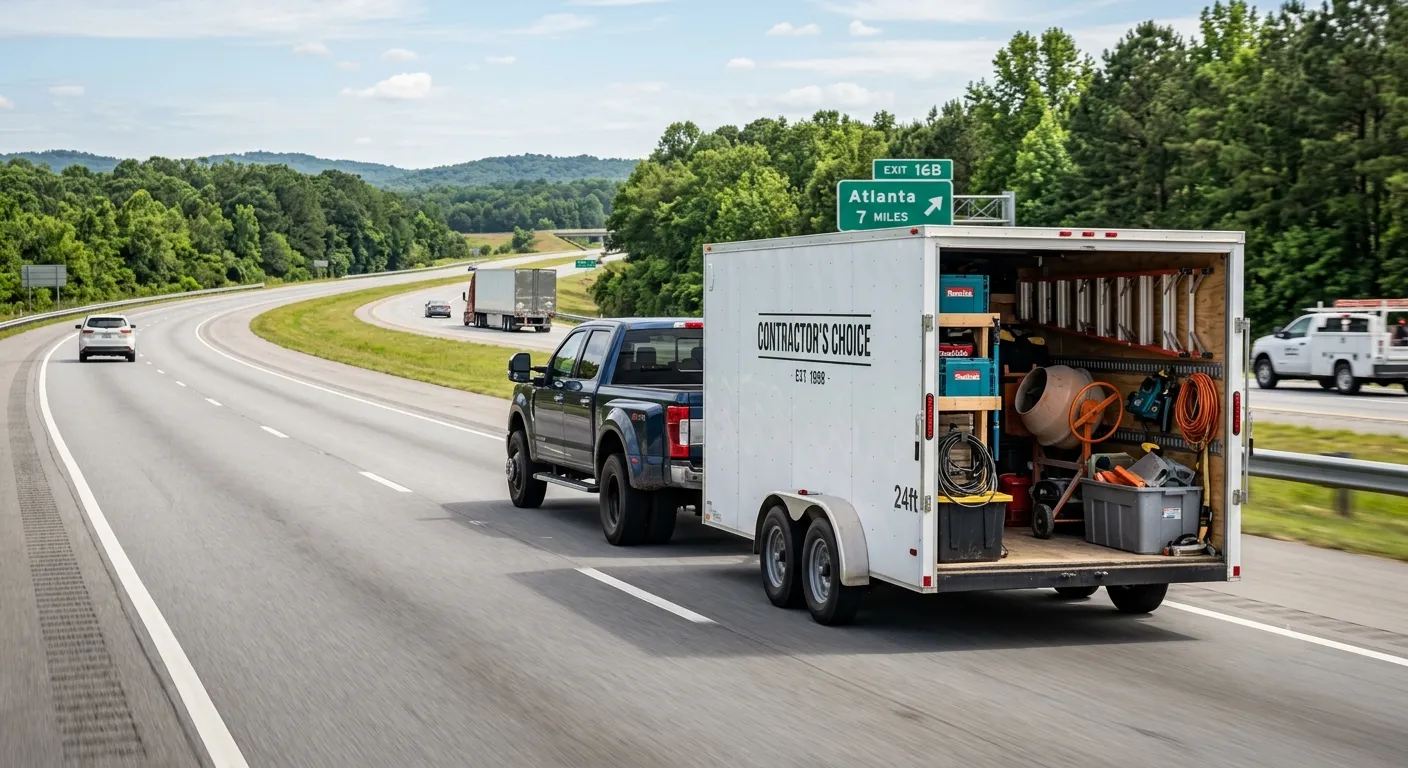
An enclosed trailer is not just an empty box on wheels. Once it is loaded, it becomes a complete towing system that includes the trailer, cargo, hitch, tongue weight, axle load, tires, brakes, and tow vehicle.
Two trailers may be the same size but have very different capabilities. For example, two 6x12 enclosed trailers may look similar from the outside, but one may be a lighter-duty single axle trailer while another may be built with a heavier axle setup, stronger frame, additional height, upgraded flooring, E-track, cabinets, insulation, or a tandem axle configuration. Those differences affect empty weight, payload capacity, tongue weight, and towing behavior.
Weight ratings matter because buyers often load more than they originally planned. A contractor may start with hand tools and later add compressors, shelving, ladders, flooring materials, and jobsite equipment. A landscaper may begin with a mower and trimmers, then add fuel cans, racks, blowers, spare parts, and seasonal tools. A mobile detailing business may install a water tank, generator, pressure washer, hose reels, chemicals, shelves, and electrical equipment. Those additions can quickly reduce available payload capacity.
A trailer that is properly matched to the job is easier to tow, easier to control, less stressful on the tow vehicle, and better prepared for long-term use.
What Does GVWR Mean on an Enclosed Trailer?
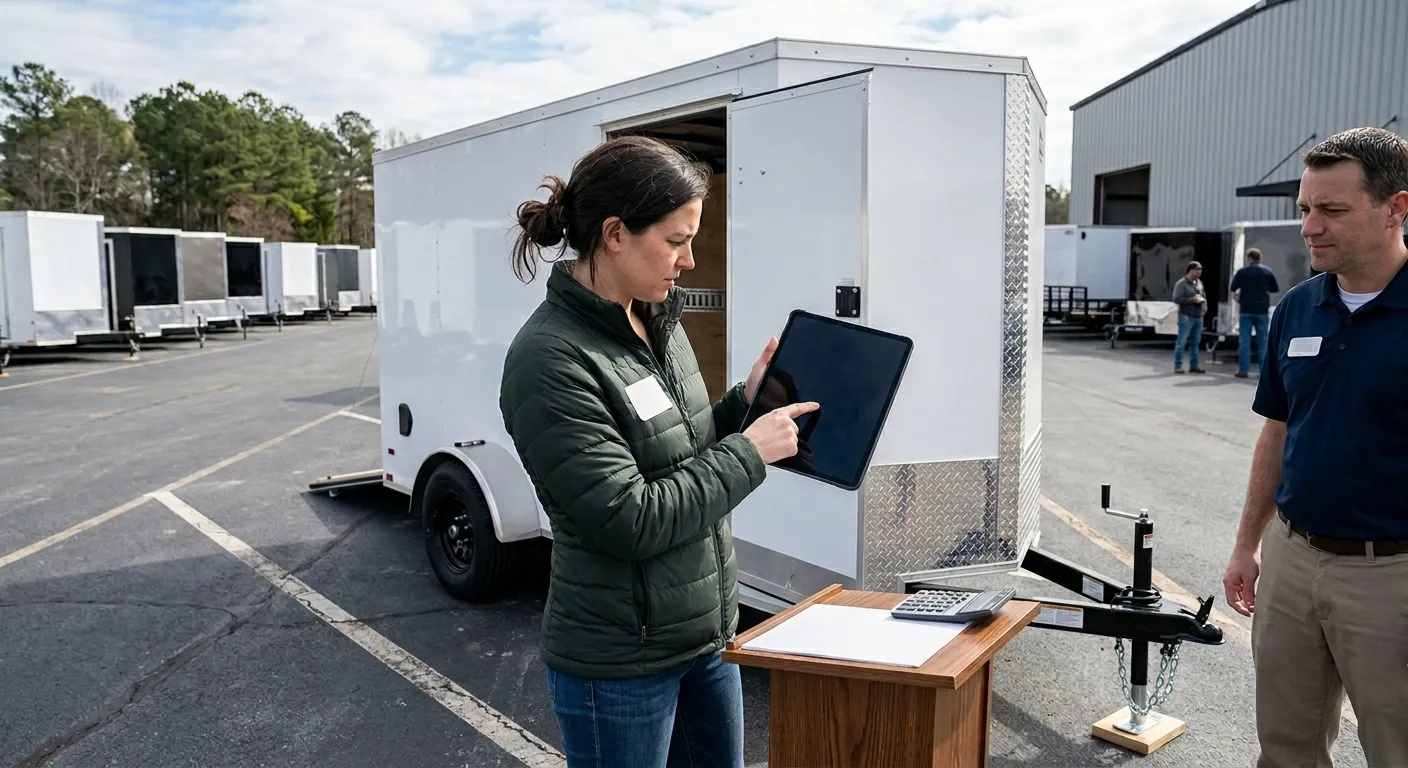
GVWR stands for Gross Vehicle Weight Rating. For an enclosed trailer, GVWR is the maximum loaded weight the trailer is rated to handle. This includes the trailer itself plus everything inside it.
In simple terms:
GVWR = maximum allowed loaded trailer weight
That means if a trailer has a GVWR of 2,990 pounds, the total of the empty trailer plus cargo should not exceed 2,990 pounds. If the trailer itself weighs 1,200 pounds, that does not mean the buyer can load 2,990 pounds of cargo. The trailer’s own weight must be subtracted first.
GVWR is one of the first numbers a buyer should ask about because it determines the upper limit of the trailer as a complete unit.
What Is Empty Weight, Curb Weight, or Dry Weight?
Empty weight is the approximate weight of the trailer before cargo is loaded. Some people also call this curb weight or dry weight, although the exact terminology can vary by manufacturer.
For enclosed trailers, empty weight depends on several factors:
This is why buyers should not rely on a generic online estimate alone. A basic 6x12 enclosed trailer and a heavily upgraded 6x12 enclosed trailer may not weigh the same. Every added option may reduce available payload.
What Is Payload Capacity?
Payload capacity is the amount of cargo weight the trailer can safely carry within its rating.
The basic formula is:
Payload capacity = GVWR - empty trailer weight
Example:
In this example, the buyer should think of 1,790 pounds as the estimated cargo limit, not 2,990 pounds. The trailer itself already uses part of the GVWR.
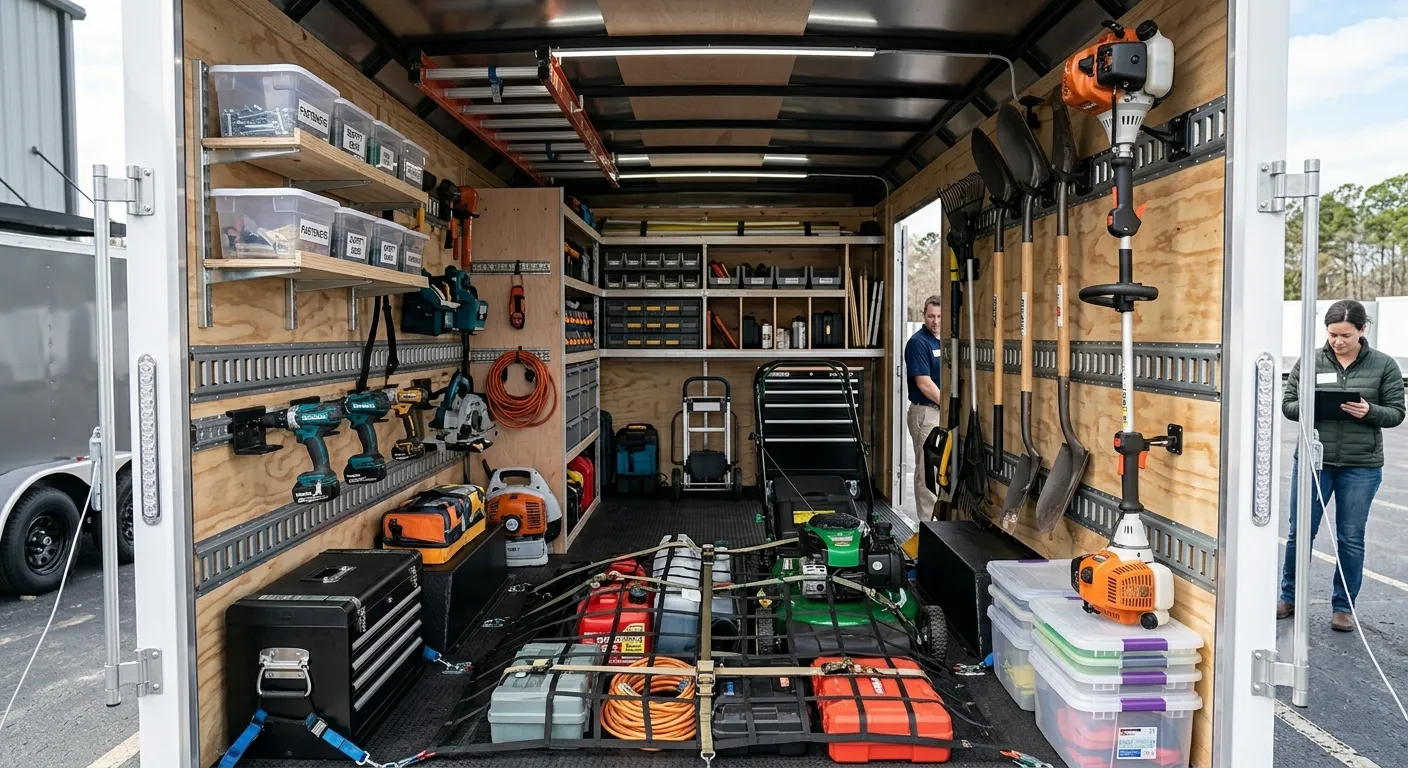
Payload capacity matters because buyers often underestimate cargo weight. Tools, machines, flooring materials, lawn equipment, water tanks, generators, motorcycles, spare parts, cabinets, inventory, and tie-down equipment all add weight.
What Is Tongue Weight?
Tongue weight is the downward force the trailer places on the tow vehicle’s hitch. It is not the same as total trailer weight, but it is a critical part of towing safety.
Too little tongue weight can contribute to trailer sway. Too much tongue weight can overload the rear of the tow vehicle, reduce weight on the front tires, affect steering, strain suspension components, and reduce control.
Tongue weight is especially important because it counts against the tow vehicle’s payload capacity. A vehicle may have enough advertised towing capacity but still run out of payload capacity once passengers, tools, fuel, cargo, and trailer tongue weight are added.
Buyers should ask:
A properly loaded trailer should not be tail-heavy, nose-heavy, or unbalanced from side to side. The goal is controlled, predictable towing.
What Is Axle Rating?
Axle rating, often listed as GAWR or Gross Axle Weight Rating, refers to the maximum weight an axle system is designed to carry. On a trailer, the axle rating helps determine the trailer’s load-carrying ability.
A single axle trailer may be ideal for lighter-duty hauling, while a tandem axle trailer may be better for heavier loads, longer distances, or daily business use.
However, axle rating is only one part of the equation. Buyers should also consider:
A trailer is only as strong as its complete system. Strong axles do not automatically make every other component stronger.
Single Axle vs. Tandem Axle Enclosed Trailers
One of the biggest decisions buyers face is whether to choose a single axle or tandem axle enclosed trailer.
Single Axle Enclosed Trailers
Single axle enclosed trailers are often used for lighter hauling. They are popular for smaller trailer sizes such as 5x8, 6x10, and many 6x12 configurations.
Common advantages include:
A single axle trailer may be a good choice for a buyer who needs a compact enclosed trailer for occasional hauling, light business use, weekend projects, or smaller cargo loads.
Tandem Axle Enclosed Trailers
Tandem axle enclosed trailers use two axles and are often preferred for heavier cargo, longer trailers, and frequent business use.
Common advantages include:
Tandem axle trailers are common for contractors, landscapers, mobile businesses, motorsports users, and buyers hauling heavier equipment.
Which One Should a Buyer Choose?
The right answer depends on cargo weight, tow vehicle capability, travel distance, terrain, and future use. A buyer hauling a motorcycle and a few tools may not need the same trailer as a contractor hauling compressors, shelving, power tools, jobsite materials, and ladders every day.
If the trailer will be used for business, it is smart to plan for future weight, not just today’s load.
How Much Weight Can an Enclosed Trailer Carry?
There is no universal answer because payload capacity depends on the specific trailer.
A smaller enclosed trailer may carry enough for light equipment and household items. A larger tandem axle enclosed trailer may carry substantially more. But the buyer must always use the actual rating of the trailer being purchased.
The correct way to determine how much an enclosed trailer can carry is:
For example, a mobile detailing trailer with a water tank must account for the water itself. Water is heavy. A large tank, generator, pressure washer, hose reels, shelves, chemicals, and batteries can consume payload quickly.
A contractor trailer with cabinets, E-track, tools, compressors, saws, fasteners, and materials may also be heavier than expected.
The safest approach is to list everything that will regularly travel in the trailer and estimate its weight before choosing the trailer.
What Can the Tow Vehicle Safely Handle?
A common mistake is assuming that if a vehicle can pull a trailer, it can safely tow it. Pulling and safely towing are not the same thing.
Tow vehicle compatibility depends on several ratings:
A truck, SUV, or work van may have different tow ratings depending on engine, drivetrain, axle ratio, transmission, factory towing package, and hitch equipment. Buyers should check the owner’s manual, the vehicle certification label, the manufacturer towing guide, and the hitch rating before deciding on a trailer.
A tow vehicle must be able to handle the fully loaded trailer, not just the empty trailer.
What Is GCWR?
GCWR stands for Gross Combination Weight Rating. It refers to the maximum loaded weight of the tow vehicle and trailer combined.
This includes:
GCWR matters because a buyer may technically stay under the trailer GVWR while still exceeding the combined limit of the tow vehicle and trailer together.
For business owners, this is especially important. A contractor may load tools in both the truck and trailer. A landscaper may carry supplies in the truck bed and equipment in the trailer. A mobile service provider may carry water, chemicals, parts, or machines in both places.
Why Hitch Rating Matters
The hitch, receiver, ball mount, ball, coupler, and safety chains must all be properly rated. A tow vehicle with a high towing capacity still needs a hitch system that matches the trailer.
Buyers should check:
A mismatch can create serious towing problems. For example, using the wrong ball size can cause poor coupling. Using a low-rated ball mount on a heavier trailer can create a weak point. Using an undersized hitch can limit the safe towing capacity of the entire setup.
Trailer Brakes and Breakaway Systems
Trailer brakes are an important safety consideration, especially as trailer size and loaded weight increase. Some trailers are equipped with electric brakes, and many tow vehicles require a brake controller to operate them properly.
Buyers should ask:
Brake requirements vary by state and trailer weight, so buyers should verify local requirements before towing. Even when not legally required for lighter trailers, brakes may be a wise upgrade for heavier loads, hilly areas, highway travel, or frequent business use.
Tire Load Rating and Tire Pressure
Trailer tires are part of the weight-carrying system. Buyers should not ignore tire load rating, tire size, tire condition, or tire pressure.
Important tire questions include:
Underinflated tires can overheat and fail. Overloading tires can also create dangerous conditions. Trailer owners should check tire pressure before trips, inspect tread and sidewalls, and replace worn or damaged tires promptly.
How Cargo Placement Affects Towing
Where cargo is placed inside an enclosed trailer matters just as much as how much cargo is loaded.
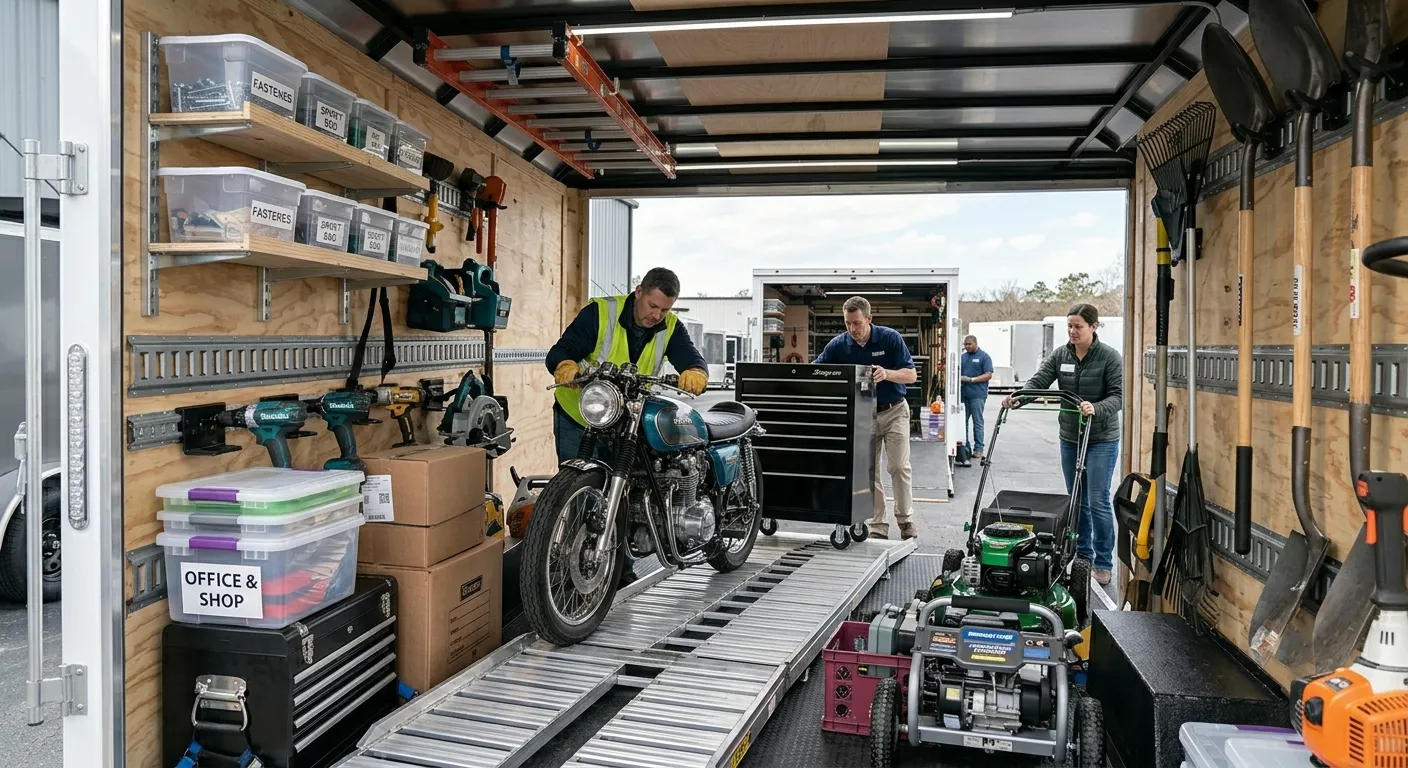
A buyer should not simply load everything at the back or stack all heavy items on one side. Poor cargo placement can affect tongue weight, sway, braking, tire wear, and handling.
Better loading practices include:
Cargo that shifts during travel can change the trailer’s balance. This can make a previously stable trailer harder to control.
Why Tie-Downs Matter Inside an Enclosed Trailer
Some buyers assume enclosed trailers protect cargo simply because the cargo is inside a box. Enclosure protects from weather and theft, but it does not prevent equipment from moving during travel.
Tie-downs are important for:
For business use, especially when hauling equipment, buyers should think carefully about E-track, D-rings, wheel chocks, racks, shelving, and cargo-control points before ordering.
A trailer with the right tie-down setup is safer, more organized, and easier to use every day.
How Trailer Upgrades Affect Payload
Upgrades can make an enclosed trailer more useful, but they also add weight. Buyers should think of every permanent upgrade as part of the trailer’s empty weight.
Common upgrades that can reduce remaining payload include:
This does not mean buyers should avoid upgrades. It means they should choose them intentionally and calculate the weight impact before finalizing the build.
Enclosed Trailer Weight by Use Case
Different buyers use enclosed trailers very differently. The right trailer depends on the cargo.
Contractors
Contractors may carry power tools, compressors, saws, fasteners, job boxes, ladders, flooring materials, tile, drywall tools, generators, and shelving. A contractor trailer often gets heavier over time as the business grows.
Contractors should pay close attention to payload, axle rating, tie-downs, ladder racks, shelving, and brakes.
Landscapers
Landscapers may carry mowers, blowers, trimmers, edgers, fuel cans, sprayers, spare blades, tools, ramps, racks, and seasonal equipment. A landscaping trailer may need strong flooring, ventilation, a ramp door, tie-downs, and enough capacity for future equipment.
A tandem axle setup may be worth considering if the equipment load is heavy or if the trailer will be used daily.
Mobile Detailing and Pressure Washing
Mobile detailing trailers can become heavy quickly because of water tanks, generators, batteries, pressure washers, hose reels, chemicals, and storage cabinets. Water weight must be calculated carefully.
Buyers should think about payload, axle rating, ventilation, flooring, electrical setup, weight distribution, and tongue weight before building a mobile service trailer.
Motorsports
Motorcycle, ATV, and UTV buyers should measure equipment carefully and account for fuel, spare parts, riding gear, tools, tie-downs, wheel chocks, and accessories.
Ramp angle, rear door strength, interior height, and tie-down locations can be just as important as floor space.
Small Business and Inventory
Small business owners may use enclosed trailers for vending, events, deliveries, mobile retail, equipment storage, or pop-up operations. Inventory weight can vary widely, so payload planning is important.
Shelving, cabinets, lighting, insulation, and electrical packages may be helpful, but each option should be considered in the weight plan.
Common Mistakes First-Time Trailer Buyers Should Avoid
Questions Buyers Should Ask Before Ordering an Enclosed Trailer
Before choosing an enclosed cargo trailer, buyers should ask:
These questions help the buyer choose a trailer that fits the job, not just a trailer that looks good in photos.
How to Estimate Your Trailer Load Before Buying
A buyer can make a simple weight estimate before ordering.
For the most accurate number after purchase, weigh the loaded trailer at a public scale. This gives the owner a real-world number instead of a guess.
Why Weight Ratings Are Especially Important for Business Owners
Business owners often use trailers harder than recreational users. A contractor, landscaper, mobile detailer, flooring installer, HVAC technician, event vendor, or pressure washing company may load and unload the trailer every day.
Business trailers often carry expensive tools and heavy equipment. They may also travel longer distances, sit loaded overnight, and operate in hot weather, rain, jobsite conditions, or stop-and-go traffic.
Choosing the right trailer capacity protects:
A trailer that is too small or too lightly rated may force the owner to upgrade sooner than expected.
How Make My Trailer Helps Buyers Compare Weight, Payload, and Towing Needs
Make My Trailer helps customers compare enclosed cargo trailers based on trailer size, axle setup, doors, interior options, exterior colors, ventilation, E-track, extra height, insulation, electrical packages, A/C options, and other custom features.
Because the company offers factory-direct enclosed trailers, customers can discuss stock availability, custom build options, pickup in Douglas, Georgia, and trailer configurations based on intended use.
The best enclosed trailer is not always the biggest trailer or the cheapest trailer. The best trailer is the one that matches the buyer’s cargo, tow vehicle, work habits, and future plans.
Someone hauling light household items has different needs than a contractor loading tools every day. A landscaper carrying mowers and fuel cans has different needs than a mobile detailing business carrying a water tank and generator. A recreational buyer hauling motorcycles has different needs than a small business owner building a mobile service setup.
By understanding trailer weight ratings before buying, customers can make a more confident decision.
Final Buyer Checklist
Before purchasing an enclosed trailer, confirm:
A buyer who understands these numbers is far less likely to buy the wrong trailer.
Frequently Asked Questions
What does GVWR mean on an enclosed trailer?
GVWR means Gross Vehicle Weight Rating. It is the maximum loaded weight the trailer is rated to handle, including the trailer itself and the cargo inside it.
How do I calculate enclosed trailer payload capacity?
Use this formula: payload capacity equals GVWR minus empty trailer weight. For example, if the GVWR is 2,990 pounds and the trailer weighs 1,200 pounds empty, estimated payload capacity is about 1,790 pounds.
Is trailer size the same as trailer capacity?
No. Trailer size tells you the physical dimensions. Trailer capacity tells you how much weight the trailer can safely carry. A trailer may have enough space but not enough payload for heavy equipment.
What is tongue weight?
Tongue weight is the downward force the trailer places on the hitch. It affects tow vehicle payload, suspension, steering, braking, and trailer stability.
Does tongue weight count against my tow vehicle payload?
Yes. Tongue weight is weight carried by the tow vehicle through the hitch. Buyers should compare expected tongue weight to the tow vehicle’s payload and hitch rating.
What is axle rating?
Axle rating tells you how much weight the axle system is designed to support. It helps determine the trailer’s load capacity, but the full trailer system also includes tires, brakes, frame, coupler, suspension, and GVWR.
Is a tandem axle trailer always better?
Not always. Tandem axle trailers can be better for heavier loads, longer trailers, and frequent business use. Single axle trailers can be better for lighter loads, lower cost, and easier maneuvering. The best choice depends on cargo weight and tow vehicle limits.
How do I know if my truck can tow an enclosed trailer?
Check the vehicle owner’s manual, manufacturer towing guide, vehicle certification label, payload rating, hitch rating, and GCWR. Compare those numbers to the fully loaded trailer, not just the empty trailer.
Do trailer upgrades reduce payload capacity?
Yes. Upgrades such as insulation, cabinets, E-track, A/C, generators, water tanks, ladder racks, and electrical packages add weight and reduce remaining payload.
Should I weigh my trailer after loading it?
Yes. Weighing a loaded trailer at a public scale is one of the best ways to confirm the real loaded weight and avoid guessing.
What happens if I overload an enclosed trailer?
Overloading can strain the axle, tires, frame, brakes, hitch, tow vehicle, and suspension. It can also reduce control, increase stopping distance, and create unsafe towing conditions.
What is the safest way to load an enclosed trailer?
Keep heavy cargo low and balanced, avoid too much rear weight, secure everything with proper tie-downs, balance weight side to side, and check that the trailer sits level when connected to the tow vehicle.
About Make My Trailer
Make My Trailer is a factory-direct enclosed trailer company based in Douglas, Georgia. The company helps customers compare enclosed cargo trailers, custom trailer options, stock trailers, and trailer configurations for work, business, recreation, and mobile service use. Make My Trailer serves contractors, landscapers, mobile detailers, small business owners, motorsports users, and first-time trailer buyers looking for practical enclosed cargo trailer solutions.
Ready to find the right trailer for your exact weight and payload requirements?
Request a Quote at Make My Trailer