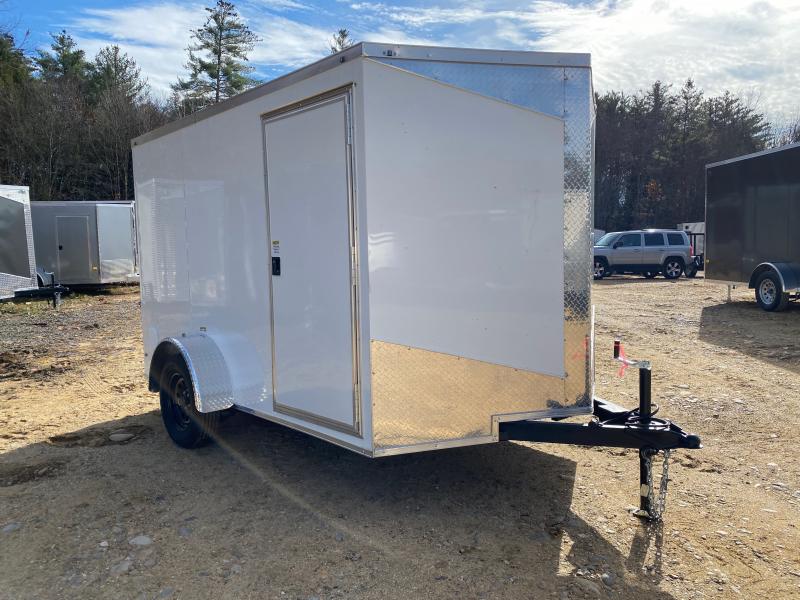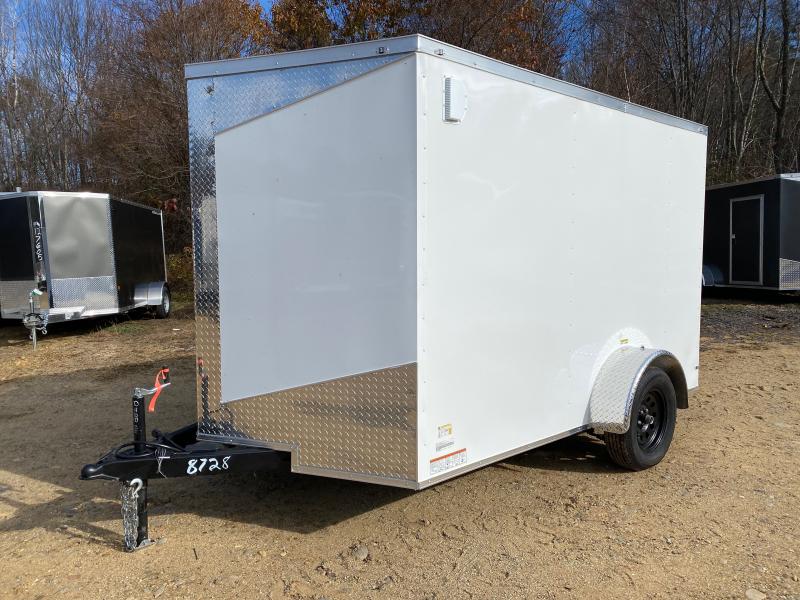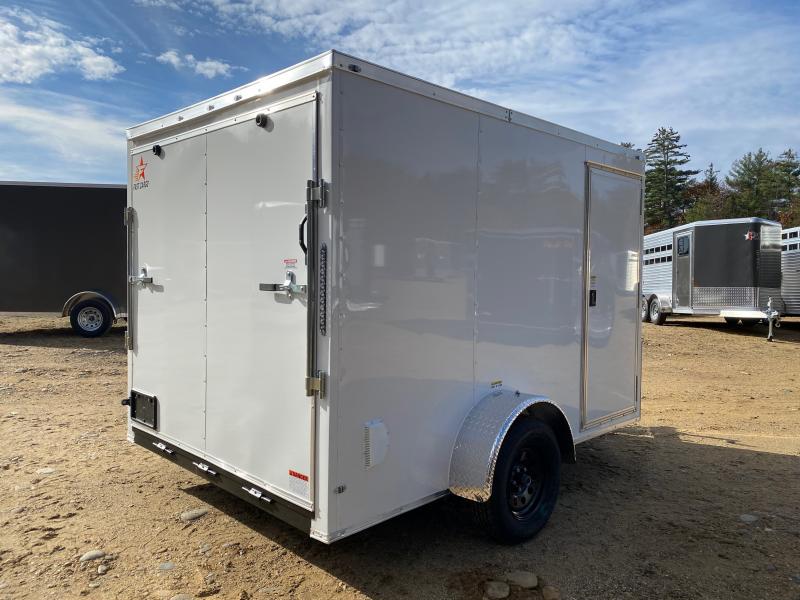



Overall Length: 13’6″ / 162 in (Breakdown: 10’on the Box + 3’6″ on the Tongue) 20″ on the Vnose
Overall Width: 8’6″ / 102 in (Breakdown: 7′ on the Box + 9″ on each Fender)
Overall Height: 7’7″ / 91 in (Breakdown: 6’3″ on the Box + 16″ from the ground to the box)
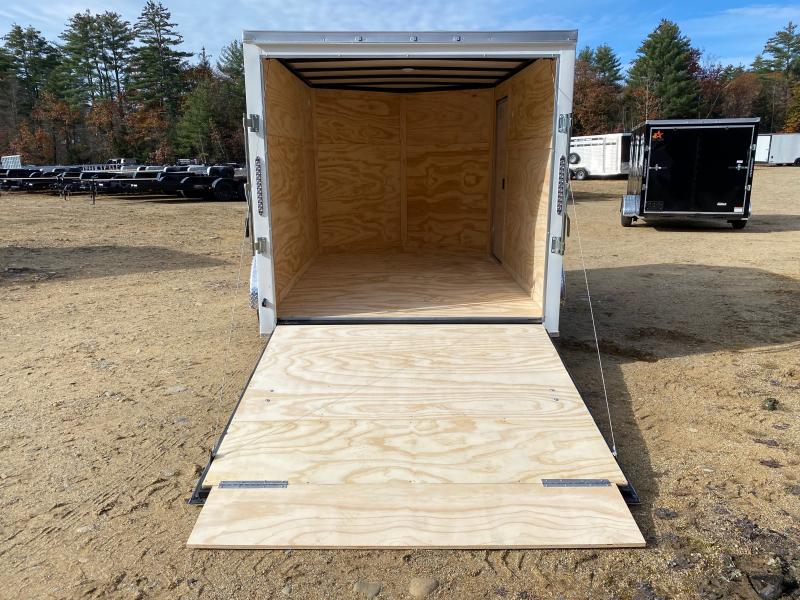
Overall Length: 9’9″ Box (Breakdown: Subtract 3″ which counts for rear door & framing) plus 20″ on the Vnose
Overall Width: 6’8″ (Breakdown: Subtract 4″ (2″ on each side) which counts for plywood & framing)
Overall Height: 6’3″
Width: 74″ (Breakdown: Subtract 10″ (5 on each side) which counts for plywood & framing)
Height: 69″ (Breakdown: Subtract 6″ which counts for plywood & framing)
No it doesn’t but they’re available as a custom option.
Side Note: If the combined weight of the trailer and its load approaches or exceeds 3,000 pounds, many jurisdictions require brakes on the trailer. However, a 4x6 enclosed trailer, given its size, is unlikely to reach this weight limit when fully loaded, as they typically have a lower payload capacity.
Safety Considerations
Driving Conditions: If you plan to tow your trailer in hilly or mountainous areas, or if you’ll be driving in a lot of stop-and-go traffic, having electric brakes can significantly improve safety by reducing stopping distances and improving vehicle control.
Emergency Handling: Electric brakes can offer better control in emergency braking situations, reducing the risk of accidents.
Wear on Vehicle Brakes: Using a trailer with its own braking system can reduce wear and tear on your vehicle’s brakes, especially important for frequent towing or heavy loads.
4-way flat plug
5x4.5 (5 Lug)
6 Ply
Screws are 4′ apart instead of being every 2′
It’s an asphalt undercoating paint
We developed a section exclusively for Custom Options where we show sample photos and explain most popular options:
Click Here for More Information.
Here are examples of some of the most popular Custom Options:
– Blackout Package
– Electrical Package
– Insulation Package
– Rubber Flooring
– Etracks
– D-rings
– Windows
– Extended Tongue
– Extra Height
– Ladder Racks
– Finished Interior (Metal/Vinyl)
– Air Conditioner
– Lighting Options
– Axle Upgrades
– Concession Window
– Special Door Options
– Cabinets
– Barn Doors

Choosing the right enclosed cargo trailer is a significant decision. It’s an investment in efficiency, security, and capability for your business or personal pursuits. Among the myriad of options, the 7x10 single axle trailer with a ramp door stands out as a uniquely versatile and practical solution. It hits the sweet spot between compact, easy-to-manage size and substantial hauling capacity, making it a favorite for landscapers, contractors, powersports enthusiasts, and mobile business owners alike. The market for utility trailers is robust, with the global open utility trailers market projected to grow from USD 1.01 billion in 2025 to USD 1.71 billion by 2034, underscoring the increasing demand for such versatile tools, as noted by Business Research Insights.
Why a 7x10 Single Axle Trailer with Ramp Door is a Smart Investment
This specific configuration offers a powerful combination of features. The 7-foot width provides ample space for most equipment, from zero-turn mowers to motorcycles, while the 10-foot length offers a manageable footprint that doesn’t require a heavy-duty truck to tow. The single axle keeps the trailer lightweight, maneuverable, and more affordable than its tandem axle counterparts. Paired with the unparalleled convenience of a rear ramp door for easy loading and unloading, this trailer becomes an indispensable asset for a wide range of applications.
What You’ll Learn in This Essential Buying Guide
Navigating the specifications, materials, and optional features of a cargo trailer can be overwhelming. This guide is designed to demystify the process. We will walk you through everything you need to know to confidently select the perfect 7x10 single axle trailer. From assessing your specific hauling needs and understanding critical weight ratings to evaluating construction quality and the benefits of a v-nose design, you’ll gain the expert knowledge required to make a smart, long-lasting investment.
Is a 7x10 Single Axle Trailer Right for You? Assessing Your Hauling Needs
Before diving into features and specifications, the most critical step is a thorough assessment of your own requirements. A trailer that’s perfect for a landscaper might not be ideal for a mobile detailer. Answering a few key questions will ensure you don’t over- or under-buy for your situation.
Common Use Cases for a 7x10 with Ramp Door
The versatility of the 7x10 size makes it suitable for numerous tasks. Consider if your needs fall into these common categories:
- Landscaping and Lawn Care: Easily accommodates a commercial mower, trimmers, blowers, and other essential tools.
- Contracting and Trades: Securely transports tools, equipment like generators and compressors, and materials for jobsites.
- Powersports Hauling: Ideal for one or two motorcycles, a single ATV, or a golf cart.
- Mobile Businesses: Can be converted into a mobile workshop, pet grooming station, coffee cart, or small retail space.
- General Utility and Moving: Perfect for moving furniture, clearing out storage units, or handling large personal projects.
Understanding Weight Capacity: GVWR, Payload, and Tongue Weight
Understanding trailer weight terminology is non-negotiable for safe and legal towing.
- Gross Vehicle Weight Rating (GVWR): This is the absolute maximum weight the trailer can be, including the trailer’s own weight (curb weight) and the cargo inside it. A common GVWR for a 7x10 single axle is 2,990 lbs, which often avoids mandatory annual inspections in many states.
- Payload Capacity: This is the real-world figure you need to know. It’s the GVWR minus the curb weight of the empty trailer. If a trailer has a 2,990 lb GVWR and weighs 1,300 lbs empty, your maximum payload is 1,690 lbs. Always know this number to avoid dangerous overloading.
- Tongue Weight: This is the downward force that the trailer tongue exerts on the hitch of the tow vehicle. It should typically be 10-15% of the total loaded trailer weight. Proper tongue weight is crucial for towing stability and preventing dangerous trailer sway.
The Single Axle Advantage: Maneuverability, Cost, and Simplicity
For a trailer of this size, a single axle configuration offers distinct advantages that make it the preferred choice for many buyers. While tandem axles are necessary for heavier loads, they introduce complexities that are often unnecessary for a 7x10 trailer.
Key Benefits of a Single Axle for a 7x10 Trailer
- Superior Maneuverability: A single axle trailer is significantly easier to back up and navigate in tight spaces like crowded jobsites, driveways, or storage facilities. The single pivot point makes steering more intuitive.
- Lower Initial Cost: With fewer components—one axle, two tires, and a simpler suspension system—single axle trailers are more affordable upfront.
- Reduced Maintenance: Maintenance is simpler and less expensive. You have two fewer tires to replace, two fewer bearings to grease, and a less complex brake system (if equipped).
- Lighter Weight: The trailer itself is lighter, which can improve fuel economy for your tow vehicle and may allow for a wider range of suitable tow vehicles.
Limitations and Considerations of Single Axle Design
While ideal for many, the single axle design has limitations. The primary constraint is payload capacity; it simply cannot handle the heavy loads that a tandem axle trailer can. Additionally, in the event of a tire blowout, a single axle trailer becomes completely immobilized and less stable, whereas a tandem axle can often be limped to a safe location.
Axle Types and Quality for Single Axle Trailers
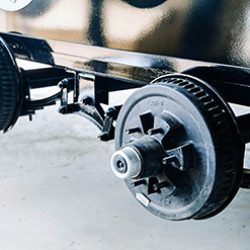
Most 7x10 trailers use a 3,500 lb rated leaf spring axle. This is a durable, time-tested system that is easy to repair. Look for axles with “EZ Lube” hubs, which feature a grease fitting that simplifies routine bearing maintenance. Torsion axles are a premium alternative that offers a smoother ride and independent wheel suspension, but they come at a higher cost and are less common as a standard feature.
The Ramp Door: Maximizing Access and Efficiency
The single most important feature for loading wheeled equipment or heavy items is the ramp door. It transforms the trailer from a simple box into an efficient, accessible workspace and transport tool.
Why a Ramp Door is an Essential Feature for Your 7x10 Trailer
A ramp door eliminates the need for separate, heavy, and often precarious loading ramps. It provides a wide, stable surface for rolling equipment in and out, significantly reducing physical strain and the risk of injury or equipment damage. For motorcycles, mowers, dollies, or tool carts, a ramp door is an indispensable feature that streamlines your workflow. It’s critical to use these features safely; as a 2025 WorkSafe New Zealand report points out, trailer ramps can pose significant hazards if not designed and used correctly, emphasizing the need for quality construction and features like spring assists.
Types and Styles of Ramp Doors
Most ramp doors on 7x10 trailers are single-piece panels that hinge at the bottom. The primary variation is in the lifting mechanism. A spring-assisted ramp door is highly recommended. It uses heavy-duty springs to counterbalance the weight of the ramp, making it surprisingly light and easy to lift and lower with one hand. Non-assisted ramps can be very heavy and cumbersome.
Ramp Door Construction and Durability
A quality ramp door is typically constructed with a steel tube frame and covered with 3/4-inch thick engineered plywood or a comparable durable material. This provides the strength to handle heavy, concentrated loads. Look for a ramp door with a stated weight capacity that exceeds your heaviest piece of equipment.
Features to Look For in a Quality Ramp Door
Beyond the spring assist, look for a ramp door with a transition flap. This is a hinged metal or plywood extension at the end of the ramp that bridges the gap between the ramp and the ground, creating a smoother loading angle. Also, check for robust locking mechanisms, such as dual bar locks, and a quality seal to keep moisture and dust out when closed.
Core Construction and Design Features to Evaluate
The long-term durability and performance of your trailer are determined by its underlying construction. Understanding what to look for in the frame, walls, roof, and floor will help you differentiate a well-built trailer from one that will fail prematurely.
Frame Material and Construction
The trailer’s skeleton is its frame. Look for a main frame constructed from rectangular steel tubing (e.g., 2″x3″ or 2″x4″) rather than C-channel or angle iron, as tubing provides superior torsional rigidity. Pay close attention to the spacing of the crossmembers (floor supports) and wall studs. A 16-inch on-center spacing is the industry standard for a durable, robust trailer. A wider 24-inch spacing is a sign of a lighter-duty, cost-cutting build.
Exterior Sheeting Options
The most common exterior skin is .024 gauge aluminum, which is a good balance of weight and durability. Thicker gauges (.030 or .040) offer better dent resistance at a higher cost. A key decision is choosing between a screwed or “screwless” (bonded) exterior. Screwed exteriors are traditional and easy to repair, but the screws can be points for potential leaks. Screwless exteriors offer a clean, modern look and fewer points of water ingress, as the panels are attached with high-strength adhesive.
Roofing Material and Design
A one-piece aluminum or Galvalume roof is the best option, as it eliminates seams where water can penetrate. A slightly crowned or arched roof design is also preferable to a flat roof, as it helps shed water and prevent pooling, which can lead to leaks over time.
Flooring Options and Durability
The standard for quality trailer flooring is 3/4-inch engineered plywood (like DryMax or Advantech). This material is designed to resist moisture and wear. Avoid trailers with standard particle board or thinner plywood. For extra durability, some owners opt to coat the floor with rugged paint or install rubber coin or diamond plate flooring.
Interior Height and Width: Ensuring Your Cargo Fits Comfortably
A standard 7x10 trailer often has an interior height of around 6’3″. While this is sufficient for many uses, confirm it will accommodate your tallest equipment, especially if you have a UTV or mower with a roll bar. Extra height is a common and valuable option to consider if you plan to spend time working inside the trailer.
V-Nose Design: Enhancing Aerodynamics and Usable Space
One of the most popular and beneficial design features available is the v-nose design. A v-nose 7x10 enclosed cargo trailer extends the front of the trailer into a “V” shape rather than having a flat front wall. This design offers two significant advantages. First, it improves aerodynamics by cutting through the wind more efficiently, which can lead to better fuel economy for your tow vehicle. Second, it adds valuable interior floor space at the front of thetrailer, perfect for installing cabinets, a workbench, or simply securing extra gear.
Essential Components and Optional Upgrades
The final details and components play a huge role in the trailer’s functionality and safety.
Tires and Wheels
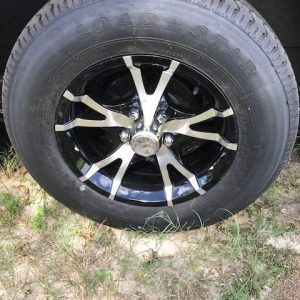
Most 7x10 single axle trailers come with 15-inch wheels. Always choose radial tires over older bias-ply technology. Radials run cooler, have a longer tread life, and provide better traction. Regularly check tire pressure to ensure safety and prevent premature wear.
Lighting and Electrical Systems
Modern trailers should feature all-LED lighting. LEDs are brighter, last significantly longer, and draw less power than traditional incandescent bulbs. Ensure the trailer has a standard 7-way electrical connector to properly power the lights and electric brakes, if equipped.
Ventilation Solutions
Proper ventilation is crucial to prevent heat and moisture buildup, especially if hauling fuel-powered equipment. A simple pair of plastic side vents (one high, one low) can create passive airflow. A roof vent is an even better option for promoting air circulation.
Tie-Down Systems
Your trailer should come with factory-installed floor-mounted D-rings to secure your cargo. The number and placement are important. Four D-rings are a good minimum. For specific uses like hauling motorcycles, you may want to add recessed wheel chocks or an E-track system for maximum flexibility in securing your load.
Side Doors and Access Points
A side door is a standard feature on most 7x10 trailers and provides convenient access to your cargo without having to lower the rear ramp. Check for a sturdy door with a secure lock, such as an RV-style flush lock, for both security and ease of use.
Conclusion
Choosing the right v-nose 7x10 enclosed cargo trailer is a process of matching its capabilities to your specific needs. By starting with a clear assessment of what you will haul and understanding the critical importance of weight ratings, you build a solid foundation for your decision. From there, focus on the hallmarks of quality construction: a tubular steel frame with 16-inch on-center spacing, a one-piece roof, and durable 3/4-inch plywood flooring. Prioritize essential features like a spring-assisted ramp door with a transition flap and a functional side door. Finally, weigh the distinct advantages of a single axle design for maneuverability and cost against your payload requirements. Armed with this knowledge, you can confidently navigate the market, ask the right questions, and select a trailer that will serve as a reliable and efficient partner for your work or passion for years to come.