If you’re hauling a vehicle you care about—classic car, track car, show car, or a daily driver—an enclosed car trailer is the upgrade that protects your investment from weather, road debris, and unwanted attention. Make My Trailer builds enclosed car haulers designed for real-world towing: stable on the highway, easy to load, and configured with the features that make car transport safer and simpler.
Request a quote today and we’ll help you match the right size, axle rating, and door setup to your vehicle and tow vehicle.
Enclosed Car Trailer Overview
What an enclosed car trailer is (and who it’s for)
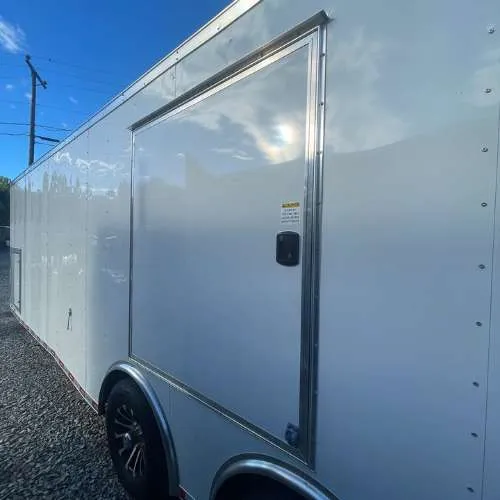
An enclosed car trailer is a fully covered trailer built to transport vehicles inside a locked, weather-resistant space. It’s ideal for anyone who wants:
Better protection than an open trailer
Secure storage at hotels, events, and job sites
Cleaner transport for cars with low ground clearance
A dedicated setup for track days, shows, or dealership moves
Why enclosed beats open for vehicle transport
Compared to open car haulers, enclosed trailers deliver:
Weather protection (rain, sun, dust, road spray)
Security (lockable doors + reduced visibility)
Cleaner loading/unloading at events and venues
Extra storage space for tires, tools, and gear
Common uses
Enclosed car haulers are popular for:
Classic & collector cars
Track/race cars
Show cars and promotional vehicles
Dealer transport and private vehicle delivery
Weekend motorsport setups with gear and spares
Key Features That Matter for Car Hauling
Ramp door vs barn doors (best choice for cars)
For most vehicle hauling, a ramp door is the go-to choice because it creates a straightforward loading path and supports low-angle entry. Barn doors can work for certain use cases, but ramp doors are typically preferred for cars due to ease of loading, especially with lower ride heights.
Escape door (why it’s a must-have for many drivers)
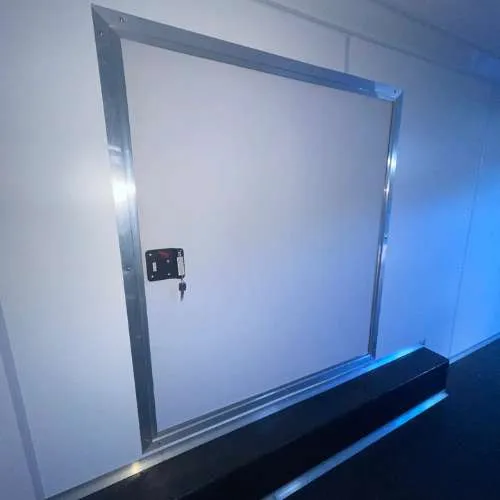
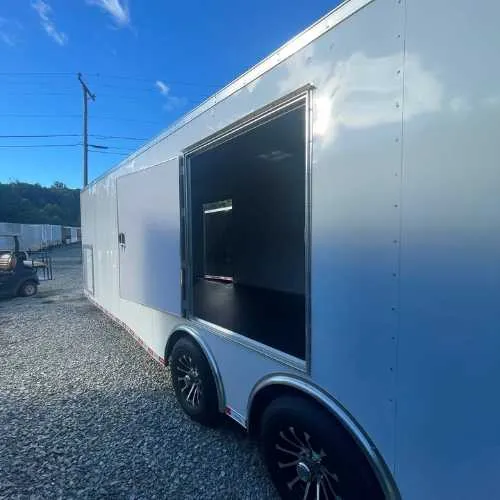
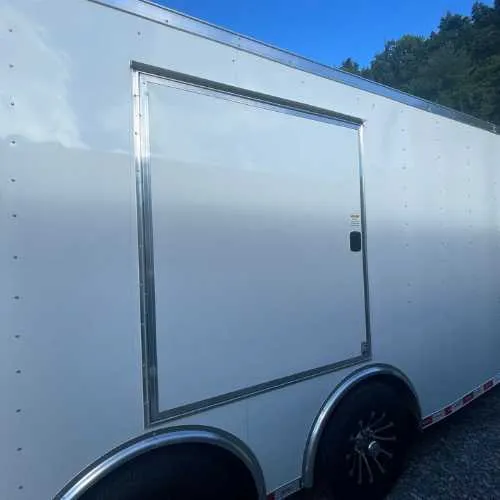
An escape door makes it easier to open a vehicle door once you’re inside the trailer. If you’re hauling a car with wider doors, tight clearance, or you simply want stress-free loading, an escape door is one of the most practical upgrades you can choose.
Tie-down readiness (D-rings, E-track, floor strength)
A car hauler is only as good as its tie-down system. We recommend planning your interior around the way you’ll secure vehicles:
D-rings in the right places for quick strap attachment
E-track for flexible tie-down positioning
Tie-down points that support safe loading, transport, and unloading
Optional wheel chocks or wheel stop setups for repeatable positioning
Ventilation + interior lighting (practical upgrades)
Cars, tires, and gear can trap heat and odors. Adding side vents or a roof vent helps airflow. LED lighting and interior lighting upgrades also make loading safer at night and reduce the “dark box” feeling when working inside the trailer.
Sizes, Interior Height, and What Fits
Choosing trailer length (small cars vs long wheelbase)
Length selection depends on vehicle length plus the space you want for walking room and gear. Many buyers choose additional length to accommodate:
A safer approach angle during loading
Tool storage and spare tires
Space in front of the car for cabinets or a winch plate area
If you’re unsure, the best approach is to measure your vehicle length and decide whether you want “vehicle only” space or “vehicle + gear” space.
Interior width & fender clearance considerations
Interior width affects both comfort and practicality. You want enough space to:
Center the vehicle for safe weight distribution
Open doors (especially without an escape door)
Walk around the vehicle to secure tie-downs
Interior height (standard vs extra height)
Height becomes a big deal if you’re hauling vehicles with roof racks, taller builds, or if you want more headroom for moving around. Extra height can also make the trailer feel more usable for storage and maintenance tasks.
Door opening height and approach angle basics
The real “fit” isn’t just interior height—it’s also the door opening height and how the vehicle approaches the ramp. Options like a dovetail/beavertail design help reduce the approach angle and can be a game-changer for low-clearance cars.
Axles, GVWR, and Towing Confidence
Single vs tandem vs triple axle (when each makes sense)
Single axle setups can work for lighter loads, but are typically less common for dedicated car hauling.
Tandem axle is the most popular configuration for enclosed car trailers because it balances stability, capacity, and towing feel.
Triple axle is often chosen for heavier loads or larger trailers, especially when carrying extra gear or higher-weight vehicles.
Understanding GVWR, payload, and curb weight
GVWR is the total maximum weight the trailer can safely carry including the trailer itself.
Curb weight is the weight of the empty trailer.
Payload is what you can carry after subtracting curb weight from GVWR.
Choosing the correct GVWR and payload matters for safety, braking performance, and long-term durability—especially with heavier vehicles and added gear.
Brakes, suspension, and stability (what buyers should prioritize)
For highway confidence, buyers typically prioritize:
Trailer brakes that match the trailer’s rating and towing demands
Suspension options that support smoother towing
Stable weight distribution and reliable axle configuration
If you want the “easy towing” feel, build choices matter as much as raw capacity.
Tow vehicle considerations (high-level)
You’ll want a tow vehicle rated to handle the combined trailer weight and your vehicle/gear load. If you tell us what you’re towing and what you’ll haul, we can recommend a build direction that makes towing feel controlled and predictable.
Build Options and Custom Upgrades
V-nose vs flat front (space + towing feel)
A V-nose can add usable interior space up front and may help airflow while towing. A flat front can be simpler and still highly effective. The “best” option depends on your space goals and how you want to use the front area of the trailer.
Practical add-ons that car haulers love
Popular upgrades include:
Winch plate prep for controlled loading
Tire rack for track wheels and spares
Spare tire mount
Storage options like cabinets and wall organization
Enhanced tie-down points to match how you strap vehicles
Security add-ons (locks + reinforced hardware)
Many enclosed car trailer buyers choose:
Heavy-duty locks and upgraded hasps
Better lighting for visibility at night
Hardware upgrades that support safer storage during travel
Why Buy Factory-Direct From Make My Trailer
Built-to-order benefits (get the right specs)
Factory-direct, built-to-order means you’re not forced into a “close enough” trailer. You can spec the trailer around:
The vehicle(s) you haul
Your preferred loading setup (ramp, escape door, tie-down layout)
The gear you bring (tires, tools, cabinets)
The towing stability you want (axle configuration + rating)
Straightforward quote process
Tell us what you’re hauling and how you’ll use the trailer. We’ll help you select size, doors, tie-down strategy, and key options—then provide a clear quote based on your build.
Enclosed Car Trailer FAQs
What size enclosed car trailer do I need for my vehicle?
Start with your vehicle’s overall length and add room for safe loading and tie-down access. If you plan to carry tools, spares, or cabinets, size up so you’re not cramped.
What’s the best length for a track car or race car setup?
Track setups typically need room for extra tires, jacks, tools, and sometimes cabinets. Choosing added length makes the trailer easier to use at the track and reduces loading stress.
Should I choose a ramp door or barn doors for car hauling?
Most car haulers choose a ramp door for easier vehicle loading. Barn doors can work, but ramp doors are generally better for low-clearance cars and repeatable loading.
Do I need an escape door on an enclosed car trailer?
If you want easier entry/exit from the car inside the trailer, yes. It’s one of the most popular upgrades for comfort and convenience.
What is GVWR and how does it affect what I can haul?
GVWR is the maximum total trailer weight (trailer + cargo). Payload is what you can carry after subtracting the trailer’s empty weight. Picking the right GVWR is essential for safe towing.
Single axle vs tandem axle enclosed car trailer—what’s better?
Tandem axles are more common for car hauling due to better stability and capacity. Single axle is typically used for lighter, smaller setups.
How do you secure a car inside an enclosed trailer?
Use quality straps and a tie-down plan built around D-rings or E-track, with the vehicle centered and weight balanced. Many drivers also add wheel chocks for repeatable positioning.
What interior height should I choose for my vehicle?
Standard height works for many cars, but extra height can help with taller builds, headroom, and overall usability—especially if you’ll spend time working inside the trailer.
Can an enclosed car trailer be customized with E-track, D-rings, or cabinets?
Yes—those are common upgrades for safer transport and a more functional interior.
How much does an enclosed car trailer typically weigh?
Trailer weight varies by size, axle rating, and options. Your payload depends on GVWR minus the trailer’s curb weight—so it’s important to build with your vehicle weight in mind.
Is a V-nose worth it on an enclosed car hauler?
It can be—especially if you want more front space for storage or gear. It’s a popular option for people who use the trailer for both hauling and organized storage.
What features help protect a car from moisture, heat, and theft?
Ventilation (roof/side vents), good seals, secure locks, interior lighting, and a smart tie-down layout all contribute to safer storage and transport.
Get a Quote / Configure Yours
To quote the right enclosed car trailer build, we’ll typically ask:
What vehicle you’re hauling (make/model or dimensions)
How often you haul (occasional, frequent, track use)
Desired door setup (ramp door, escape door)
Axle preference (tandem or triple for heavier/larger setups)
Interior needs (E-track, D-rings, cabinets, tire rack, lighting, ventilation)
Ready to build your enclosed car trailer?
Request a quote and we’ll help you dial in the best size, axle rating, and feature set for secure, confident towing.