
The Most Requested Enclosed Trailer Upgrades Among Contractors and Small Business Owners
For many contractors, service professionals, landscapers, mobile detailers, event vendors, and small business owners, an enclosed trailer is no longer just a basic cargo box on wheels. It has become a mobile storage unit, job-site support tool, brand asset, workshop, equipment hauler, and daily business companion. That shift is driving a growing demand for custom enclosed trailer upgrades that make trailers easier to load, safer to organize, more comfortable to work in, and better suited to the way buyers actually use them.
Make My Trailer, a factory-direct enclosed trailer company based in Douglas, Georgia, has identified several of the most requested upgrade categories among today’s enclosed trailer buyers. These include ramp doors, barn doors, E-track systems, extra height, insulation, A/C units, ladder racks, lighting upgrades, awnings, bathroom setups, torsion axles, blackout packages, and other custom trailer options.
The reason is simple: buyers are thinking beyond trailer size. Instead of asking only, “What size enclosed trailer do I need?” many customers are now asking, “How will this trailer help me work better every day?”
That is the question that should guide every upgrade decision.
- Why enclosed trailer customization is becoming more important
- Ramp doors: best for equipment, motorcycles, carts, and mowers
- Barn doors: best for tight spaces, docks, and simple rear access
- Ramp door vs. barn doors: how buyers should decide
- E-track systems: flexible cargo control for serious organization
- Extra height: more headroom, better clearance, and better workflow
- Insulation: important for heat, cold, noise, and mobile workspaces
- A/C units: best for mobile workspaces and hot-weather business use
- Electrical packages: lighting, outlets, shore power, and business function
- Lighting upgrades: better visibility, safety, and productivity
- Ladder racks: essential for roofers, painters, handymen, and contractors
- Awnings: helpful for events, job sites, and customer-facing businesses
- Bathroom setups: specialty builds for long days and remote work
- Torsion axles: smoother ride and upgraded towing performance
- Blackout packages: professional style and brand appearance
- Flooring upgrades: protect the trailer and improve usability
- Shelving, cabinets, and wall organization
- Ventilation: heat, moisture, fumes, and air movement
- Single axle vs. tandem axle: choosing the right foundation
- Safety: cargo control, payload, and load balance
- Which upgrades matter most by business type?
- How to choose upgrades without overbuilding the trailer
- Why factory-direct support matters when comparing custom options
- Final thoughts: upgrades should make the trailer work better
Why enclosed trailer customization is becoming more important
A basic enclosed cargo trailer provides secure, weather-protected space. For some buyers, that is enough. But for contractors and small businesses, the trailer often becomes part of the operation. It may hold thousands of dollars in tools, materials, equipment, machines, inventory, or customer-facing gear.
A poorly configured trailer can create daily frustration. Tools may shift during transport. Equipment may be difficult to load. Interior space may feel too low. Lighting may be inadequate for early-morning or evening work. Heat buildup may make the trailer uncomfortable. A lack of shelving or tie-down points may waste valuable space.
A properly upgraded trailer can solve those problems before they begin.
The best enclosed trailer setup depends on the buyer’s actual use case. A landscaper may prioritize a ramp door, floor strength, ventilation, and tie-downs. A roofer may need ladder racks, extra height, and barn doors. A mobile detailer may need insulation, electrical power, water tank space, and organized storage. A contractor may need E-track, shelving, interior lighting, and a clean professional exterior.
Customization is not just about looks. It is about making the trailer perform like a business tool.
Ramp doors: best for equipment, motorcycles, carts, and mowers
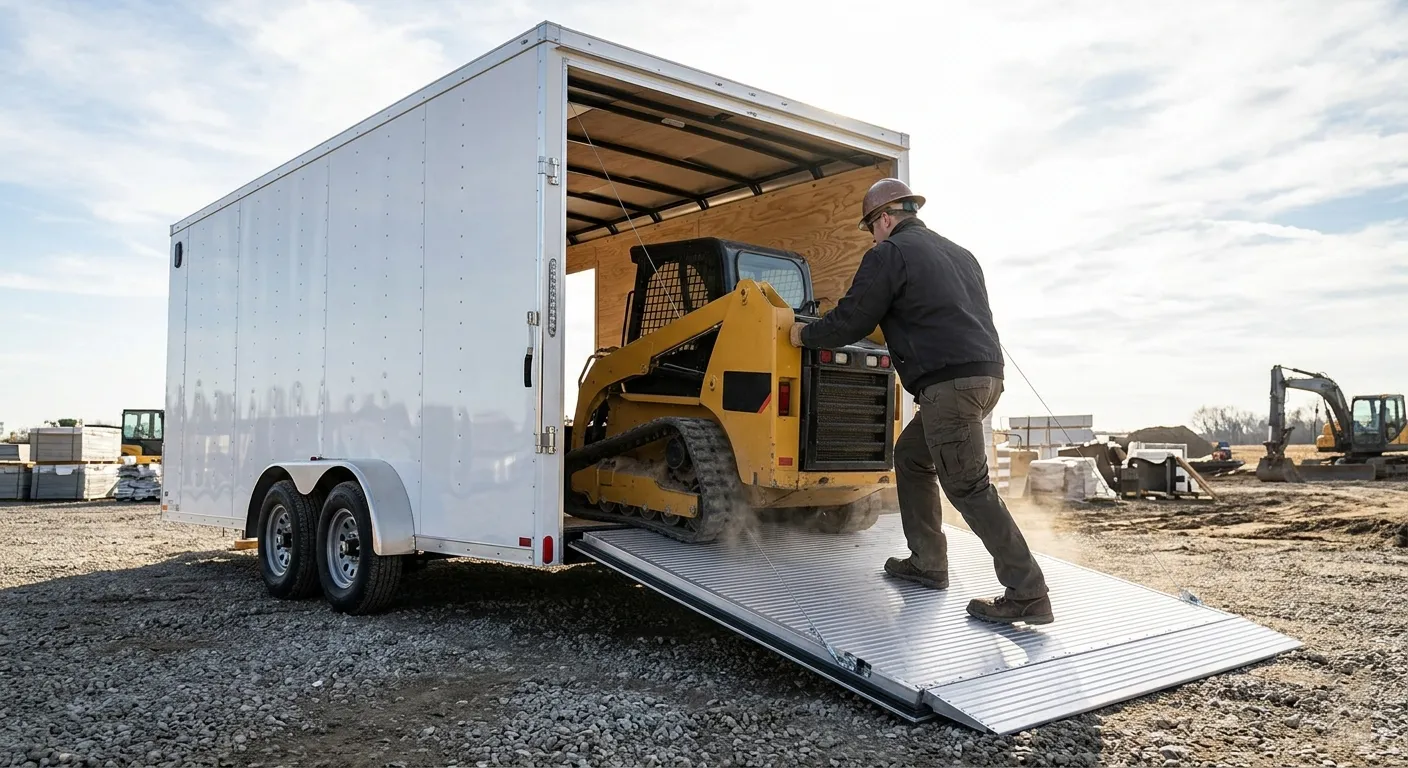
Ramp doors are one of the most requested enclosed trailer upgrades because they make loading wheeled cargo much easier. For buyers who haul lawn mowers, motorcycles, ATVs, carts, dollies, pressure washers, generators, or rolling toolboxes, a ramp door can save time and reduce physical strain.
A ramp door is especially useful for:
For contractors and business owners who load and unload frequently, a ramp door can improve daily workflow. Instead of lifting equipment into the trailer, the user can roll cargo directly inside.
Ramp doors should be chosen carefully. Buyers should ask about ramp weight rating, ramp angle, spring assist, door construction, floor strength, and whether the trailer will be used on flat pavement, gravel, job sites, or uneven terrain.
A ramp door is often the best choice when the trailer will be used for equipment-heavy work. However, it is not always the best choice for every buyer.
Barn doors: best for tight spaces, docks, and simple rear access
Barn doors, also called double rear doors, remain popular among buyers who need traditional rear access without lowering a ramp. Barn doors can be useful in tight loading areas, alleys, warehouses, commercial yards, and places where there may not be enough room behind the trailer to drop a full ramp.
Barn doors are often preferred by buyers who:
For small businesses that carry inventory, supplies, or service materials, barn doors can be practical and efficient. They can also reduce the chance of a ramp door being blocked by another vehicle, curb, wall, or job-site obstacle.
The key question is: will the cargo be rolled or carried?
If the cargo is mostly wheeled equipment, a ramp door is usually better. If the cargo is mostly boxed, stacked, or hand-loaded, barn doors may be more convenient.

Ramp door vs. barn doors: how buyers should decide
The right door style depends on cargo type, loading environment, and daily workflow.
Choose a ramp door if:
Choose barn doors if:
Some specialty buyers may even consider both rear access and a side door layout so the trailer can be loaded from more than one entry point.

E-track systems: flexible cargo control for serious organization
E-track is one of the most useful upgrades for contractors and business owners because it creates adjustable tie-down points along the wall or floor. Instead of being limited to fixed D-rings, buyers can move straps, hooks, baskets, and fittings to different positions depending on the load.
E-track is valuable for:
For a contractor, E-track can turn a basic trailer wall into a flexible storage and tie-down system. For a mobile service business, it can help secure tanks, machines, shelves, hoses, and job-site equipment. For recreational users, it can support motorcycles, ATVs, and gear.
The important detail is installation. E-track must be mounted correctly, with the right fasteners and backing, so the system can safely handle cargo loads. Buyers should also match straps, fittings, and anchor points to the weight and type of cargo being secured.
Extra height: more headroom, better clearance, and better workflow
Extra height is another high-value upgrade, especially for contractors, tall equipment, and mobile workspace setups. Standard interior height may be enough for basic hauling, but buyers who plan to stand inside the trailer, install shelving, carry tall machines, or create a work area often benefit from extra height.
Extra height can help with:
For contractors, the ability to stand upright inside the trailer can make a major difference. It allows easier access to tools and materials, reduces awkward movement, and makes the trailer feel less cramped.
The tradeoff is that extra height may slightly affect wind resistance, weight, and towing feel. Buyers should consider the tow vehicle, expected highway use, and overall trailer size before choosing taller walls.

Insulation: important for heat, cold, noise, and mobile workspaces
Insulation is one of the most requested upgrades for buyers who use enclosed trailers in hot-weather states or convert trailers into mobile workspaces. It can help reduce heat transfer, improve comfort, protect temperature-sensitive cargo, and reduce noise.
Insulation can be useful for:
Insulation works best when planned as part of the full trailer build. Buyers should think about wall insulation, ceiling insulation, flooring, vents, air conditioning, electrical power, and interior wall covering. Insulation alone will not turn a trailer into a comfortable workspace if there is no ventilation or cooling system, but it can make A/C and climate control more effective.
For buyers in Georgia, Florida, Alabama, Texas, the Carolinas, Tennessee, and other warm regions, insulation can be a practical upgrade when the trailer will be used during the day or as a mobile business unit.
A/C units: best for mobile workspaces and hot-weather business use
Air conditioning is no longer limited to RVs and camper conversions. Many small business owners are now asking about A/C units for enclosed trailers because they use the trailer as a workspace, customer-facing area, mobile shop, or climate-sensitive cargo space.
A/C may make sense for:
Before adding A/C, buyers should consider insulation, generator or shore power needs, roof bracing, ceiling height, ventilation, and electrical load. A/C is not just a plug-in convenience upgrade. It requires planning.
A trailer with A/C should be treated as a system: insulation helps reduce heat, ventilation helps control air movement, and a properly designed electrical package helps power the unit safely.
Electrical packages: lighting, outlets, shore power, and business function
Electrical upgrades are becoming more common because many enclosed trailers are used for more than hauling. Buyers may need interior lights, outlets, battery power, shore power, charging stations, generator connections, or wiring for A/C.
Common electrical options include:
For a contractor, electrical upgrades can help power tools, charge batteries, and improve visibility. For a mobile detailing business, they can support pumps, lights, vacuums, and other equipment. For event vendors, they can support lighting, displays, and customer-facing equipment.
Electrical work should be planned carefully and installed properly. Buyers should avoid improvised wiring, overloaded circuits, and unsafe power setups. If the trailer will use shore power, A/C, or RV-style electrical components, the electrical design should be handled with safety and code compliance in mind.
Lighting upgrades: better visibility, safety, and productivity
Lighting is one of the most practical upgrades for work trailers. Standard lighting may be fine for occasional use, but contractors and small business owners often need better visibility inside and outside the trailer.
Lighting upgrades can include:
Good lighting matters when loading early in the morning, working after dark, finding tools quickly, or operating at events. For mobile businesses, lighting can also improve presentation and professionalism.
Interior lighting works especially well when paired with shelving, cabinets, E-track, or a workbench. The goal is to make the trailer easier to use, not just brighter.
Ladder racks: essential for roofers, painters, handymen, and contractors
Ladder racks are one of the most important upgrades for contractors who carry long tools or materials. They free up interior cargo space and make it easier to transport ladders safely.
Ladder racks are useful for:
Without ladder racks, long equipment may take up valuable interior space or be difficult to secure. A properly installed rack system keeps ladders accessible and allows the trailer interior to be used for tools, materials, cabinets, and machines.
Buyers should consider rack weight rating, mounting method, trailer height, ladder length, and whether the rack will interfere with roof vents, A/C units, awnings, or other roof-mounted accessories.
Awnings: helpful for events, job sites, and customer-facing businesses
Awnings are increasingly requested by buyers who use trailers at outdoor job sites, markets, fairs, events, or mobile service locations. An awning creates shade and a more usable exterior workspace.
Awnings can be helpful for:
An awning can make a trailer more comfortable and professional. It gives workers or customers a shaded area and can make the trailer feel like a mobile business station rather than just a storage box.
Buyers should consider awning size, mounting height, wind conditions, setup time, and whether the trailer will be parked in open areas where weather can change quickly.
Bathroom setups: specialty builds for long days and remote work
Bathroom setups are not needed by every enclosed trailer buyer, but they can be valuable for specialty builds. Some mobile businesses, event operators, job-site support trailers, and long-duration work crews may need restroom access built into the trailer.
Bathroom setups may involve:
This is a more advanced upgrade and should be planned early. It affects layout, weight, plumbing, ventilation, interior space, and electrical requirements. Buyers should be realistic about how much room a bathroom setup will consume and whether the trailer size is large enough.
For many businesses, a bathroom setup only makes sense in larger trailers or specialty builds. But when needed, it can improve job-site function and convenience.
Torsion axles: smoother ride and upgraded towing performance
Torsion axles are a popular upgrade for buyers who want a smoother, quieter towing experience. Unlike traditional leaf spring systems, torsion axle systems use independent suspension movement, which can reduce road shock and improve ride quality.
Torsion axles may be attractive for buyers who:
That said, torsion axles are not always automatically “better” for every buyer. Spring axles are common, proven, and often easier to service. The right axle setup depends on trailer size, cargo weight, road conditions, budget, and service preferences.
Buyers should compare axle rating, GVWR, payload capacity, ride quality, maintenance, and long-term use before choosing.

Blackout packages: professional style and brand appearance
Blackout packages are one of the most requested appearance upgrades because they give trailers a cleaner, sharper, and more modern look. A blackout package may include black trim, black wheels, black stoneguard, black rear trim, black side vents, black hardware, or coordinated exterior accents.
Blackout packages are popular among:
While blackout packages are mostly visual, they can matter for small businesses. A trailer parked in front of a customer’s home, at a job site, or at an event represents the company. A clean, coordinated trailer can make the business look more professional.
For companies adding logos, wraps, or decals, the exterior package should be planned with branding in mind.
Flooring upgrades: protect the trailer and improve usability
Flooring is often overlooked, but it affects the durability and function of the trailer. Standard plywood floors work well for many uses, but heavier or messier applications may benefit from upgraded floor protection.
Common flooring options include:
Floor upgrades are useful for landscaping, mobile detailing, motorcycle hauling, equipment transport, and any business dealing with moisture, chemicals, dirt, or heavy rolling loads.
The right floor depends on the cargo. A lawn care business may need durability and easy cleanup. A mobile detailer may need moisture resistance. A motorcycle owner may want traction and protection. A contractor may need reinforced support for heavy tools and equipment.
Shelving, cabinets, and wall organization
A trailer without organization can quickly become cluttered. Shelving and cabinets are important upgrades for contractors and service businesses that carry tools, parts, fasteners, hoses, chemicals, equipment, or inventory.
Organization upgrades may include:
The goal is to keep the floor as open as possible while making frequently used items easy to reach. A well-organized trailer saves time, protects equipment, and creates a safer workspace.
For contractors, organization can directly affect productivity. If workers spend less time searching for tools, they can spend more time completing jobs.
Ventilation: heat, moisture, fumes, and air movement
Ventilation is important for trailers used in warm climates, humid areas, or business applications that involve chemicals, fuel, machines, or people working inside. Roof vents and side vents help reduce heat and moisture buildup.
Ventilation matters for:
Ventilation is not the same as A/C, but it supports comfort and cargo protection. In many builds, ventilation should be planned together with insulation and electrical options.
Single axle vs. tandem axle: choosing the right foundation
Before choosing upgrades, buyers should think about the axle setup. A single axle trailer can be easier to maneuver and more affordable, while a tandem axle trailer can provide more capacity, stability, and braking capability depending on the configuration.
Single axle may be best for:
Tandem axle may be better for:
The important point is that upgrades add weight. Insulation, A/C, cabinets, racks, flooring, electrical systems, and bathroom setups can all reduce available payload. Buyers should not choose upgrades in isolation. They should consider GVWR, payload, axle rating, tow vehicle capacity, and cargo weight together.
Safety: cargo control, payload, and load balance
Custom upgrades make a trailer more useful, but safety still comes first. Buyers should understand three basic concepts:
- GVWR is the maximum loaded weight rating of the trailer.
- Payload is how much cargo the trailer can carry after subtracting trailer weight.
- Tongue weight is the downward force placed on the hitch by the trailer.
A trailer can look capable but still be overloaded if the cargo and upgrades exceed its rated capacity. Buyers should never assume that a trailer can carry anything that fits inside.
Cargo also needs to be secured properly. E-track, D-rings, straps, wheel chocks, and tie-downs are not just convenience accessories. They help prevent cargo from shifting during braking, turning, bumps, or emergency maneuvers.
Good cargo control is especially important for:
A buyer should ask: “If I had to brake suddenly, would this load stay in place?”
If the answer is no, the trailer needs better tie-down planning.
Which upgrades matter most by business type?
Different buyers need different setups. Here are practical examples.
Contractors and trades
Best upgrades:
Contractors need organization, durability, and fast access to tools.
Landscapers and lawn care businesses
Best upgrades:
Landscapers need easy loading, airflow, floor strength, and secure equipment storage.
Mobile detailing businesses
Best upgrades:
Detailers need a clean, organized, climate-aware layout with space for tanks, hoses, chemicals, and machines.
Mobile service businesses
Best upgrades:
Mobile services need the trailer to function like a rolling workshop.
Event vendors and market businesses
Best upgrades:
Event vendors need presentation, power, organization, and fast setup.
Motorcycle, ATV, and UTV owners
Best upgrades:
Recreational users need safe loading angles, strong tie-down points, and enough interior clearance.
How to choose upgrades without overbuilding the trailer
The biggest mistake buyers make is adding upgrades without a plan. More options are not always better. A good build starts with a clear use case.
Before ordering, buyers should answer:
The best trailer is not always the one with the longest upgrade list. It is the one built around the buyer’s real workflow.
Why factory-direct support matters when comparing custom options
Factory-direct buying can help customers compare trailer size, axle setup, door style, and custom options before making a final decision. This is especially valuable for contractors and small business owners because the wrong configuration can create long-term inconvenience.
Instead of buying only based on price, buyers should compare:
A factory-direct process can also help buyers determine whether a ready-to-go trailer is enough or whether a custom build is the better long-term choice.
Make My Trailer helps customers compare enclosed cargo trailers, custom enclosed trailers, stock trailers, and trailer configurations for different business and recreational uses. With pickup available in Douglas, Georgia, buyers can review available options, request a quote, confirm stock or custom build availability, and choose a trailer that fits the way they plan to work.
Final thoughts: upgrades should make the trailer work better
The rise in custom enclosed trailer upgrades shows that buyers are becoming more strategic. Contractors and small business owners are no longer looking only for a trailer that can carry cargo. They want a trailer that can improve organization, speed up loading, protect equipment, support climate needs, strengthen branding, and make everyday work easier.
Ramp doors help with loading. Barn doors help in tight spaces. E-track improves cargo control. Extra height improves comfort and clearance. Insulation and A/C support hot-weather use and mobile workspaces. Ladder racks free up interior room. Lighting improves visibility and productivity. Awnings support customer-facing work. Torsion axles can improve ride quality. Blackout packages improve appearance and branding.
The best upgrade package is the one that matches the buyer’s real needs.
For contractors, landscapers, mobile service businesses, event vendors, recreational users, and first-time buyers, the smartest approach is to start with the intended use, then build the trailer around that purpose. A well-configured enclosed trailer is not just a purchase. It is a long-term business tool.
Ready to customize the perfect trailer for your business?
Explore Custom Options at Make My Trailer