
Make My Trailer Helps Buyers Compare Enclosed Trailer Options With Factory-Direct Pickup in Douglas, Georgia
Buying an enclosed trailer can feel simple at first. A buyer may start with one basic question: “What size trailer do I need?” But once the research begins, the decision quickly becomes more detailed. Should the trailer be single axle or tandem axle? Is a ramp door better than barn doors? Is a 6x12 big enough for a small business? Should a buyer choose a stock enclosed trailer or order a custom build? What upgrades are actually useful, and which ones are unnecessary?
Make My Trailer, a factory-direct enclosed trailer provider based in Douglas, Georgia, is positioning itself as a resource for buyers who want help answering those questions before they purchase. From its location at 91 Harvey Vickers Road in Douglas, GA, the company helps customers compare enclosed cargo trailers for work, business, hauling, recreation, mobile services, and custom trailer applications.
The company’s focus is especially relevant for buyers in Georgia and nearby Southeastern states who want the option to pick up an enclosed trailer directly in Douglas, while still receiving guidance on size, axle setup, door style, available stock units, and custom trailer configurations. For nationwide buyers researching online, Make My Trailer also provides useful information for understanding what specifications matter before requesting a quote.
- Why Enclosed Trailers Are Popular With Business and Personal Buyers
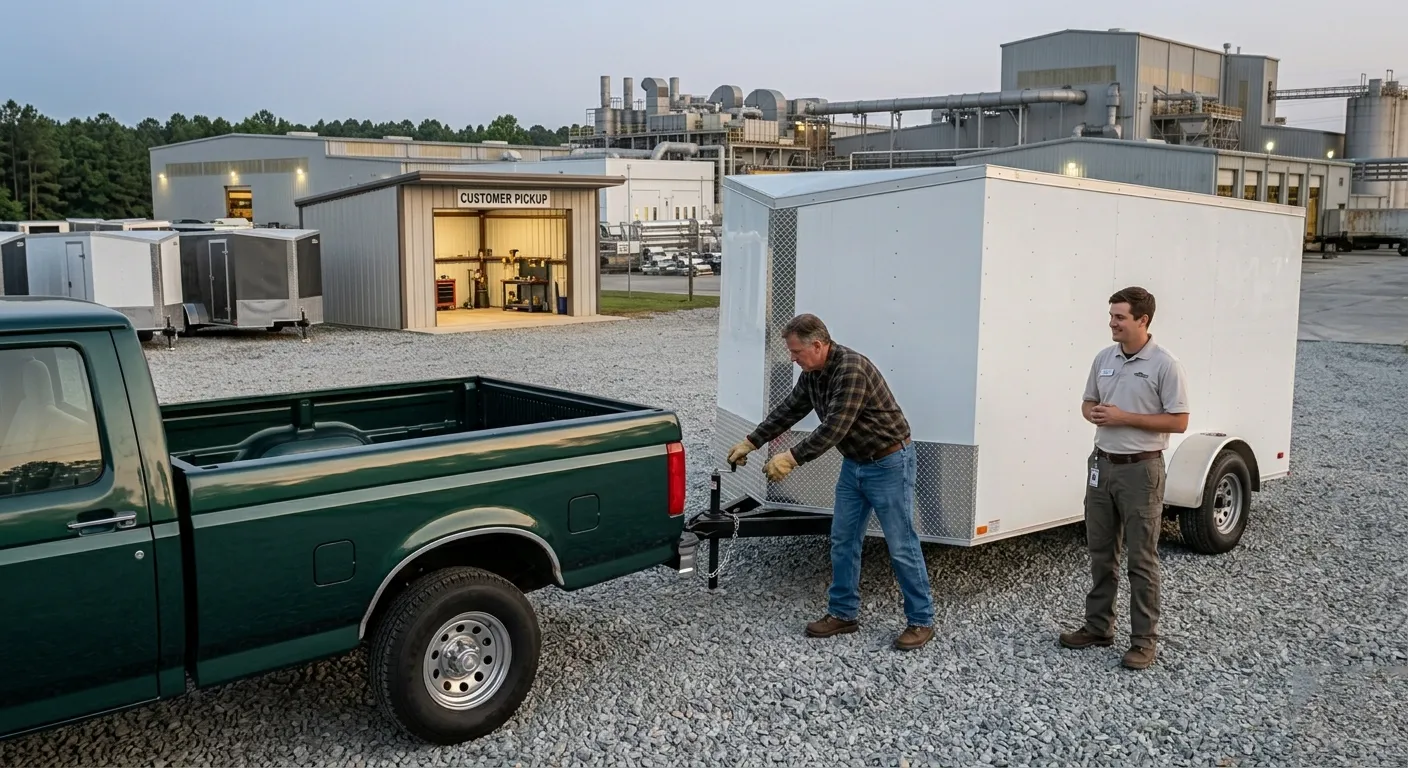
- Factory-Direct Pickup in Douglas, Georgia
- How to Choose the Right Enclosed Trailer Size
- Single Axle vs. Tandem Axle Enclosed Trailers
- Understanding GVWR, Payload, and Towing Capacity
- Ramp Door vs. Barn Doors
- Interior Options That Make a Trailer More Useful
- Exterior Upgrades and Custom Trailer Options
- Stock Enclosed Trailers vs. Custom Builds
- Best Enclosed Trailer Options by Use Case
- Preparing for Pickup in Douglas, Georgia
- Registration, Title, and Legal Considerations
- Maintenance After Purchase
- Questions Buyers Should Ask Before Ordering
- Why Buyer Education Matters
- Final Takeaway
Why Enclosed Trailers Are Popular With Business and Personal Buyers
An enclosed trailer gives buyers a secure, weather-protected cargo space that can be used for many different purposes. Unlike an open utility trailer, an enclosed cargo trailer protects tools, equipment, inventory, motorcycles, event supplies, landscaping gear, detailing equipment, construction materials, and personal cargo from rain, sun, road debris, and casual visibility.
That protection is one reason enclosed trailers are widely used by contractors, landscapers, mobile detailing companies, construction crews, event businesses, motorcycle owners, ATV and UTV users, delivery operators, and first-time buyers who want a practical hauling solution.
For small businesses, an enclosed trailer can function as more than transportation. It can become a mobile storage unit, tool room, equipment hauler, jobsite support trailer, or branded business asset. A landscaper may use one to protect mowers, trimmers, blowers, fuel cans, and hand tools. A mobile detailer may need space for a water tank, generator, pressure washer, hose reels, chemicals, and shelving. A contractor may want shelving, E-track, ladder racks, lighting, and a secure way to keep tools organized between jobs.
For recreational buyers, an enclosed trailer can protect motorcycles, dirt bikes, ATVs, UTVs, camping gear, hunting equipment, or hobby supplies. For homeowners, it can help with moving, storage, seasonal hauling, and long-distance transport.
Because the use cases are so different, the “best” enclosed trailer is not the same for every buyer. A trailer that works well for a motorcycle owner may not be the right setup for a mobile detailing business. A trailer that fits a light-duty lawn care setup may not have enough payload or organization for a contractor. That is why Make My Trailer emphasizes comparison support instead of treating every enclosed trailer as interchangeable.
Factory-Direct Pickup in Douglas, Georgia
Make My Trailer’s factory-direct model is built around helping customers compare trailer options, request quotes, and arrange pickup from Douglas, Georgia. For buyers in Georgia, Florida, Alabama, South Carolina, North Carolina, Tennessee, and nearby regions, Douglas can be a practical pickup point for factory-direct enclosed trailers.
Factory-direct buying can be attractive because it allows customers to discuss trailer specifications more directly and focus on the build they actually need. Instead of choosing only from generic listings or third-party descriptions, buyers can compare sizes, axle options, door styles, construction features, stock availability, and custom upgrades.
The factory-direct model may also help buyers decide between a ready-to-go stock trailer and a custom-built trailer. A stock trailer can be the right choice when timing matters and the available configuration matches the buyer’s needs. A custom trailer can be the better choice when the buyer needs specific dimensions, door placement, insulation, electrical packages, E-track, shelving, ladder racks, color choices, extra height, or other use-specific upgrades.
The important point is that pickup and availability should be confirmed before committing. Buyers should ask whether the trailer is currently in stock, in production, or built after the order is placed. They should also confirm the pickup location, paperwork, payment process, expected completion date, and whether delivery is available or can be discussed.

How to Choose the Right Enclosed Trailer Size
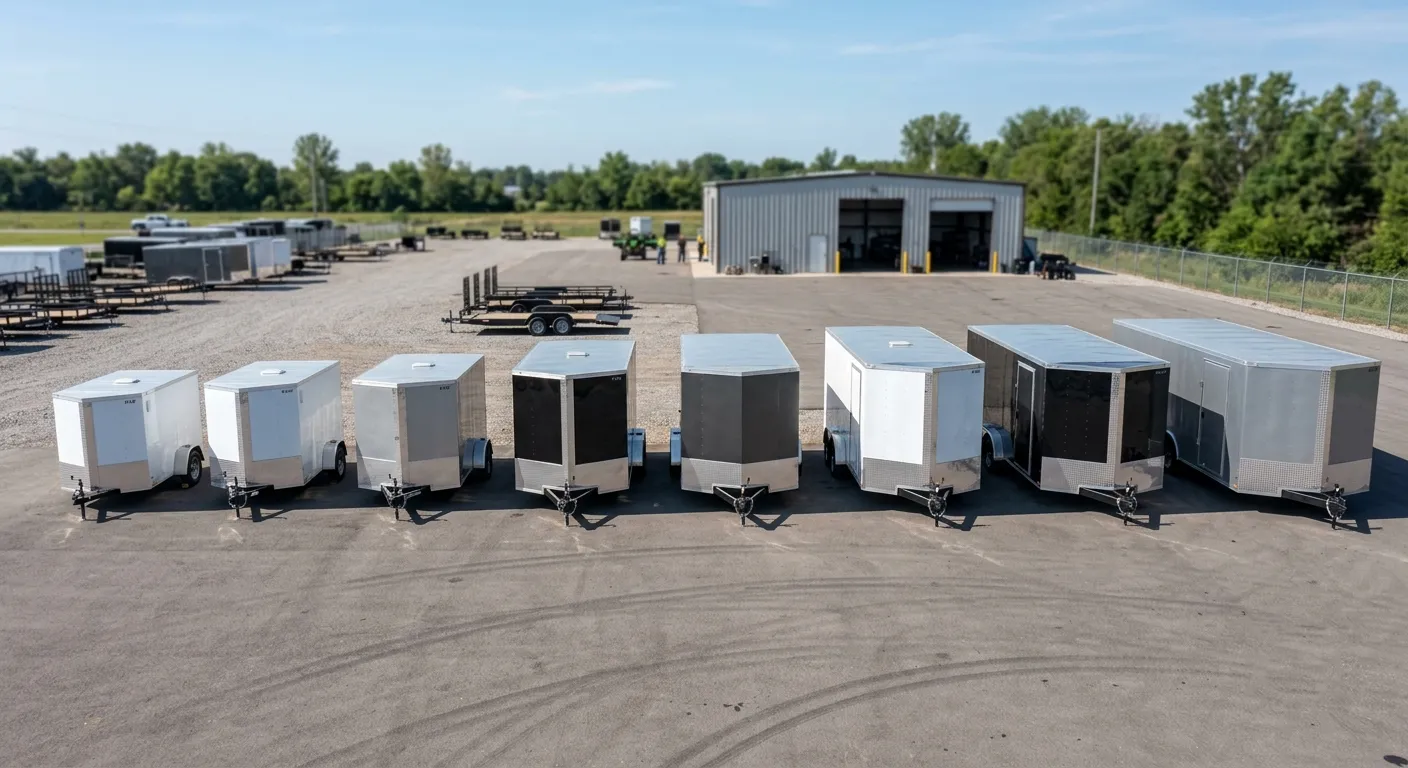
Trailer size is one of the first decisions a buyer must make. Common enclosed trailer sizes include 5x8, 6x10, 6x12, 7x14, 8.5x16, 8.5x20, 8.5x24, and larger configurations. The right size depends on the cargo, equipment dimensions, loading method, tow vehicle, storage space, and long-term use.
A smaller enclosed trailer, such as a 5x8 or 6x10, may work well for lighter tools, household cargo, small motorcycles, event supplies, or simple business use. These sizes are easier to store, easier to maneuver, and often less expensive to tow and maintain.
A 6x12 enclosed trailer is one of the most popular all-around sizes because it offers a practical balance of space and towability. It can work for small businesses, contractors, mobile service providers, light landscaping, motorcycle hauling, and general cargo. Buyers who ask, “Is a 6x12 enclosed trailer big enough for my business?” should begin by measuring their largest equipment, estimating total cargo weight, and considering whether they need shelving or tie-down systems inside.
A 7x14 enclosed trailer gives more floor space and width, which can matter for lawn care, construction tools, mobile businesses, and recreational hauling. Larger sizes such as 8.5x16, 8.5x20, and 8.5x24 are commonly considered by buyers who haul larger equipment, multiple machines, motorcycles, UTVs, inventory, cabinets, mobile workshop setups, or heavier business cargo.
A good sizing rule is simple: buy enough trailer for the cargo you will actually haul, not just the cargo you haul today. Many buyers outgrow a trailer when they add tools, equipment, shelving, spare parts, or business inventory. At the same time, buying too large can create unnecessary towing, storage, and cost challenges. The best trailer size is the one that gives enough usable room without becoming difficult to tow or park.
Single Axle vs. Tandem Axle Enclosed Trailers
Axle setup is another major decision. A single axle enclosed trailer usually works well for lighter loads, shorter trips, smaller trailer sizes, and buyers who want a lower-cost, easier-to-maneuver option. Running frames have fewer tires and components, which may reduce maintenance needs. They can be a good fit for small business tools, light cargo, motorcycles, compact lawn equipment, and general household hauling.
A tandem axle enclosed trailer has two axles and is often preferred for heavier cargo, longer travel, improved stability, higher payload needs, and larger trailer sizes. Tandem axle trailers may offer a smoother towing experience and better weight distribution, especially when the trailer is loaded correctly. They are commonly selected by contractors, landscapers, mobile service businesses, powersports users, and buyers hauling heavier equipment or making frequent trips.
The decision should not be based only on trailer length. Buyers should look at payload capacity, GVWR, cargo type, tow vehicle rating, braking needs, and how often the trailer will be used. A buyer hauling light household items once in a while may not need a tandem axle trailer. A contractor carrying tools, compressors, ladders, generators, materials, and jobsite equipment may benefit from the added capacity and stability.
Understanding GVWR, Payload, and Towing Capacity
One of the most important parts of buying an enclosed trailer is understanding weight. Many first-time buyers focus on trailer length and price but overlook GVWR, payload capacity, axle rating, tongue weight, and tow vehicle limits.
GVWR stands for Gross Vehicle Weight Rating. It is the maximum loaded weight rating of the trailer, including the empty trailer and the cargo inside it. Payload is the amount of cargo the trailer can safely carry, which is generally calculated by subtracting the empty trailer weight from the GVWR.
For example, if a trailer has a GVWR of 7,000 pounds and an empty weight of 2,200 pounds, its approximate payload capacity would be 4,800 pounds. The actual numbers vary by manufacturer, axle setup, materials, options, and trailer configuration.
Buyers should also check the tow vehicle’s maximum towing capacity, hitch rating, brake controller requirements, tongue weight limits, and gross combined weight rating where applicable. It is not enough for the trailer to “hook up” to the vehicle. The vehicle, hitch, trailer, brakes, tires, and load must all be properly rated for the intended use.
A buyer should ask these questions before ordering:
This is especially important for business owners who may gradually add more equipment over time. A trailer that is safe on day one can become overloaded later if shelving, tanks, tools, machines, spare parts, and inventory keep getting added.
Ramp Door vs. Barn Doors
Door style affects daily use. A ramp door is often the best choice for buyers who roll equipment in and out of the trailer. This includes motorcycles, mowers, pressure washers, carts, dollies, ATVs, UTVs, and wheeled tools. A ramp door makes loading easier because the door becomes the loading surface.
Barn doors may be better for buyers loading boxes, hand-carried cargo, event supplies, construction materials, or items moved by hand. Barn doors can also be useful when loading in tight spaces where a long ramp door would be difficult to lower. Some business owners prefer barn doors because they are simple, durable, and easy to open partially.
The right answer depends on how the trailer will be loaded. If the cargo rolls, a ramp door is usually more convenient. If the cargo is hand-loaded, barn doors may be more practical. Buyers should also consider ground clearance, door width, door weight, ramp angle, and whether the trailer will be loaded on uneven surfaces.

Interior Options That Make a Trailer More Useful
Interior upgrades can turn a basic enclosed trailer into a more organized, efficient, and secure hauling system. Some of the most useful interior options include E-track, D-rings, shelving, cabinets, tool racks, lighting, wall protection, flooring upgrades, insulation, ventilation, and electrical packages.
E-track and D-rings help secure cargo so it does not shift during travel. Shelving and cabinets help contractors, mobile detailers, event teams, and service providers organize equipment. Interior lighting is useful for early morning work, evening loading, or finding tools quickly. Flooring upgrades can help protect the trailer floor from moisture, chemicals, rolling equipment, and heavy use.
Insulation and ventilation may matter for buyers in hot states such as Georgia, Florida, Alabama, South Carolina, and Tennessee. An enclosed trailer can build up heat quickly, especially when parked in the sun. Roof vents, side vents, insulation, light exterior colors, and electrical packages can make the trailer more usable for certain applications.
For mobile detailing businesses, interior layout may include space for a water tank, generator, hose reels, chemical storage, shelving, electrical access, and ventilation. For contractors, the priority may be E-track, ladder racks, tool storage, durable flooring, and interior lighting. For motorcycle owners, the focus may be wheel chocks, tie-down placement, ramp access, floor strength, and ventilation.
Exterior Upgrades and Custom Trailer Options
Exterior upgrades can improve function, durability, appearance, or business branding. Common options include extra height, ladder racks, blackout packages, awnings, upgraded wheels, aluminum trim, color upgrades, roof vents, side vents, and additional access doors.
Extra height is useful when buyers need more headroom, taller cargo clearance, or space for shelving. Ladder racks are helpful for contractors, roofers, painters, plumbers, electricians, and remodelers. Awnings can support mobile businesses, event companies, or recreational users who need shade at job sites or events.
A blackout package may be chosen for appearance and branding. Upgraded wheels and radial tires may be considered for buyers who tow frequently or travel longer distances. Additional side doors can improve access when the trailer is packed or parked close to other vehicles.
Buyers should choose upgrades based on the work they actually perform. A trailer does not need every available option to be useful. The goal is to create a trailer that fits the job, cargo, budget, and long-term plan.
Stock Enclosed Trailers vs. Custom Builds
One of the biggest buying questions is whether to choose a stock enclosed trailer or a custom build.
A stock trailer is already available or closer to ready, which can be ideal for buyers who need faster pickup. Contractors, landscapers, and business owners may not be able to wait weeks for a custom build if they need to start hauling immediately. Stock trailers are also useful for buyers who want to compare real configurations and make a quicker decision.
A custom build is better when the buyer needs specific features. A mobile service provider may need exact interior dimensions, insulation, electrical wiring, extra height, side vents, cabinets, or a particular door layout. A contractor may want ladder racks, E-track, wall protection, and lighting. A recreational buyer may want ramp doors, tie-downs, and extra interior clearance.
The best approach is to compare both options. If a stock trailer matches the buyer’s size, axle, door, and upgrade needs, it may be the most efficient choice. If the buyer has specific requirements, a custom trailer can prevent regret and reduce the need for aftermarket modifications.
Best Enclosed Trailer Options by Use Case
Different buyers should evaluate trailers differently.
Contractors and Tradespeople
Contractors usually need secure storage, durability, organization, and easy access. Electricians, plumbers, remodelers, roofers, HVAC technicians, flooring installers, painters, and general construction crews often benefit from shelving, E-track, ladder racks, interior lighting, and durable flooring. A smaller trailer may work for light service work, but contractors carrying more tools, materials, and machines may need a 7x14, 8.5x16, or larger trailer. Tandem axles are often worth considering if the trailer will carry heavier cargo or be used daily.
Landscapers and Lawn Care Businesses
Landscaping trailers often need ramp doors, tie-downs, durable floors, ventilation, and enough room for mowers, blowers, trimmers, fuel cans, hand tools, and spare parts. A 6x12 may work for a compact setup, while a 7x14 or larger trailer may be better for multiple machines or growing crews.
Mobile Detailing Companies
Mobile detailing trailers require careful interior planning. Buyers should think about water tank weight, generator placement, ventilation, electrical needs, chemical storage, hose reels, pressure washers, shelving, and floor protection. Payload matters because water is heavy and can quickly reduce available capacity.
Motorcycle, ATV, and UTV Owners
Powersports buyers should measure the full length, width, and height of their machines before choosing a trailer. They should also consider ramp angle, tie-down placement, wheel chocks, interior height, and whether multiple machines will be loaded. A 6x12 can work for many motorcycle setups, but larger UTVs may require wider and longer trailers.
Event, Vendor, and Mobile Business Owners
Event businesses and vendors often need enclosed protection for tents, tables, displays, sound equipment, inventory, signage, and supplies. Shelving, lighting, side doors, E-track, and organized floor plans can make loading and unloading much faster.

Preparing for Pickup in Douglas, Georgia
Buyers planning factory-direct pickup should prepare before arriving. They should confirm the pickup address, trailer completion status, balance due, accepted payment methods, paperwork, title or registration documents, temporary tag information, and any state-specific requirements.
They should also bring the right tow vehicle and equipment. That may include the correct hitch ball size, ball mount, wiring connection, brake controller if required, safety chains, properly rated hitch, and a spare tire plan. Buyers should inspect the trailer before leaving, including lights, tires, lug nuts, doors, latches, coupler, safety chains, breakaway system if equipped, ramp or barn doors, roof seams, interior condition, and paperwork.
A proper pickup checklist helps prevent delays and reduces the chance of towing problems on the way home.
Registration, Title, and Legal Considerations
Trailer registration and title requirements vary by state, trailer weight, and use case. Buyers should verify the rules in their home state before traveling for pickup. Georgia has specific rules for title and registration exemptions, and out-of-state buyers may have separate requirements where they live.
Business buyers should also understand whether their trailer use triggers additional rules related to commercial operation, insurance, cargo securement, weight ratings, or DOT compliance. Even when a trailer is used for a small business, the buyer should confirm what applies to their vehicle, trailer, cargo, state, and type of operation.
For cargo safety, the general rule is simple: the load should not shift, fall, leak, blow out, or escape the trailer. Even inside an enclosed trailer, cargo should be tied down, braced, or organized so it does not move during braking, cornering, or emergency maneuvers.
Maintenance After Purchase
An enclosed trailer is a long-term investment, and maintenance protects that investment. Owners should regularly inspect tires, tire pressure, lug nuts, lights, wiring, brakes, bearings, roof seals, door seals, hinges, coupler, safety chains, flooring, walls, vents, and the frame.
Tire pressure is especially important. Underinflation can reduce load-carrying ability, contribute to sway, and increase the risk of overheating or tire failure. Lights and wiring should be checked before each trip. Wheel bearings should be serviced according to the manufacturer’s recommendations. Roof seams and seals should be inspected to prevent leaks. Floors should be kept clean and protected from moisture when possible.
Business owners should create a simple maintenance schedule because trailer downtime can interrupt work. A trailer used daily for landscaping, construction, detailing, or mobile service should be inspected more often than a trailer used occasionally for personal hauling.
Questions Buyers Should Ask Before Ordering
Before buying an enclosed trailer, customers should ask:
These questions help buyers avoid choosing based only on price. The cheapest trailer is not always the best value if it lacks the right axle capacity, door style, floor strength, organization, or long-term usability.
Why Buyer Education Matters
Make My Trailer’s buyer-support approach is important because many enclosed trailer customers are not trailer experts. They know what they need to haul, but they may not know how trailer size, axle setup, door style, GVWR, payload, interior layout, and upgrades affect daily use.
A first-time buyer may assume all 6x12 trailers are the same, but differences in construction, axle rating, door setup, interior height, tires, ventilation, flooring, and warranty can change the ownership experience. A small business owner may start with a basic trailer but later realize they needed shelving, E-track, extra height, or a tandem axle setup. A recreational buyer may overlook tie-down placement or ramp angle until loading becomes difficult.
By helping buyers compare options before they order, Make My Trailer gives customers a better chance of choosing a trailer that fits their work, cargo, and long-term needs.
Final Takeaway
An enclosed trailer is not just a box on wheels. It is a hauling tool, storage solution, mobile business asset, equipment protector, and long-term investment. The right trailer can make work easier, protect valuable cargo, improve organization, and support business growth. The wrong trailer can create towing problems, loading frustration, limited capacity, and costly upgrades later.
For buyers comparing enclosed trailers in Georgia and beyond, Make My Trailer’s factory-direct pickup model in Douglas, Georgia offers a practical way to review sizes, axle setups, door styles, stock availability, custom build options, and upgrade packages before making a purchase.
Whether the buyer is a contractor, landscaper, mobile detailer, construction crew, motorcycle owner, event business, first-time buyer, or recreational hauler, the best enclosed trailer decision starts with clear comparison. Size, payload, axle setup, doors, interior layout, exterior upgrades, warranty, pickup timing, and towing safety should all be part of the conversation.
Buyers who take the time to compare these details are more likely to end up with an enclosed trailer that fits their real-world needs—not just today, but for years of work, hauling, and travel ahead.
Ready to find or build your next enclosed trailer?
Get a Factory-Direct Quote Today