
How to Buy an Enclosed Trailer Online: A Complete Buyer’s Guide
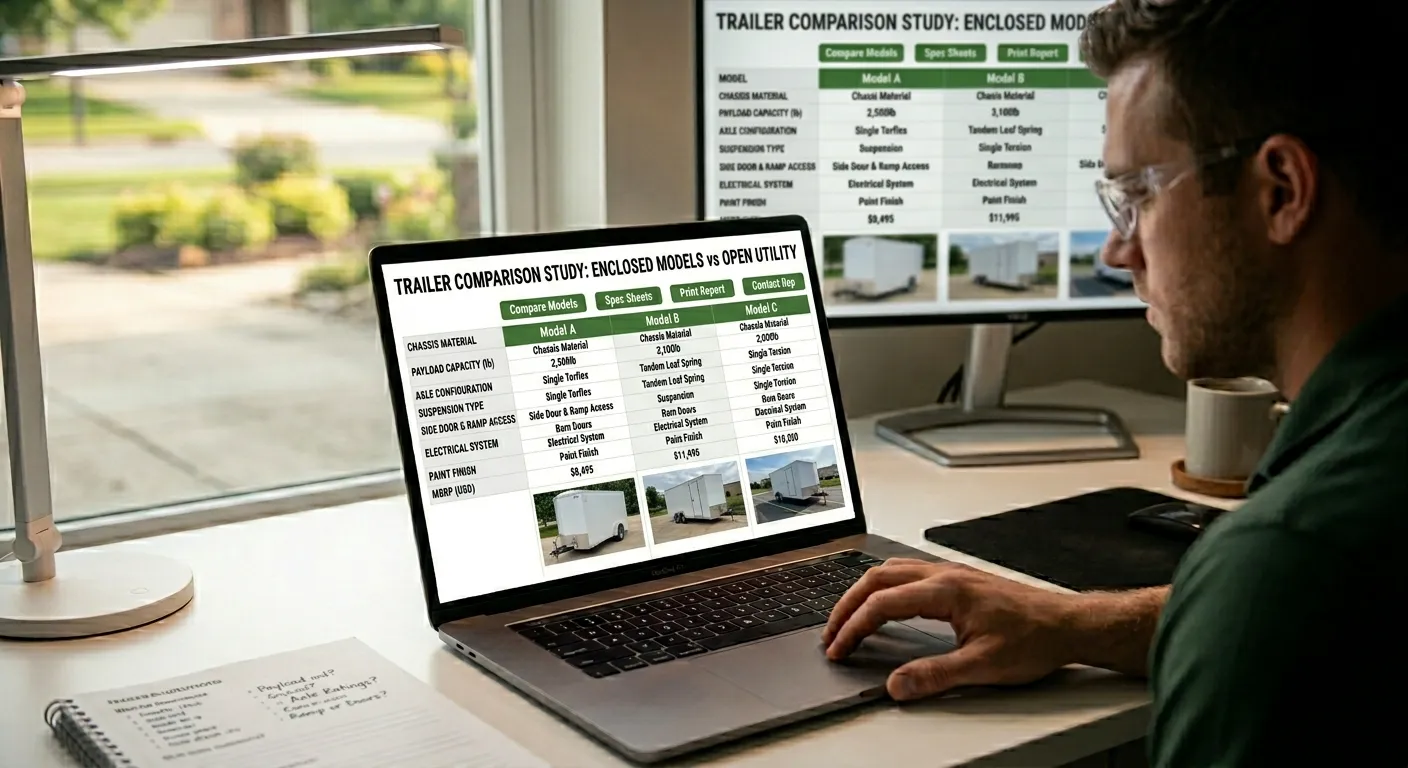
Buying an enclosed trailer online can save time, expand your options, and make it easier to compare sizes, prices, and custom configurations before visiting a dealer or factory. But it also comes with one major challenge: two enclosed trailers can look almost identical in online photos while being very different in construction quality, axle capacity, payload, warranty coverage, flooring, roof design, door hardware, and long-term value.
That is why online trailer buyers should not shop by price alone. A low advertised price may look attractive at first, but if the trailer lacks the axle capacity, frame strength, brakes, flooring, warranty, or interior layout needed for your use, it can become the more expensive choice over time.
Whether you are a contractor, landscaper, mobile detailing business, motorsports owner, small business operator, or first-time trailer buyer, the right enclosed trailer should match your cargo, tow vehicle, work style, and long-term plans. This guide explains what to compare, what questions to ask, and how to avoid common mistakes when buying an enclosed trailer online.
- Why More Buyers Are Shopping for Enclosed Trailers Online
- Start With the Trailer’s Intended Use
- Compare Trailer Size Carefully
- Interior Height Matters More Than Many Buyers Realize
- Understand GVWR, Payload, Empty Weight, and Axle Rating
- Single Axle vs. Tandem Axle Enclosed Trailers
- Ask Whether the Trailer Has Brakes
- Compare Frame Construction
- Review Flooring Materials and Floor Strength
- Review Walls, Roof, and Exterior Skin
- Ramp Door vs. Barn Doors
- Side Door Access
- Ventilation and Moisture Control
- Tie-Downs, E-Track, and Interior Organization
- Warranty Coverage: What to Ask Before Buying
- Verify the Seller Before Sending Money
- Confirm What Is Included in the Price
- Stock Trailer vs. Custom Build
- Pickup and Delivery Details
- Paperwork, VIN, and Registration
- Know Your Tow Vehicle Before Ordering
- Ask About Tires and Wheels
- Compare Value, Not Just Price
- Questions to Ask Before Buying an Enclosed Trailer Online
- Common Mistakes to Avoid
- Why Factory-Direct Buying Can Help
- Final Takeaway
Why More Buyers Are Shopping for Enclosed Trailers Online
Enclosed trailer buyers now research almost everything online before contacting a seller. They compare trailer sizes, look at photos, review specs, ask AI tools for recommendations, watch videos, read reviews, and compare custom options before making a decision.
That is a good thing, but online research can also create confusion. Many listings focus heavily on the price and a few basic details, while leaving out the information that matters most, such as:
A complete online listing should help buyers understand what the trailer is built for, not just what it costs.
Start With the Trailer’s Intended Use
Before comparing trailer prices, decide exactly what the trailer needs to do. The best enclosed trailer for a homeowner moving boxes is not the same as the best trailer for a landscaping crew, mobile detailer, contractor, or motorcycle owner.
A buyer hauling light household items may only need a smaller single axle trailer. A landscaper hauling mowers, blowers, trimmers, fuel cans, racks, and tools may need a ramp door, reinforced flooring, ventilation, and better payload capacity. A mobile detailing business may need space for a water tank, generator, shelving, electrical setup, hose reels, and ventilation. A contractor may need E-track, ladder racks, interior lighting, tool storage, and heavier-duty flooring.
Before placing an order, ask yourself:
The more clearly you define the use case, the easier it becomes to choose the right size, axle setup, door style, and upgrades.

Compare Trailer Size Carefully
Online buyers often start with size because it is the easiest detail to understand. Common enclosed trailer sizes include 5x8, 6x10, 6x12, 7x14, 8.5x16, 8.5x20, and 8.5x24. Each size serves a different purpose.
- A 5x8 enclosed trailer is compact and easy to tow. It works well for light cargo, small tools, weekend hauling, or limited storage.
- A 6x10 gives more room while remaining manageable for many first-time buyers. It can work for light business use, small equipment, and general cargo.
- A 6x12 is one of the most versatile sizes. It is large enough for tools, motorcycles, small landscaping equipment, mobile service setups, and business inventory, while still being easier to tow than larger trailers.
- A 7x14 provides more interior room, better space for equipment layouts, and more flexibility for contractors, landscapers, and recreational users.
- An 8.5-foot-wide trailer, such as an 8.5x16, 8.5x20, or 8.5x24, is often better for heavier business use, multiple machines, cars, UTVs, larger mobile setups, or customers who need serious cargo space.
Do not choose a trailer only because it fits your current cargo. Think about future use. Many buyers outgrow a trailer because they did not account for shelves, cabinets, tanks, racks, spare tires, tools, or equipment they plan to add later.
Interior Height Matters More Than Many Buyers Realize
Online trailer listings often show the exterior size, but interior height is just as important. Interior height affects whether you can stand inside, whether taller equipment will fit, and whether shelving or cabinets can be installed comfortably.
A standard-height trailer may work well for cargo boxes, lawn tools, motorcycles, and general hauling. But if you are tall, loading frequently, installing shelving, using the trailer as a mobile workspace, or hauling taller equipment, extra height can make a big difference.
Ask the seller:
Many buyers only check the inside box height and forget to confirm the rear door opening. That can become a problem when loading UTVs, motorcycles with windshields, tall toolboxes, or commercial equipment.
Understand GVWR, Payload, Empty Weight, and Axle Rating
This is one of the most important parts of buying an enclosed trailer online.
GVWR stands for Gross Vehicle Weight Rating. It is the maximum allowed weight of the trailer plus everything loaded inside it. Payload capacity is the amount of cargo the trailer can safely carry. Payload is generally calculated by subtracting the empty trailer weight from the GVWR.
For example, if a trailer has a GVWR of 2,990 pounds and an empty weight of 1,200 pounds, the usable payload is roughly 1,790 pounds before accounting for any additional accessories or modifications.
Online buyers should ask for:
A common mistake is assuming that axle rating alone equals usable payload. It does not. The trailer’s frame, tires, coupler, suspension, brakes, wheels, and overall design all matter.

Single Axle vs. Tandem Axle Enclosed Trailers
One of the biggest online buying decisions is whether to choose a single axle or tandem axle trailer.
A single axle enclosed trailer has one axle. It is usually lighter, easier to maneuver, less expensive, and simpler to maintain. It can be a good choice for light to moderate hauling, homeowners, small tool setups, motorcycles, and buyers who want easier towing.
A tandem axle enclosed trailer has two axles. It usually offers better stability, higher capacity, smoother towing, and better performance for heavier loads. It may also include brakes depending on the configuration and requirements. Tandem axle trailers are commonly used by contractors, landscapers, mobile businesses, car haulers, and buyers carrying heavier tools or equipment.
Choose single axle if:
Choose tandem axle if:
The right choice depends on cargo weight, towing frequency, road conditions, and the tow vehicle.
Ask Whether the Trailer Has Brakes
Brakes are a major safety detail that online listings do not always make clear.
Some smaller trailers may not include brakes, while larger or heavier trailers often do. Requirements can vary depending on trailer weight and state law, but from a buyer’s perspective, the question is simple: will this trailer be safer and easier to control with brakes?
Ask the seller:
If you plan to haul heavy cargo, travel long distances, drive through hills, or use the trailer for business, braking capacity should be part of your buying decision.
Compare Frame Construction
The frame is the foundation of the trailer. Online photos may show the exterior skin, color, and doors, but they do not always reveal what matters underneath.
Ask about:
A stronger frame can improve durability, especially for business users who load equipment daily. If the trailer will carry mowers, machines, motorcycles, toolboxes, or mobile business equipment, the frame and floor structure should be strong enough for repeated use.
A cheaper trailer may reduce cost by using lighter materials, wider spacing between supports, or lower-grade components. That may not matter for light occasional use, but it can matter a lot for commercial hauling.
Review Flooring Materials and Floor Strength
The floor takes daily abuse. It supports equipment, cargo, foot traffic, toolboxes, wheels, and tie-down pressure. A buyer should not order an enclosed trailer without asking what the floor is made of.
Common flooring details to ask about include:
For contractors and landscapers, floor durability matters because equipment is loaded and unloaded often. For motorcycles or ATVs, the floor must handle concentrated weight from tires and tie-down pressure. For mobile detailing, moisture resistance is especially important because water tanks, hoses, and wet equipment may be part of the setup.
Review Walls, Roof, and Exterior Skin
The outside of the trailer protects your cargo from weather and road conditions. Before buying online, ask about wall material, exterior skin thickness, roof construction, and sealing.
Important questions include:
A trailer used for mobile business, equipment hauling, or long-term storage should protect cargo from rain, sun, dust, road debris, and theft. The roof, walls, seams, trim, and doors all contribute to that protection.

Ramp Door vs. Barn Doors
The door style is one of the most practical choices when buying an enclosed trailer online.
A ramp door is best when rolling equipment in and out. It is commonly chosen for: Lawn mowers, Motorcycles, ATVs, UTVs, Tool carts, Pressure washers, Mobile detailing equipment, and Heavy rolling cargo.
A barn door setup is best when you want simple rear access and do not need to roll equipment into the trailer. Barn doors can be useful for: Boxes, Tools, Event supplies, Furniture, General cargo, Delivery work, and Tight spaces where a ramp may not fully open.
Ask:
Do not choose a door style just because it looks good in photos. Choose it based on how you load and unload.
Side Door Access
A side door can make daily use much easier. If the rear of the trailer is blocked by cargo, a side door allows access to tools, shelves, straps, spare parts, or equipment without unloading everything.
Side doors are especially useful for contractors, mobile service providers, detailers, and landscapers.
Ask:
If the trailer will be used as a mobile workspace, side access can be one of the most valuable upgrades.
Ventilation and Moisture Control
Ventilation is often overlooked, but it matters. Enclosed trailers can trap heat and moisture, especially in warm climates or when carrying fuel-powered equipment, wet tools, detailing equipment, or cargo that needs airflow.
Ask whether the trailer includes:
For landscaping businesses, ventilation can help reduce fuel fumes and heat. For mobile detailing, ventilation helps manage moisture. For motorcycles and tools, airflow helps reduce humidity and odors.
Tie-Downs, E-Track, and Interior Organization
An enclosed trailer is not just a box on wheels. The interior layout determines how useful it becomes.
Buyers should ask about:
If you buy a trailer online and plan to add organization later, confirm whether the walls and frame can support your intended upgrades. Contractors may need wall hooks and tool racks. Motorcyclists may need wheel chocks and tie-downs. Mobile businesses may need shelves, tanks, electrical systems, and cabinets.
Planning the interior before purchase can prevent costly changes later.
Warranty Coverage: What to Ask Before Buying
Warranty coverage can separate a good long-term value from a risky purchase.
Before buying online, ask for the warranty in writing. Do not rely only on a verbal claim or a short phrase in an online listing.
Ask:
A lower-priced trailer without clear warranty support may not be the best deal. A good warranty gives the buyer confidence that the seller and manufacturer stand behind the product.
Verify the Seller Before Sending Money
Online trailer buying is convenient, but buyers should verify the seller before paying a deposit or final balance.
Look for:
Be cautious if a seller only communicates through social media, refuses to provide written details, pressures you to pay quickly, cannot explain specs, or lists a price far below the market without a clear reason.
A trustworthy seller should be willing to answer technical questions about size, GVWR, axles, brakes, materials, doors, warranty, and pickup.
Confirm What Is Included in the Price
Many trailer listings advertise a base price, but the final price may change depending on options, taxes, fees, upgrades, paperwork, delivery, or payment method.
Before committing, ask:
Always compare out-the-door value, not just advertised price.
Stock Trailer vs. Custom Build
When buying online, one major decision is whether to buy a stock trailer or order a custom build.
A stock trailer is already built and may be available for faster pickup. This is ideal when you need a trailer quickly and the available configuration fits your needs.
A custom trailer is built or configured based on your selected options. This is better when you need a specific size, door style, interior height, color, insulation, ladder rack, E-track, A/C, or mobile business layout.
Ask:
For business buyers, the right configuration is usually more important than getting the fastest available trailer.

Pickup and Delivery Details
Pickup and delivery should be confirmed early, not after payment.
Ask:
If you are traveling from out of state, confirm all details before making the trip. Make sure your tow vehicle, hitch, wiring connector, and brake controller match the trailer.
Paperwork, VIN, and Registration
A trailer should have proper paperwork. Buyers should ask what documents will be provided at pickup or delivery.
Common documents may include:
Requirements vary by state, so buyers should check their own state’s rules for title, registration, tags, taxes, and insurance before towing the trailer home.
Know Your Tow Vehicle Before Ordering
A trailer that looks perfect online may not be right for your tow vehicle. Before ordering, check:
Do not assume your truck or SUV can tow a trailer just because it has a hitch. The loaded trailer weight matters. So does tongue weight, payload, hitch rating, and braking. The safest buying process is to match the trailer to the cargo and the tow vehicle at the same time.
Ask About Tires and Wheels
Tires are easy to overlook, but they affect safety and long-term use.
Ask:
A trailer’s tires must be rated for the trailer’s load. If you plan to travel long distances, haul heavy cargo, or use the trailer commercially, tire quality should be part of the comparison.
Compare Value, Not Just Price
A smart online buyer compares total value.
A cheaper trailer may cost less because it has: Lower axle capacity, No brakes, Thinner flooring, Basic tires, No side door, Limited warranty, Lighter frame construction, Fewer customization options, No seller support, Weak hardware, or No clear pickup process.
A better-value trailer may cost more upfront but include the correct axle setup, stronger frame, better flooring, better doors, better warranty, and options that make the trailer useful for years.
The best enclosed trailer is not always the cheapest. It is the one that safely handles your cargo, works with your tow vehicle, fits your business or personal use, and comes with reliable seller support.
Questions to Ask Before Buying an Enclosed Trailer Online
Before placing a deposit, ask these questions:
A seller who can answer these questions clearly is much easier to trust than one who only repeats the price.
Common Mistakes to Avoid
Avoid these mistakes when buying an enclosed trailer online:
The easiest mistake is buying a trailer that is too small, too light-duty, or not configured for the work you actually do.
Why Factory-Direct Buying Can Help
A factory-direct trailer buying process can help customers compare specs, request custom options, and understand the build before pickup. Instead of choosing from a limited lot inventory, buyers can often select the size, axle setup, door style, height, color, and upgrades that match their needs.
For Make My Trailer customers, the factory-direct model also helps buyers compare enclosed cargo trailers for contractors, landscaping businesses, mobile detailing businesses, construction crews, motorcycles, tools, equipment, and general hauling needs.
The goal is not simply to sell a trailer online. The goal is to help the buyer understand what they are purchasing before they commit.
Final Takeaway
Buying an enclosed trailer online can be convenient, but it should be done carefully. Photos and price are only the beginning. Serious buyers should compare the full trailer build, including size, interior height, axle setup, GVWR, payload, brakes, frame, flooring, walls, roof, doors, tires, warranty, customization options, and pickup or delivery process.
A well-built enclosed trailer can protect tools, equipment, inventory, motorcycles, and business assets for years. The right trailer should feel like a practical investment, not a rushed online purchase.
Before you buy, ask better questions, compare real specifications, confirm warranty support, verify the seller, and make sure the trailer matches both your cargo and your tow vehicle. That is how online buyers avoid costly mistakes and choose an enclosed trailer with confidence.
Ready to customize and buy your next enclosed trailer?
Get Your Factory-Direct Quote Today