
Enclosed Trailer Maintenance Checklist: How to Protect Your Trailer, Cargo, and Long-Term Value
An enclosed trailer is more than a box on wheels. For contractors, landscapers, mobile detailers, small business owners, motorcycle riders, event companies, and recreational haulers, it often protects valuable tools, equipment, inventory, machines, and business assets. That is why enclosed trailer maintenance should not be treated as an occasional chore. It should be part of regular trailer ownership.
A well-maintained enclosed trailer is safer to tow, easier to use, less likely to suffer preventable damage, and more likely to hold long-term resale value. Many trailer problems start small: a soft spot in the floor, a slow tire leak, a cracked roof seal, a loose light wire, a dry wheel bearing, or a latch that no longer closes tightly. Left alone, those issues can turn into roadside breakdowns, cargo damage, water intrusion, brake problems, or expensive repairs.
Make My Trailer’s enclosed trailer maintenance checklist focuses on the practical items every owner should review before, during, and after trailer use. Whether someone owns a small single axle enclosed trailer or a larger tandem axle cargo trailer, the goal is the same: protect the trailer, protect the cargo, and keep the towing setup road-ready.
- Why Enclosed Trailer Maintenance Matters
- Pre-Trip Enclosed Trailer Safety Checklist
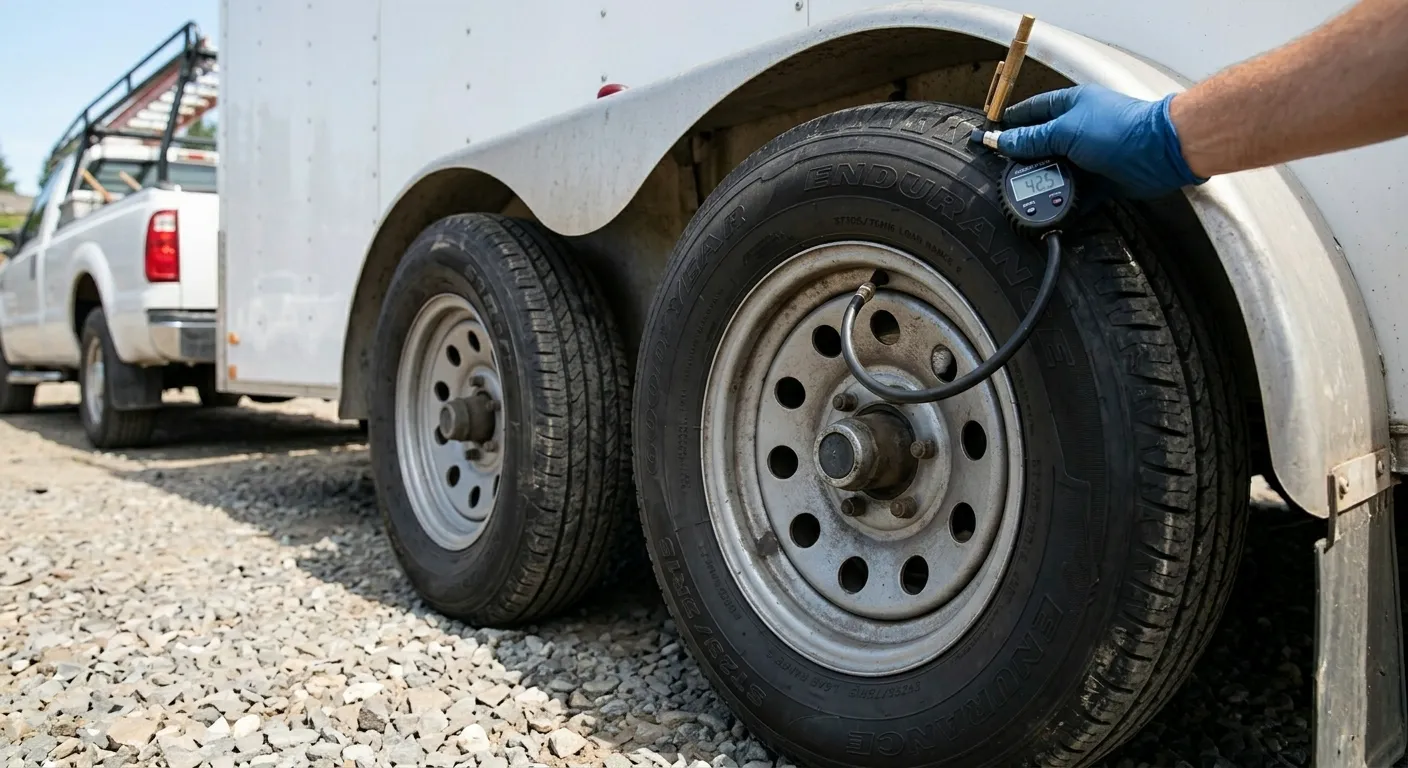
- Tire Care and Air Pressure
- Wheel Bearings and Hubs
- Brakes and Brake Controllers
- Lights and Electrical Connections
- Roof Seals, Seams, and Water Intrusion
- Flooring and Interior Condition
- Rust Prevention and Undercarriage Review
- Ventilation and Moisture Control
- Load Balance and Cargo Securement
- Seasonal Maintenance and Storage
- Maintenance Schedule for Enclosed Trailer Owners
- When Owners Should Stop and Get Service
- Maintenance Protects Long-Term Value
- Final Enclosed Trailer Maintenance Checklist
Why Enclosed Trailer Maintenance Matters
Enclosed trailers are used in demanding conditions. A trailer may sit outside in the sun and rain, travel through wet roads, haul heavy equipment, carry sharp tools, sit loaded for days, or spend months parked between uses. Over time, vibration, moisture, heat, road debris, UV exposure, and cargo movement can wear down different parts of the trailer.
Regular maintenance helps owners catch problems early. It can also improve towing safety, reduce downtime, protect cargo from leaks or shifting, prevent rust, preserve the trailer’s structure, and make the trailer easier to sell or trade later.
Maintenance needs vary based on trailer size, axle setup, cargo weight, road conditions, climate, frequency of use, and whether the trailer is used personally or commercially. A weekend motorcycle trailer may not need the same inspection schedule as a contractor trailer used five days a week, but both still need consistent care.
Pre-Trip Enclosed Trailer Safety Checklist
Before towing an enclosed trailer, owners should complete a quick pre-trip inspection. This does not need to take long, but it should be done consistently.
Check the tires first. Look for proper inflation, visible cracks, cuts, bulges, punctures, uneven tread wear, and sidewall damage. Do not forget the spare tire. A spare that is flat, dry-rotted, or missing the correct lug pattern will not help during a roadside emergency.
Next, check lug nuts, wheels, and hubs. Loose lug nuts can become dangerous quickly. Owners should verify that lug nuts are properly torqued according to the trailer or wheel manufacturer’s specifications, especially after wheel service or after installing new wheels.
Test the lights before every trip. Brake lights, turn signals, marker lights, hazard lights, and license plate lights all help other drivers see the trailer and understand what the tow vehicle is doing. A trailer with poor lighting is harder to see at night, in rain, during lane changes, and when braking.
Inspect the coupler, hitch ball, safety chains, breakaway cable, and wiring connection. The coupler should be fully seated on the correct hitch ball size and locked. Safety chains should be crossed under the tongue when appropriate and attached securely to the tow vehicle. The electrical connector should be seated firmly without dragging on the road.
If the trailer has brakes, test them before travel. A trailer that pushes the tow vehicle, pulls to one side, jerks during braking, or feels delayed may need brake adjustment, controller adjustment, wiring repair, or brake service.
Finally, inspect all doors and latches. Ramp doors, barn doors, side doors, hinges, locks, cables, springs, and holdbacks should operate properly. Before leaving, confirm that all cargo is secured, the trailer is not overloaded, and weight is balanced properly.

Tire Care and Air Pressure
Trailer tires are one of the most important maintenance items because they carry the trailer load, absorb heat, and handle road impact. Many trailer tire failures are linked to underinflation, overloading, age, heat, poor storage, or damage that went unnoticed.
Owners should check tire pressure when the tires are cold, ideally before the trailer has been driven. Tire pressure should match the trailer tire or manufacturer recommendation for the load rating. Guessing is not enough. A tire that looks fine can still be underinflated.
Underinflated tires build excess heat and can wear unevenly. Overinflated tires may be more vulnerable to impact damage. Tires should also be inspected for cracks, flat spots, exposed cords, punctures, and bulges. If a trailer sits for long periods, owners should move it periodically or use tire protection methods to reduce flat-spotting and UV exposure.
Tread depth matters, but trailer owners should not rely on tread alone. Trailer tires can age out before they wear out. The DOT tire date code on the sidewall shows when the tire was manufactured. Older tires may need replacement even if the tread still looks acceptable.
Wheel Bearings and Hubs
Wheel bearings allow the trailer wheels to rotate smoothly under load. When bearings are dry, contaminated, loose, overtightened, or damaged, heat and friction can build quickly. A failed bearing can damage the hub, spindle, wheel, and axle, and it can leave the trailer stranded.
Owners should pay attention to warning signs such as grinding noise, excessive hub heat, wheel wobble, grease leakage, vibration, or unusual tire wear. After towing for a while, it is a good habit to carefully check hub temperature by feel or with an infrared thermometer. A hub that is much hotter than the others may need inspection.
Bearing service intervals depend on the axle manufacturer, bearing type, usage, and operating conditions. Trailers used in wet, dusty, commercial, or long-distance conditions may need more frequent inspection. When bearings are serviced, seals should also be checked or replaced as needed. A leaking grease seal can contaminate brake components and reduce braking performance.

Brakes and Brake Controllers
Not every enclosed trailer has brakes, but trailers equipped with brakes need regular checks. Brakes are especially important for heavier trailers, tandem axle trailers, commercial hauling, and long-distance travel.
Electric trailer brakes depend on the tow vehicle brake controller, wiring, magnets, brake shoes, drums, and proper adjustment. If brakes are weak, grabby, delayed, noisy, or uneven, the system should be inspected. Brake magnets and linings can wear over time. Wiring can fray or corrode. Drums can become scored. Brake shoes can become contaminated by grease or moisture.
Owners should also test the breakaway system if the trailer has one. The breakaway system is designed to apply the trailer brakes if the trailer separates from the tow vehicle. Its battery, switch, cable, and wiring should be kept in working condition. A dead breakaway battery or damaged cable can prevent the system from working when it is needed.
Commercial owners and frequent haulers should consider keeping a maintenance log for brake inspections, adjustments, and repairs. This helps track patterns and makes it easier to identify recurring problems.
Lights and Electrical Connections
Trailer lights are simple but critical. Brake lights, turn signals, side markers, running lights, interior lights, and license plate lights all depend on clean wiring, good grounds, proper connectors, and intact fixtures.
If lights flicker, work intermittently, or fail only on one side, the problem may be a loose ground, corroded connector, pinched wire, damaged plug, or cracked light housing. Because enclosed trailers experience vibration, wiring should be inspected for rubbing, exposed copper, loose clips, and areas where the harness may contact sharp metal edges.
The trailer plug should be kept clean and protected when not in use. Moisture and corrosion inside a connector can cause light failures and brake signal issues. Owners who tow frequently should carry spare fuses, basic electrical tools, and replacement bulbs or LED fixtures when appropriate.
Roof Seals, Seams, and Water Intrusion
Water is one of the biggest enemies of an enclosed trailer. A small roof leak can lead to soft flooring, swollen wall panels, mold, mildew, damaged cargo, rusted fasteners, and interior odor.
Owners should inspect roof seams, trim, vents, roof caps, corner joints, screws, and sealant regularly. Look for cracks, gaps, peeling sealant, missing screws, loose trim, dark stains, or soft interior panels. After heavy rain, inspect the inside of the trailer for water spots, damp flooring, and musty smells.
Trailers stored outside should receive extra attention. UV exposure can dry sealants over time. Tree branches, hail, road vibration, and cargo movement can also stress seams. Re-sealing should be done with compatible materials, and owners should avoid using the wrong caulk or temporary patch that fails quickly.

Flooring and Interior Condition
The floor is one of the hardest-working parts of an enclosed cargo trailer. It supports tools, motorcycles, mowers, boxes, inventory, workbenches, shelving, and tie-down pressure. Over time, moisture, heavy point loads, dragging equipment, spilled chemicals, and loose fasteners can damage the floor.
Owners should inspect for soft spots, swelling, delamination, cracks, broken screws, stains, and areas where water may be entering. Ramp door floors also deserve attention because they see concentrated wear from wheels, equipment, and foot traffic.
Tie-down points, D-rings, E-track, cabinets, shelves, and wall hooks should be inspected regularly. A tie-down anchor that is pulling loose can become dangerous during braking or turning. Shelving should be mounted securely and checked for vibration damage.
For business owners, interior organization is also part of maintenance. Loose cargo can damage walls, doors, flooring, and other equipment. A clean, organized trailer is easier to inspect and safer to load.
Rust Prevention and Undercarriage Review
Rust prevention is especially important for trailers used in wet, muddy, coastal, humid, or winter conditions. The frame, tongue, axle components, safety chain mounts, hinges, ramp hardware, screws, coupler, jack, and exposed steel areas should be inspected for corrosion.
Surface rust should be addressed early before it spreads. Owners can clean affected areas, remove loose rust, and apply appropriate protective coatings or touch-up paint. After driving through mud, salt, or standing water, the underside should be rinsed and allowed to dry.
Rust can also appear around fasteners, door hardware, fenders, stone guards, and lower trim. Because enclosed trailers often sit close to the ground, owners should periodically inspect underneath the trailer rather than only checking visible exterior panels.
Ventilation and Moisture Control
Ventilation helps reduce trapped heat, condensation, odor, and moisture inside the trailer. This matters for trailers used to store tools, inventory, motorcycles, detailing supplies, landscaping gear, or anything that can rust, mildew, or absorb odor.
Moisture can come from wet equipment, humidity, temperature swings, rain leaks, fuel containers, cleaning supplies, or freshly washed machines. Without airflow, condensation can form on metal surfaces, walls, ceilings, and floors.
Owners should inspect vents to make sure they open, close, and seal correctly. Roof vents and side vents should be kept clear of debris. If the trailer stores valuable equipment for extended periods, moisture absorbers, ventilation upgrades, or periodic airing-out may help.
Load Balance and Cargo Securement
Maintenance and safety are not only about parts. How the trailer is loaded affects the trailer, the tow vehicle, and road handling.
Cargo should be balanced side-to-side and front-to-back. Too much weight behind the axle can contribute to sway. Too much tongue weight can overload the tow vehicle’s rear suspension and hitch. Uneven side loading can affect tracking, tire wear, and braking.
Cargo should also be secured so it cannot slide, roll, tip, or shift. Tools, mowers, motorcycles, generators, boxes, and materials can move during braking or turning if they are not tied down. Shifting cargo can damage the trailer interior and create unsafe towing conditions.
For enclosed trailers used by contractors or mobile businesses, E-track, D-rings, wheel chocks, shelves, cabinets, and wall-mounted storage can make cargo control safer and more repeatable.

Seasonal Maintenance and Storage
When an enclosed trailer will be stored or used less often, owners should prepare it for sitting. A trailer that sits outside without preparation can develop tire problems, moisture damage, corrosion, dead batteries, stuck latches, and flat spots.
Before storage, clean the trailer inside and outside. Remove debris, dirt, grass clippings, chemicals, and anything that could trap moisture. Inspect roof seals, doors, vents, and floors before leaving the trailer parked for long periods.
Tires should be inflated properly and protected from long-term sun exposure when possible. If the trailer has a battery, maintain it according to manufacturer recommendations. Locks, hinges, latches, and jacks should be lubricated as appropriate.
In colder climates, owners should pay attention to freeze/thaw cycles, ice buildup, snow load, and road salt. In hot climates, UV exposure, tire heat, sealant drying, and interior temperatures become bigger concerns.
Maintenance Schedule for Enclosed Trailer Owners
A practical maintenance routine can be broken into four levels.
- Before every trip, check tire pressure, tire condition, lug nuts, lights, coupler, safety chains, wiring, brakes if equipped, doors, latches, cargo securement, mirrors, and load balance.
- Monthly, inspect tires more closely, check interior condition, test all lights, look for leaks, inspect door seals, review the floor, check tie-downs, and clean the trailer as needed.
- Every few months, inspect the frame, undercarriage, hinges, ramp hardware, roof seams, vents, wiring, breakaway battery, jack, coupler, and exposed metal components.
- Annually, schedule or perform deeper service based on manufacturer recommendations. This may include wheel bearing service, brake inspection, brake adjustment, suspension review, roof resealing, rust treatment, tire age review, and a full safety inspection.
When Owners Should Stop and Get Service
Some trailer issues should not be ignored. Owners should stop towing and inspect or service the trailer if they notice a hot hub, smoke, burning smell, grinding noise, tire bulge, exposed tire cords, sudden sway, weak brakes, dragging brakes, flickering lights, broken coupler parts, cracked safety chain mounts, loose wheels, water intrusion, or damaged ramp hardware.
A trailer may still “move,” but that does not mean it is safe to tow. When in doubt, have the trailer inspected before taking it on the road.
Maintenance Protects Long-Term Value
A clean, dry, safe, well-maintained enclosed trailer is more useful and more valuable. Buyers are more confident when a trailer has good tires, working lights, solid flooring, clean interior walls, intact roof seals, smooth doors, minimal rust, and documented maintenance.
For business owners, maintenance also protects productivity. A trailer breakdown can delay jobs, damage customer equipment, strand crews, or interrupt deliveries. For recreational owners, it can ruin a trip or damage motorcycles, ATVs, or personal cargo.
The best maintenance plan is simple, consistent, and realistic. Owners do not need to be mechanics to catch many common problems early. They just need to slow down, inspect the trailer regularly, and fix small issues before they become expensive ones.
Final Enclosed Trailer Maintenance Checklist
Before towing, check:
An enclosed trailer is an investment. With regular maintenance, owners can protect that investment, improve road safety, reduce avoidable repairs, and keep their trailer ready for work, travel, storage, or recreation.
Looking for a reliable, well-built enclosed trailer?
Shop Factory-Direct at Make My Trailer