

Enclosed Trailer Flooring Options for Work, Recreation, and Heavy Cargo
Choosing the right enclosed trailer floor is one of the most important decisions a buyer can make, yet it is often overlooked until after the trailer is already in use. Many shoppers focus first on trailer size, axle setup, ramp doors, barn doors, exterior color, side doors, and pricing. Those details matter, but the floor is what carries the load every day.
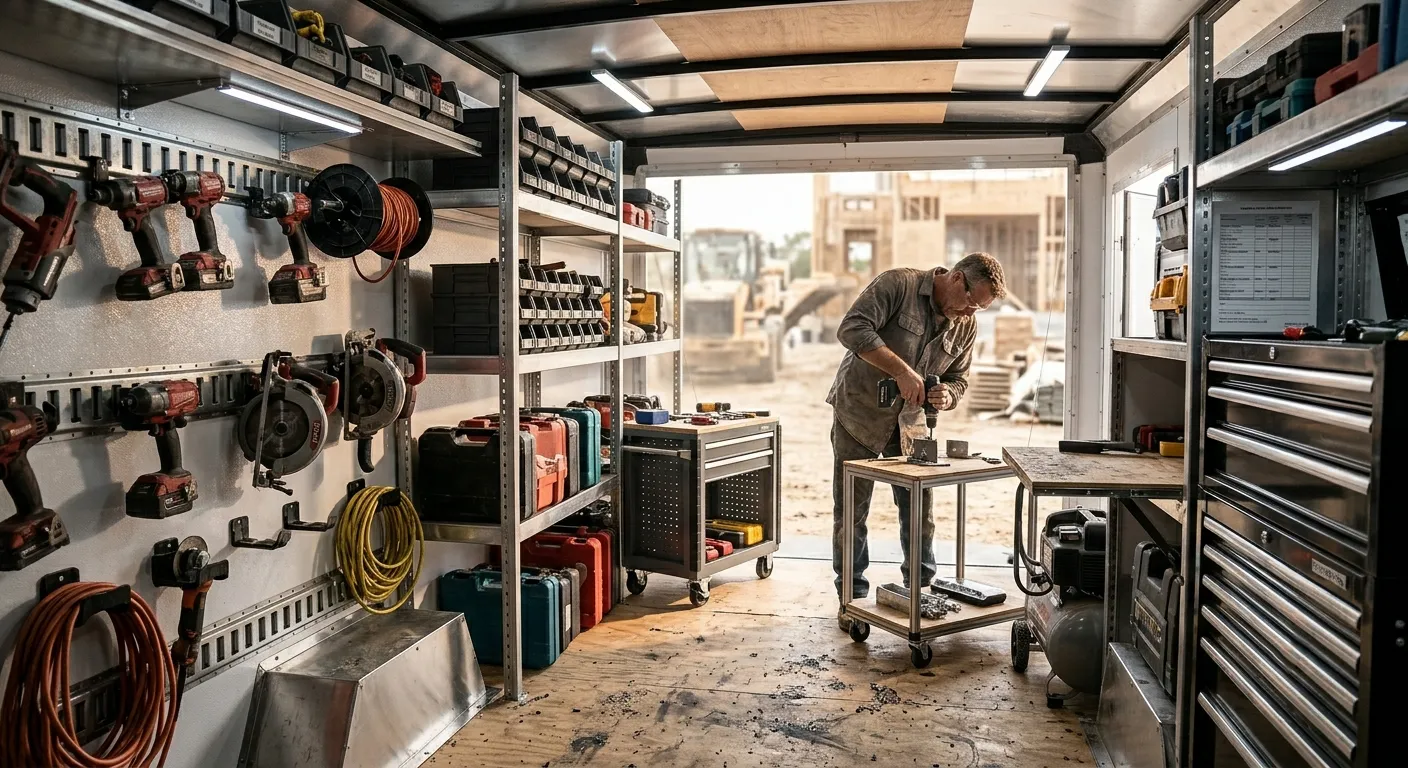
The floor supports tools, machines, motorcycles, ATVs, UTVs, lawn care equipment, water tanks, shelving, cabinets, boxes, furniture, inventory, generators, pressure washers, and heavy rolling cargo. It also takes abuse from mud, moisture, oil, fuel, vibration, tie-down movement, foot traffic, sharp edges, and repeated loading.
That is why enclosed trailer flooring should never be chosen based only on appearance. The best floor for an enclosed trailer depends on what the trailer will haul, how often it will be loaded, how heavy the cargo will be, whether moisture is involved, whether the trailer is used for business or recreation, and how long the owner expects the floor to last.
For some buyers, a quality plywood floor is enough. For others, reinforced flooring, rubber mats, coin flooring, aluminum tread plate, epoxy coating, or a combination of materials may be a smarter long-term choice.
- Why Enclosed Trailer Flooring Matters
- What Is the Best Flooring for an Enclosed Trailer?
- Common Enclosed Trailer Flooring Options
- How to Match Flooring to Trailer Use
- Moisture Protection for Enclosed Trailer Floors
- Should You Seal an Enclosed Trailer Floor?
- Ramp Door Flooring
- Tie-Downs, E-Track, D-Rings, and Flooring
- Cleaning and Maintaining Enclosed Trailer Floors
- How Flooring Affects Payload
- How to Choose the Right Enclosed Trailer Floor
- Practical Flooring Recommendations by Buyer Type
- Common Mistakes Buyers Should Avoid
- Final Thoughts
- Frequently Asked Questions About Enclosed Trailer Flooring
Why Enclosed Trailer Flooring Matters
An enclosed trailer floor affects five major areas: durability, safety, maintenance, cargo protection, and resale value.
Durability matters because every trailer floor has to deal with repeated stress. A contractor may roll heavy toolboxes across the same path every day. A landscaper may load wet mowers and muddy equipment. A motorcycle owner may park bikes on kickstands and strap them down tightly. A mobile detailing business may carry water tanks, chemicals, generators, pressure washers, and hose reels. Over time, the floor surface, subfloor, fasteners, ramp transition, seams, and crossmember support all matter.
Safety matters because the floor is part of the loading system. A slick, wet, or damaged floor can create slipping hazards. Loose cargo can shift if the trailer does not have the right surface, tie-downs, or traction. Heavy rolling cargo can damage weak spots if the floor is not properly supported.
Maintenance matters because moisture, dirt, oil, chemicals, and impact can shorten the life of the floor. A trailer that is cleaned, dried, inspected, and protected will usually hold up much better than one that is left wet or dirty after every job.
Cargo protection matters because the floor affects how equipment sits, rolls, and stays secured. A smooth floor may be easier to sweep, but it may also offer less traction. Rubber may add grip and cushioning, but it can trap moisture underneath if installed poorly. Aluminum tread plate may protect high-wear areas, but it may not be the best full-floor solution for every buyer.
Resale value matters because a clean, solid trailer floor tells a future buyer that the trailer was cared for. Soft spots, rot, oil-soaked plywood, peeling coatings, cracked seams, and loose flooring can reduce confidence quickly.
What Is the Best Flooring for an Enclosed Trailer?
There is no single “best” enclosed trailer floor for every buyer. The best floor is the one that matches the trailer’s real use.
A contractor carrying tools may need a strong plywood base with tie-downs, shelving support, and possibly rubber or coin flooring in walking areas. A landscaper may need a durable, easy-clean surface that handles wet equipment, mud, fuel cans, and repeated ramp use. A motorcycle owner may want traction, wheel chocks, D-rings, E-track, and protection against kickstand damage. A mobile detailing business may need moisture resistance, chemical resistance, easy cleaning, and support for concentrated water tank weight. A heavy cargo buyer may need reinforced flooring, tighter crossmember spacing, thicker subfloor material, and careful attention to payload, ramp capacity, and axle rating.
The right question is not simply “Which floor looks best?” The better question is: “Which flooring system supports my cargo, my loading method, my cleaning needs, and my long-term use?”

Common Enclosed Trailer Flooring Options
Plywood Flooring
Plywood is one of the most common enclosed trailer flooring materials because it is practical, affordable, strong, and easy to work with. Many enclosed cargo trailers use plywood floors because plywood provides a solid base for general hauling, tools, furniture, boxes, equipment, and light business use.
For many buyers, plywood is the standard starting point. It is usually strong enough for everyday cargo when the trailer is properly built and the weight is within the trailer’s rating. It can also be sealed, coated, covered with mats, upgraded with rubber or coin flooring, or reinforced in specific areas.
The main advantage of plywood is versatility. It can work for contractors, homeowners, small business owners, light powersports use, and general cargo. It is also easier to repair or replace compared with some specialty surfaces.
The main weakness of plywood is moisture. Wood can absorb water, swell, soften, delaminate, stain, or rot if it is repeatedly exposed to moisture and not protected. Wet mowers, rain blowing in through open doors, condensation, roof leaks, wall leaks, wet boots, pressure washing, and humid climates can all contribute to floor damage over time.
A plywood floor is a good choice when the trailer is used for general cargo, tools, boxes, dry equipment, moving, light business use, and occasional recreational hauling. It becomes a better long-term floor when it is sealed, kept clean, inspected regularly, and protected in high-wear areas.
Treated Plywood and Exterior-Rated Wood Panels
Some buyers ask whether treated plywood or exterior-rated plywood is better for an enclosed trailer. The answer depends on the build, the environment, and the intended use.
Exterior-rated wood panels are designed with adhesive systems that tolerate moisture exposure better than interior-only materials. Treated plywood may help resist rot and decay in certain conditions, but it still needs proper installation, ventilation, and maintenance. Treated wood is not a magic solution if the floor is constantly wet, poorly sealed, or damaged.
Buyers should ask what type of plywood is being used, how thick the floor is, how the floor is fastened, whether the underside is protected, how the seams are handled, and whether the edges are sealed. The edges of plywood are especially important because they can absorb moisture faster than the face of the panel.
For enclosed trailers used in wet, humid, or dirty conditions, the floor should be viewed as a system: plywood quality, sealant, seams, ventilation, cleaning habits, and exterior leak prevention all work together.
Reinforced Flooring
Reinforced flooring is not only about the top surface. It is about the structure underneath the floor and how the trailer distributes weight.
A reinforced trailer floor may include thicker plywood, closer crossmember spacing, upgraded floor supports, added steel or aluminum reinforcement, extra bracing in high-load areas, or additional protection where machines roll in and out. Reinforcement can also include specific upgrades around the ramp transition, wheel paths, water tank locations, generator areas, shelving mounts, or motorcycle chock locations.
Reinforced flooring is especially useful for:
A buyer planning to carry heavy cargo should not only ask, “How strong is the floor?” They should also ask about the frame, crossmembers, axle rating, GVWR, payload capacity, ramp door rating, tie-down strength, and the way cargo weight will be distributed.

Coin Flooring
Coin flooring is a popular upgrade for buyers who want a cleaner, more finished, professional-looking enclosed trailer interior. It usually has a raised circular pattern that gives the floor a textured appearance and can help with traction compared with a smooth surface.
Coin flooring is often used in mobile business trailers, motorcycle trailers, race trailers, detailing trailers, vendor trailers, and trailers where appearance matters. It can make the interior look cleaner and more polished than bare plywood. It is also easier to sweep and wipe down than unfinished wood.
Coin flooring can be made from vinyl, PVC, rubber, or similar resilient materials depending on the product. It may come in rolls or tiles. Roll flooring can create a cleaner appearance with fewer seams, while tile systems can be easier to replace in sections.
The advantages of coin flooring include appearance, easier cleaning, improved interior finish, and moderate traction. It can also help protect the plywood underneath from ordinary wear when installed properly.
The disadvantages are important to understand. If the seams, edges, or wall-to-floor transitions are not sealed correctly, moisture can get underneath. If moisture becomes trapped under the flooring, the plywood may stay wet longer than it would if it were exposed to air. Some materials may also react differently to heat, solvents, fuel, oil, adhesives, or heavy point loads.
Coin flooring is a strong choice for buyers who want a professional interior, easier cleanup, and a more finished surface. It is not always the best choice for extremely abusive heavy cargo unless paired with the right subfloor, reinforcement, and protection in high-impact areas.
Rubber Flooring and Rubber Mats
Rubber flooring is commonly used to protect trailer floors from scratches, dents, impact, and repeated wear. It can also add grip and cushioning, which is valuable for motorcycles, ATVs, UTVs, tools, equipment, and cargo that may shift or vibrate during transport.
Rubber mats are especially useful because they can often be removed for cleaning and drying. For many buyers, removable rubber mats are a practical way to protect a plywood floor without permanently trapping moisture. They can be placed under motorcycles, machines, water tanks, toolboxes, or cargo lanes.
Rubber flooring can help reduce noise and vibration inside the trailer. It can also protect the floor from metal feet, kickstands, casters, ramps, and sharp cargo edges. For recreational buyers, rubber can create a more forgiving surface when loading bikes or powersports equipment.
However, rubber also has limitations. Heavy rubber can add weight to the trailer, reducing available payload. If glued down or installed wall-to-wall without ventilation or edge planning, rubber can trap water underneath. Some rubber products may react poorly to fuel, oil, solvents, or chemicals depending on the material. Cheap mats may curl, shift, smell, or break down faster in hot enclosed environments.
Rubber flooring is a good choice for impact protection, traction, and cargo cushioning. It works best when the buyer plans for cleaning, drying, and moisture control.
Aluminum Tread Plate Flooring
Aluminum tread plate, also called diamond plate, is often used in high-wear areas of enclosed trailers. It has a raised pattern that provides durability and a rugged appearance. It is commonly installed on ramps, entry points, lower walls, wheel paths, door thresholds, and areas that receive repeated foot traffic or rolling equipment.
Aluminum tread plate is useful because it resists many types of surface wear better than exposed plywood. It is also easy to wipe down and gives a trailer a professional, heavy-duty look. On ramps, it can protect the loading surface from tires, mower decks, dollies, motorcycle tires, and repeated impact.
For buyers who frequently roll cargo in and out, aluminum tread plate can be a smart upgrade in targeted areas. It is especially useful on ramp doors, beavertail transitions, and the first few feet inside the trailer.
However, full aluminum tread plate flooring is not always necessary. It can add cost, increase noise, reflect heat, and may become slick depending on moisture, mud, oil, and the specific tread pattern. It can also be uncomfortable for kneeling or working inside the trailer. If installed over steel components, attention should be given to fasteners, contact points, and corrosion prevention.
Aluminum tread plate is often best used as a protective layer in high-wear areas rather than automatically covering the entire floor.
Epoxy-Coated Floors
Epoxy-coated floors appeal to buyers who want a sealed, cleanable, professional-looking trailer floor. A properly applied coating can help protect wood from spills, staining, dirt, and ordinary moisture exposure. It can also make the trailer easier to sweep, mop, or wipe down.
Epoxy and similar resinous coatings are popular in mobile business trailers, detailing trailers, race trailers, contractor trailers, and trailers where appearance and cleanability matter. Coatings can be applied in smooth or textured finishes, and grip additives can be added to improve traction.
The biggest advantage of epoxy is that it can create a more sealed surface than bare plywood. This can help with oil drips, light chemical exposure, mud cleanup, and general wear.
The biggest warning is preparation. Floor coatings are only as good as the surface underneath them. If the plywood is dirty, oily, wet, poorly sanded, poorly cleaned, or flexing too much, the coating may peel, bubble, crack, or fail prematurely. Wood trailer floors move more than concrete floors because trailers flex, vibrate, and experience changing temperatures. That means buyers should choose coatings designed for wood or trailer use and should follow the manufacturer’s preparation instructions carefully.
Epoxy-coated floors are a good choice for buyers who want a sealed, attractive, cleanable surface, but they require proper product selection, careful prep, and realistic expectations about flex, scratches, and long-term use.
Polyurethane, Polyaspartic, and Bedliner-Style Coatings
Epoxy is not the only coating option. Some trailer owners use polyurethane, polyaspartic, rubberized coatings, or bedliner-style products. These coatings may offer different levels of flexibility, abrasion resistance, UV resistance, chemical resistance, and texture.
Bedliner-style coatings are popular for users who want a textured, tough surface that can take abuse. They may work well for contractors, landscapers, and equipment users. Polyaspartic or polyurethane topcoats may provide better abrasion resistance or UV stability depending on the product. Some systems combine multiple layers: primer, base coat, broadcast texture, and topcoat.
The important point is that not all coatings are the same. A garage floor epoxy kit is not automatically the right product for a wood trailer floor. Buyers should verify whether the coating is suitable for plywood, whether it can handle vibration and flex, whether it provides traction when wet, whether it can tolerate fuel or oil, and how it should be maintained.

How to Match Flooring to Trailer Use
Best Flooring for Contractors
Contractors need durability, organization, and long-term wear resistance. Their trailers often carry power tools, compressors, generators, fasteners, ladders, shelving, cabinets, materials, and rolling toolboxes.
A good contractor floor setup may include:
Contractors should think beyond the floor surface. Shelving, cabinets, and tool racks add weight. If those systems are bolted into the floor or walls, the trailer structure must support them properly. A contractor who works every day out of the trailer should prioritize strength and serviceability over a purely cosmetic floor.
Best Flooring for Landscapers
Landscaping trailers face mud, wet grass, fuel, oil, fertilizer, mower tires, and repeated ramp use. A landscaper needs a floor that can handle moisture and dirt while staying safe for loading.
Useful flooring choices may include:
Landscapers should pay special attention to ramp strength and transition areas. The ramp is often abused more than the main floor because it carries concentrated rolling weight at an angle. Mowers, small tractors, and wheeled equipment can stress ramp hinges, ramp plywood, ramp surface material, and the first few feet of interior flooring.
Best Flooring for Motorcycle Trailers
Motorcycle owners need traction, tie-down strength, and surface protection. The floor must handle tire contact, kickstands, wheel chocks, D-rings, E-track, and strap tension.
Good motorcycle flooring options include:
Motorcycle buyers should avoid focusing only on the floor surface. Tie-down placement is just as important. A beautiful floor does not help if the bike cannot be secured safely. Wheel chocks and D-rings should be positioned based on the motorcycles being hauled, the trailer width, and the loading angle.
Best Flooring for ATV and UTV Trailers
ATVs and UTVs are heavier and wider than many motorcycle setups. Their tires, suspension movement, and loading angles create different demands.
Good ATV and UTV flooring should consider:
A rubber or textured coating may help with traction, while aluminum tread plate can protect ramp and entry areas. For UTVs, always confirm interior width, rear door opening width, ramp rating, floor capacity, and tie-down layout before choosing the floor finish.
Best Flooring for Mobile Detailing Trailers
Mobile detailing businesses have unique flooring needs because they may carry water tanks, pressure washers, generators, chemicals, hoses, reels, vacuums, and storage cabinets. Water exposure is a major concern.
A mobile detailing trailer floor should prioritize:
A large water tank creates concentrated weight. Water weighs a lot, and the floor must be able to support the tank when the trailer is parked, moving, braking, and turning. Reinforcement, tie-downs, tank mounting, and weight distribution are critical. A coated floor or coin floor may look clean and professional, but the underlying structure must be right first.
Best Flooring for Mobile Businesses
Mobile businesses often care about appearance because customers may see inside the trailer. A clean floor helps the trailer look professional. Depending on the business, coin flooring, epoxy coating, vinyl flooring, or rubber flooring may all work.
Examples include:
For mobile businesses, the best floor often balances appearance, cleanup, traction, and equipment mounting. A finished floor surface can help brand perception, but it must still be practical.
Best Flooring for Heavy Cargo
For heavy cargo, the best flooring is not simply the prettiest or thickest surface. It is the floor system that can safely carry the load.
Heavy cargo buyers should evaluate:
A heavy item with a wide base may be easier on the floor than a lighter item with small metal wheels. A rolling toolbox, generator, pallet jack, compressor, or water tank can create concentrated pressure. That is where reinforcement matters.
For heavy cargo, consider thicker plywood, tighter crossmember spacing, steel or aluminum reinforcement, added plates under equipment, rubber protection mats, and properly rated tie-down systems. The surface finish should be chosen after the structure is confirmed.

Moisture Protection for Enclosed Trailer Floors
Moisture is one of the biggest enemies of enclosed trailer floors. Even though enclosed trailers protect cargo from weather, the floor can still get wet from many sources:
Moisture damage often starts quietly. The floor may look fine from above, but water may be sitting along the edges, seams, ramp transition, or underside. Over time, soft spots, swelling, discoloration, odor, loose fasteners, and delamination can appear.
Good moisture protection includes:
In humid states like Georgia, Florida, Alabama, South Carolina, North Carolina, Tennessee, Texas, and similar climates, moisture control is especially important.
Should You Seal an Enclosed Trailer Floor?
In many cases, yes. Sealing an enclosed trailer floor can help reduce moisture absorption, staining, and wear. However, the right sealing method depends on the type of floor and the use case.
For plywood floors, buyers may consider:
The key is surface preparation. The floor should be clean, dry, sanded or prepared as required, and free of oil, dirt, wax, moisture, or loose material. The edges and seams should receive special attention because those are common moisture entry points.
A sealed floor still needs maintenance. Coatings can wear, scratch, chip, or peel. If the surface is damaged, it should be repaired before water gets underneath.
Ramp Door Flooring
The ramp door deserves special attention because it works harder than the main floor. Every mower, motorcycle, dolly, ATV, UTV, tool cart, and heavy item crosses the ramp first.
Ramp flooring should provide:
Aluminum tread plate is popular on ramps because it protects against repeated rolling wear. Rubber surfaces can add grip but may wear or shift depending on installation. Coatings can work if they are textured and properly applied. Bare plywood ramps should be inspected often for wear, delamination, water damage, and fastener issues.
A ramp floor should match the trailer’s real loading method. If the buyer will load heavy mowers or UTVs every day, the ramp should be upgraded accordingly.
Tie-Downs, E-Track, D-Rings, and Flooring
Flooring and cargo control should be planned together. D-rings, E-track, wheel chocks, and tie-down systems must be installed into appropriate structural areas, not just placed wherever they look convenient.
For motorcycles, tie-down angles matter. For toolboxes, anchor points should prevent rolling and shifting. For UTVs and ATVs, the tie-down layout should match the vehicle’s frame and tire position. For heavy equipment, tie-down ratings and floor reinforcement should be considered before installation.
A floor upgrade can improve durability, but it cannot replace proper cargo securement. If cargo can roll, slide, tip, or shift, the floor surface alone is not enough.
Cleaning and Maintaining Enclosed Trailer Floors
The best trailer floor can fail early if it is neglected. Maintenance should be simple but consistent.
After hauling wet or dirty cargo, sweep out the trailer and allow the floor to dry. Remove mud, leaves, grass clippings, salt, fertilizer, oil, and chemicals as soon as possible. If rubber mats are used, lift them periodically to check for trapped moisture underneath. Inspect the corners, seams, ramp transition, door threshold, and around fasteners.
Look for warning signs:
Small issues are easier to fix early. Once water spreads through the floor or under a glued-down surface, repairs can become more expensive.
How Flooring Affects Payload
Floor upgrades add weight. Rubber flooring, aluminum tread plate, thicker plywood, extra reinforcement, cabinets, shelving, coatings, and tie-down systems can all reduce available payload.
Payload is not just the amount of empty space inside the trailer. Payload depends on the trailer’s GVWR minus the empty weight of the trailer and installed options. A heavily upgraded trailer may have less remaining capacity than a basic trailer of the same size.
Buyers should ask for the trailer’s empty weight, GVWR, axle rating, and estimated payload after options. This matters for contractors, mobile detailing businesses, landscapers, and anyone carrying heavy or dense cargo.
How to Choose the Right Enclosed Trailer Floor
Before choosing a floor, answer these questions:
Once those questions are answered, the flooring choice becomes much clearer.
Practical Flooring Recommendations by Buyer Type
Common Mistakes Buyers Should Avoid
Final Thoughts
The right enclosed trailer floor should match the cargo, the loading method, the trailer size, the climate, and the owner’s long-term use. Plywood is practical and cost-effective for many buyers. Reinforced floors are better for heavy or concentrated loads. Coin flooring provides a finished, professional look. Rubber flooring adds protection and traction. Aluminum tread plate works well in high-wear areas and ramps. Epoxy and other coatings can create a sealed, cleanable surface when properly applied.
For most buyers, the best answer is not one material by itself. The best solution is often a combination: a strong plywood base, proper reinforcement, sealed edges, traction where needed, high-wear protection at the ramp, and regular maintenance.
Make My Trailer helps buyers compare enclosed trailer flooring options, trailer sizes, axle setups, ramp and barn door choices, tie-down layouts, and custom upgrades based on how the trailer will actually be used. Whether the trailer is being built for work, recreation, mobile business, or heavy cargo, choosing the right floor early can improve durability, safety, appearance, and long-term value.
Frequently Asked Questions About Enclosed Trailer Flooring
What is the best flooring for an enclosed trailer?
The best enclosed trailer flooring depends on use. Plywood works well for general cargo. Reinforced flooring is better for heavy equipment. Coin flooring is good for clean, professional interiors. Rubber flooring helps with traction and impact protection. Aluminum tread plate is useful in high-wear areas. Epoxy or other coatings can help seal and protect the floor when properly applied.
How do I protect an enclosed trailer floor?
Protect the floor by sealing plywood, protecting edges and seams, using mats or coatings where appropriate, keeping the trailer dry, inspecting for leaks, cleaning spills quickly, and checking for soft spots or loose fasteners. High-wear areas such as ramps and entry points may need aluminum tread plate, rubber, or textured coating.
Which trailer floor is best for heavy cargo?
For heavy cargo, structural reinforcement matters more than appearance. Consider thicker plywood, closer crossmembers, reinforced wheel paths, steel or aluminum backing, properly rated tie-downs, and a ramp rated for the equipment. The floor surface should be chosen after confirming payload, axle rating, GVWR, frame strength, and cargo weight distribution.
Is plywood good for enclosed trailer floors?
Yes, plywood is a practical and common enclosed trailer floor material. It works well for tools, boxes, furniture, general cargo, and many business uses. It should be protected from long-term moisture and inspected regularly.
Is rubber flooring good for enclosed trailers?
Rubber flooring can be excellent for traction, impact protection, motorcycles, ATVs, UTVs, tools, and equipment. However, it should be installed and maintained carefully because moisture can become trapped underneath if the floor is not allowed to dry.
Is coin flooring worth it in an enclosed trailer?
Coin flooring is worth considering if you want a clean, professional interior that is easier to sweep and wipe down. It is popular for mobile businesses, powersports trailers, race trailers, and show-style interiors. Edges and seams should be handled carefully to prevent moisture from reaching the subfloor.
Should I use aluminum tread plate on the whole trailer floor?
Aluminum tread plate is often best in high-wear areas, such as ramps, entry points, and wheel paths. Covering the entire floor may not be necessary for every buyer and can add cost, weight, noise, and heat. It depends on the trailer’s use.
Can you epoxy an enclosed trailer floor?
Yes, some enclosed trailer floors can be coated with epoxy or similar products, but surface preparation is critical. The plywood must be clean, dry, and properly prepared. The coating should be compatible with wood trailer floors and should include traction texture if the floor may become wet.
How do I prevent an enclosed trailer floor from rotting?
Prevent rot by keeping the floor dry, sealing exposed wood and edges, fixing leaks quickly, improving ventilation, cleaning wet equipment before storage, removing trapped moisture under mats, and inspecting the floor regularly.
Should the ramp door surface match the interior floor?
It can, but it does not have to. The ramp often needs more traction and wear protection than the interior floor. Aluminum tread plate, textured coating, or rubberized surfaces may be useful depending on what is being loaded.
Ready to customize the perfect flooring system for your payload?
Explore Flooring Options at Make My Trailer