

Best Enclosed Trailer Upgrades for Hot Weather States: A Complete Guide for Contractors, Mobile Businesses, and Recreational Buyers
For buyers in hot-weather states such as Georgia, Florida, Texas, Alabama, South Carolina, North Carolina, and Tennessee, choosing an enclosed trailer is not just about size, price, or axle setup. Heat, humidity, direct sun, daily jobsite use, and long hours on the road can all affect how practical, comfortable, and durable a trailer feels over time.
That is why more buyers are asking detailed questions before ordering:
The right answer depends on how the trailer will be used. A trailer used for occasional household storage does not need the same setup as a mobile detailing trailer, contractor trailer, motorsports trailer, or enclosed trailer used as a mobile workspace. A buyer who only hauls cargo from point A to point B may only need basic ventilation and durable flooring. A buyer who works inside the trailer may need A/C, insulation, lighting, outlets, an electrical package, roof support, and an awning.
Make My Trailer, a factory-direct enclosed trailer company based in Douglas, Georgia, helps buyers compare these hot-weather upgrades before ordering so the trailer is built around real-world use, not just a basic spec sheet.

- Why Hot-Weather Trailer Planning Matters
- A/C Units: When an Enclosed Trailer with AC Makes Sense
- Insulation: Why It Matters in Hot Weather
- Roof Vents: Letting Hot Air Escape
- Side Vents: Improving Cross-Ventilation
- White Exterior and Lighter Colors: A Smart Choice for Hot Climates
- Extra Height: Comfort, Storage, and Better Interior Layouts
- Electrical Package: Plan Power Before You Build
- Awning: Shade for the Trailer and the Work Area
- Interior Wall Protection: Built for Daily Use
- Flooring: Another Hot-Weather Upgrade Buyers Should Consider
- Best Hot-Weather Trailer Setups by Use Case
- Can You Add AC to an Enclosed Trailer?
- Is an Insulated Enclosed Trailer Worth It in Hot Weather?
- Do Roof Vents and Side Vents Help?
- What Is the Best Enclosed Trailer Color for Hot Weather?
- What Upgrades Should Contractors Consider in Hot States?
- What Trailer Upgrades Are Useful for Mobile Businesses?
- Safety Considerations for Hot-Weather Trailer Owners
- How to Choose the Right Hot-Weather Trailer Setup
- Final Thoughts: Hot-Weather Upgrades Can Make an Enclosed Trailer More Useful Long-Term
Why Hot-Weather Trailer Planning Matters
An enclosed trailer is essentially a sealed cargo box on wheels. That is what makes it valuable: it protects tools, equipment, inventory, motorcycles, detailing supplies, and personal cargo from rain, road debris, theft, and direct exposure. But in warm climates, that same enclosed design can also trap heat and moisture if the trailer is not planned correctly.
In the Southeast and other hot regions, enclosed trailers may spend long hours parked in direct sun. Contractors may leave tools inside all day. Landscapers may load fuel-powered equipment. Mobile detailers may carry water tanks, generators, chemicals, hoses, polishers, and electrical equipment. Recreational users may store motorcycles, ATVs, UTV gear, helmets, riding apparel, and camping supplies.
Heat and humidity can create several practical problems:
That is why hot-weather trailer planning should start before the trailer is built. Adding A/C, insulation, vents, electrical outlets, extra height, wall protection, and shade options during the build process is usually easier than trying to retrofit everything later.
A/C Units: When an Enclosed Trailer with AC Makes Sense
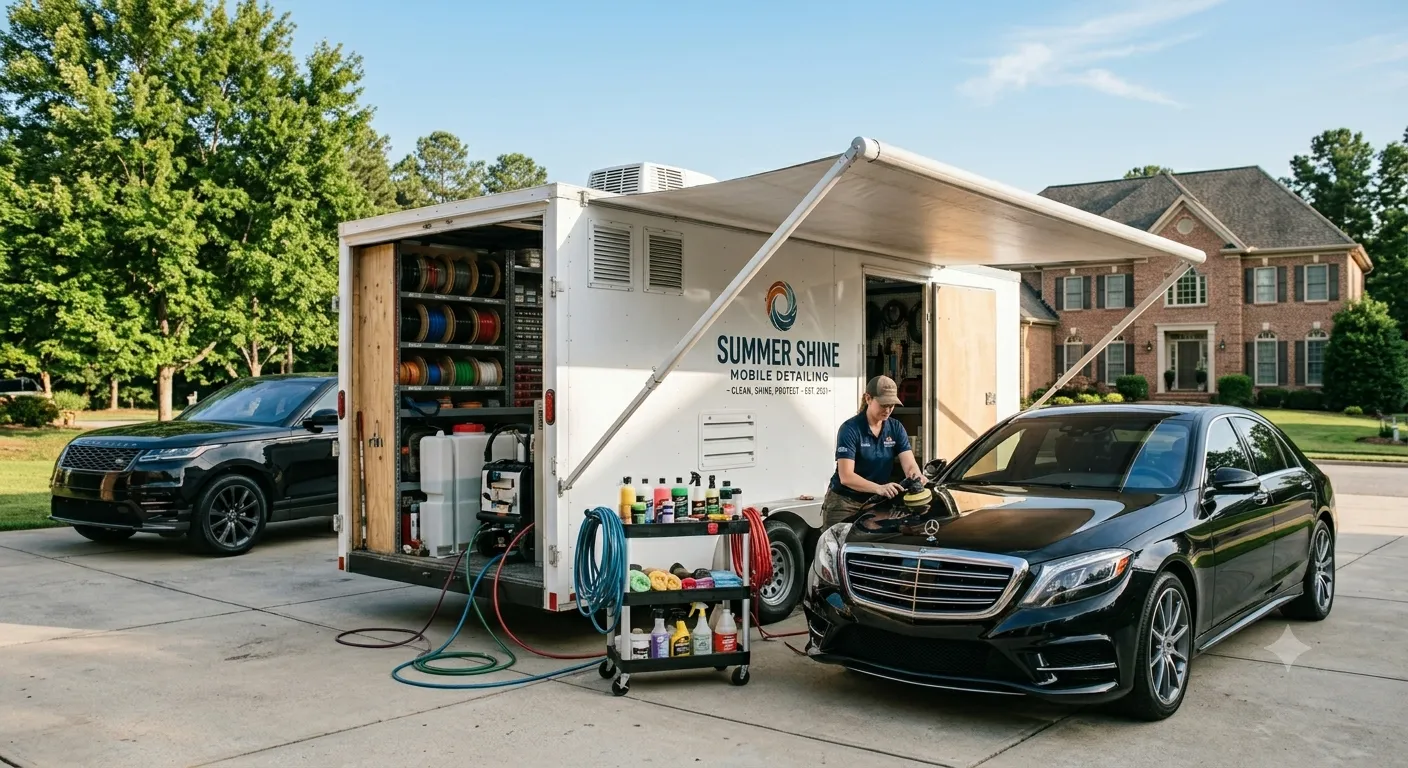
An enclosed trailer with A/C is one of the most requested upgrades for buyers who plan to spend time inside the trailer. It is especially useful for mobile businesses, detailing trailers, concession-style setups, contractor workstations, event trailers, motorsports support trailers, and specialty builds where comfort matters.
A/C is most valuable when the trailer is used as more than a storage box. If a person will be working inside, standing inside, organizing tools inside, performing service work, or operating equipment inside the trailer, air conditioning can make the space much more usable in hot climates.
However, A/C should be planned correctly. Buyers should think about:
A/C by itself does not solve every heat problem. If the trailer is not insulated, hot air and radiant heat can still enter through the roof, walls, and doors. If the electrical system is not planned correctly, the A/C may not be practical to run. If the trailer is used in dusty, dirty, or equipment-heavy environments, filters and maintenance should also be considered.
Best uses for A/C include:
For basic cargo hauling, A/C may not be necessary. For trailers where people, electronics, inventory, or temperature-sensitive supplies are involved, it can be one of the most important upgrades.
Insulation: Why It Matters in Hot Weather
An insulated enclosed trailer can help reduce heat transfer through the walls and ceiling. Insulation does not magically cool the trailer by itself, but it slows down how quickly outside heat moves into the interior. When paired with A/C, ventilation, or a lighter exterior color, insulation can make a noticeable difference in comfort and cargo protection.
Insulation is especially useful for buyers who:
For hot-weather states, ceiling insulation is especially important because the roof receives the most direct sun exposure. Wall insulation can also help, particularly on trailers parked for long periods in open lots, driveways, job sites, and commercial spaces.
Insulation is also commonly paired with finished walls and ceiling panels. This creates a cleaner, more professional interior and can help protect the insulation from damage. Contractors, detailers, mobile service businesses, motorsports users, and event businesses often prefer a more finished interior because the trailer becomes part of their professional setup.
Buyers should remember that insulation works best as part of a complete system. A white or lighter-colored exterior, ventilation, A/C, sealed doors, and proper electrical planning all work together. Insulation alone may slow heat transfer, but insulation plus A/C and proper ventilation is much more effective for comfort.

Roof Vents: Letting Hot Air Escape
Roof vents are one of the most practical upgrades for enclosed trailers used in warm climates. Since hot air rises, a roof vent gives trapped heat a place to escape. This is helpful when the trailer is parked, when equipment is stored inside, or when the trailer is used in humid areas.
A basic roof vent can help reduce stale air. A powered roof vent can improve airflow more aggressively. Buyers who carry equipment, fuel-powered tools, landscaping gear, detailing supplies, or recreational equipment often benefit from roof ventilation.
Roof vents are especially useful for:
A roof vent is not the same as an air conditioner. It does not cool the air below the outside temperature. Instead, it helps reduce trapped heat, humidity, and stale air. For many basic work trailers, roof vents may be enough. For trailers where people work inside, roof vents are usually only one part of a larger setup that may also include A/C, insulation, side vents, and electrical upgrades.
Side Vents: Improving Cross-Ventilation
Side vents help move air through the trailer. When paired with roof vents, they can create better airflow by allowing cooler air to enter and hot air to exit. This cross-ventilation is useful in humid climates where enclosed spaces can become stale.
Side vents are especially helpful for trailers used by:
For landscaping businesses, side vents can help with airflow around mowers, trimmers, fuel cans, and damp equipment. For mobile detailing businesses, vents can help reduce moisture and odors from wet towels, tanks, hoses, and chemicals. For contractors, side vents can help keep the trailer from feeling sealed and stagnant during hot workdays.
Buyers should consider vent placement carefully. The goal is not just to add vents randomly, but to support airflow through the space. Placement depends on the trailer size, door style, wall layout, shelving, cabinets, and the type of equipment being carried.
White Exterior and Lighter Colors: A Smart Choice for Hot Climates
Exterior color matters more in hot climates than many buyers realize. Dark colors absorb more solar heat, while white and lighter colors are commonly preferred for reducing heat absorption. This is one reason white enclosed trailers are so popular in Florida, Georgia, Texas, Alabama, South Carolina, North Carolina, and Tennessee.
A white enclosed trailer can be especially useful when the trailer:
Best hot-weather exterior colors include:
Dark colors can still look sharp, especially for branding, but they may increase heat absorption. If a buyer chooses a dark exterior, it becomes more important to consider insulation, ventilation, and A/C.
This does not mean buyers should never choose darker colors. A darker trailer may match a brand, fleet, or personal style. But in hot-weather states, buyers should understand the tradeoff. If a darker exterior is important for branding, it may be even more important to add insulation, roof vents, side vents, or A/C.

Extra Height: Comfort, Storage, and Better Interior Layouts
Extra height is often overlooked, but it can make a major difference for hot-weather trailer users. A taller trailer gives buyers more vertical room for shelving, cabinets, tool racks, water tanks, detailing systems, and business equipment. It also makes the trailer more comfortable to stand and work inside.
Extra height is useful for:
In hot climates, extra height can also help the trailer feel less cramped. More headroom improves movement and makes the space easier to organize. However, buyers should remember that taller trailers may create more wind resistance and can affect towing. Extra height should be matched with the tow vehicle, axle setup, and intended cargo.
For a buyer who only needs simple storage, standard height may be enough. For a buyer using the trailer daily as a mobile workspace, extra height can be one of the best upgrades available.
Electrical Package: Plan Power Before You Build
An electrical package is one of the most important upgrades for buyers who want A/C, interior lighting, outlets, battery systems, chargers, tools, compressors, pumps, or business equipment. It is especially important for mobile detailing trailers, contractor trailers, vending setups, repair trailers, and any enclosed trailer used as a workspace.
A good electrical plan may include:
Buyers should plan electrical needs before ordering. It is much easier to build the trailer with the right wiring, outlets, and support than to add everything after the fact.
For example, a mobile detailing business may need power for polishers, vacuums, lighting, pumps, pressure washers, battery chargers, and possibly A/C. A contractor may need outlets for battery chargers, saws, lighting, and small tools. A motorsports buyer may want lighting, battery tenders, and climate control.
The key is to build the electrical package around the real equipment load. Buyers should not simply say “add outlets” without thinking through what will be plugged in, how many devices will run at once, and how the trailer will be powered.
Awning: Shade for the Trailer and the Work Area
An awning can make a hot-weather trailer much more useful outside the trailer, not just inside it. Shade matters in the Southeast and other sunny regions, especially for mobile businesses, outdoor service providers, motorsports users, and event setups.
An awning can help create a shaded work area for:
For mobile detailing businesses, an awning can help create shade while working around vehicles. For contractors, it can provide a shaded area for tools, plans, or equipment. For motorsports users, it can create a comfortable area next to the trailer during track days, races, or recreational trips.
An awning does not replace A/C or insulation, but it can reduce direct sun exposure around the trailer and improve comfort for people working outside. Buyers should consider awning size, mounting location, wind conditions, and how often they will realistically deploy it.
Interior Wall Protection: Built for Daily Use
Interior wall protection is one of the most practical upgrades for contractors, landscapers, mobile service providers, and business owners who use their trailer every day. Tools, machines, carts, ladders, pressure washers, mowers, and materials can damage standard trailer walls over time.
Interior wall protection may include:
This upgrade is especially valuable for trailers that carry:
Wall protection helps extend the useful life of the trailer and keeps the interior looking more professional. It also supports organization because protected walls can be paired with shelving, cabinets, hooks, tie-down systems, and E-track.
For buyers using the trailer as a mobile business asset, interior wall protection is not just about durability. It also helps create a cleaner, more organized workspace that looks better to customers.
Flooring: Another Hot-Weather Upgrade Buyers Should Consider
Although the press release focuses on A/C, insulation, vents, exterior color, extra height, electrical, awning, and wall protection, flooring also matters in hot-weather states. Flooring takes heavy abuse from tools, water, chemicals, fuel, dirt, grass clippings, motorcycles, ATVs, and daily loading.
Common flooring considerations include:
Mobile detailing trailers may benefit from moisture-resistant flooring because water, hoses, tanks, and wet towels are part of the business. Landscaping trailers need flooring that can handle mowers, dirt, grass, and fuel-powered equipment. Contractor trailers need flooring that can handle repeated loading of tools and materials.
The best floor depends on the business. A mobile detailer, flooring installer, electrician, landscaper, and motorsports user all load trailers differently. Buyers should explain their cargo and workflow before choosing flooring.

Best Hot-Weather Trailer Setups by Use Case
Contractors and Trades
Contractors often need a trailer that works like a mobile tool room. Heat matters because tools, batteries, adhesives, supplies, and workers may be exposed to long days in direct sun.
Recommended upgrades:
Best for: Electricians, Plumbers, HVAC techs, Remodelers, Roofers, Flooring installers, General contractors, and Handymen.
Mobile Detailing Businesses
Mobile detailing trailers are some of the most upgrade-heavy enclosed trailer builds because they often carry water tanks, generators, hoses, reels, vacuums, polishers, chemicals, towels, lighting, and power systems.
Recommended upgrades:
Mobile detailers should plan the layout carefully. Water tank placement, generator ventilation, hose reel access, equipment weight, and electrical demand all matter.
Landscaping Businesses
Landscapers need trailers that can handle heat, dirt, equipment, fuel, and daily loading. Ventilation and durability are especially important.
Recommended upgrades:
A/C may not be necessary unless people work inside the trailer, but ventilation is very useful for equipment and moisture control.
Recreational Buyers
Recreational buyers may use enclosed trailers for motorcycles, ATVs, UTV gear, camping supplies, event gear, or motorsports weekends. Comfort and airflow can matter, especially when the trailer is used as a staging area.
Recommended upgrades:
For motorcycle and ATV use, buyers should also think about wheel chocks, D-rings, E-track, ramp angle, floor strength, and interior height.
Equipment Storage
For buyers using a trailer mainly for storage, the goal is protection, airflow, and long-term durability.
Recommended upgrades:
A/C may not be necessary for basic storage, but ventilation and color choice are important in hot climates.
Can You Add AC to an Enclosed Trailer?
Yes, many enclosed trailers can be configured with A/C, but buyers should plan it before ordering. A/C depends on the trailer design, roof structure, insulation, electrical package, and intended use.
Buyers should ask:
For best results, A/C should be paired with insulation, proper electrical planning, and a realistic understanding of how the trailer will be powered.
Is an Insulated Enclosed Trailer Worth It in Hot Weather?
For many buyers, yes. Insulation is worth considering if the trailer will be used in hot climates, especially if people work inside or if the trailer carries heat-sensitive items.
Insulation is most valuable for:
Insulation does not eliminate heat, but it helps slow heat transfer. That makes the trailer easier to cool and more comfortable to use.
Do Roof Vents and Side Vents Help?
Yes, roof vents and side vents can help improve airflow. Roof vents allow hot air to escape, while side vents can support cross-ventilation. Together, they can reduce stale air, trapped heat, moisture, and odors.
Vents are especially useful for:
If the trailer has A/C, vents should still be planned carefully. You do not want to constantly vent out cooled air while trying to run A/C. In that case, vents are most useful when the trailer is not actively being cooled.
What Is the Best Enclosed Trailer Color for Hot Weather?
White or lighter exterior colors are usually the best choice for hot-weather states because they absorb less solar heat than darker colors. This is why white enclosed trailers are common in sunny regions.
Best hot-weather exterior colors include:
Dark colors can still look sharp, especially for branding, but they may increase heat absorption. If a buyer chooses a dark exterior, it becomes more important to consider insulation, ventilation, and A/C.
What Upgrades Should Contractors Consider in Hot States?
Contractors should think beyond basic cargo space. A contractor trailer often becomes a daily-use tool room, storage unit, and mobile workstation.
Best upgrades include:
Contractors should also consider how tools are accessed. A well-organized trailer saves time every day.
What Trailer Upgrades Are Useful for Mobile Businesses?
Mobile businesses should build trailers around workflow. The trailer is not just for hauling; it is part of the business operation.
Useful upgrades include:
Mobile detailers, repair businesses, vending operators, event companies, and service providers should plan equipment placement before ordering.
Safety Considerations for Hot-Weather Trailer Owners
Hot weather also affects towing and maintenance.
Before long trips or daily use, trailer owners should check:
Heat can be hard on tires, batteries, wiring, sealants, and cargo. Trailer owners should avoid overloading the trailer, secure cargo properly, and confirm that the tow vehicle is rated for the trailer’s loaded weight.
Buyers should understand GVWR, payload capacity, axle rating, and tongue weight before loading equipment. A trailer that is comfortable when empty may behave very differently when loaded with water tanks, generators, mowers, motorcycles, tools, or inventory.
How to Choose the Right Hot-Weather Trailer Setup
Before ordering, buyers should answer these questions:
The best enclosed trailer for hot weather is not the same for every buyer. The right setup depends on the trailer’s job.
Final Thoughts: Hot-Weather Upgrades Can Make an Enclosed Trailer More Useful Long-Term
In hot-weather states, enclosed trailer upgrades are not just luxury features. For many buyers, they are practical decisions that affect comfort, durability, cargo protection, and daily usability.
A/C can make the trailer workable in extreme heat. Insulation can slow heat transfer. Roof vents and side vents can improve airflow. A white exterior can reduce heat absorption. Extra height can make the trailer easier to organize and work inside. An electrical package can support lighting, outlets, A/C, and business equipment. An awning can create shade outside the trailer. Interior wall protection can help the trailer survive daily work use.
For contractors, landscapers, mobile detailers, service businesses, recreational buyers, and equipment owners, the right upgrades can turn an enclosed trailer from a basic cargo box into a more comfortable, professional, and long-lasting hauling solution.
Make My Trailer helps buyers compare trailer size, axle setup, door style, ventilation, insulation, A/C compatibility, electrical packages, wall protection, awnings, and other custom enclosed trailer options before ordering. For buyers in Georgia, Florida, Texas, Alabama, South Carolina, North Carolina, Tennessee, and other warm-weather regions, planning the build around heat, humidity, airflow, and daily use can make the trailer far more practical for the long run.
Ready to customize your enclosed trailer for hot-weather performance?
Explore Custom Options at Make My Trailer