
6x12 Enclosed Cargo Trailer Configurations: A Complete Buyer’s Guide for Work, Business, and Recreational Use
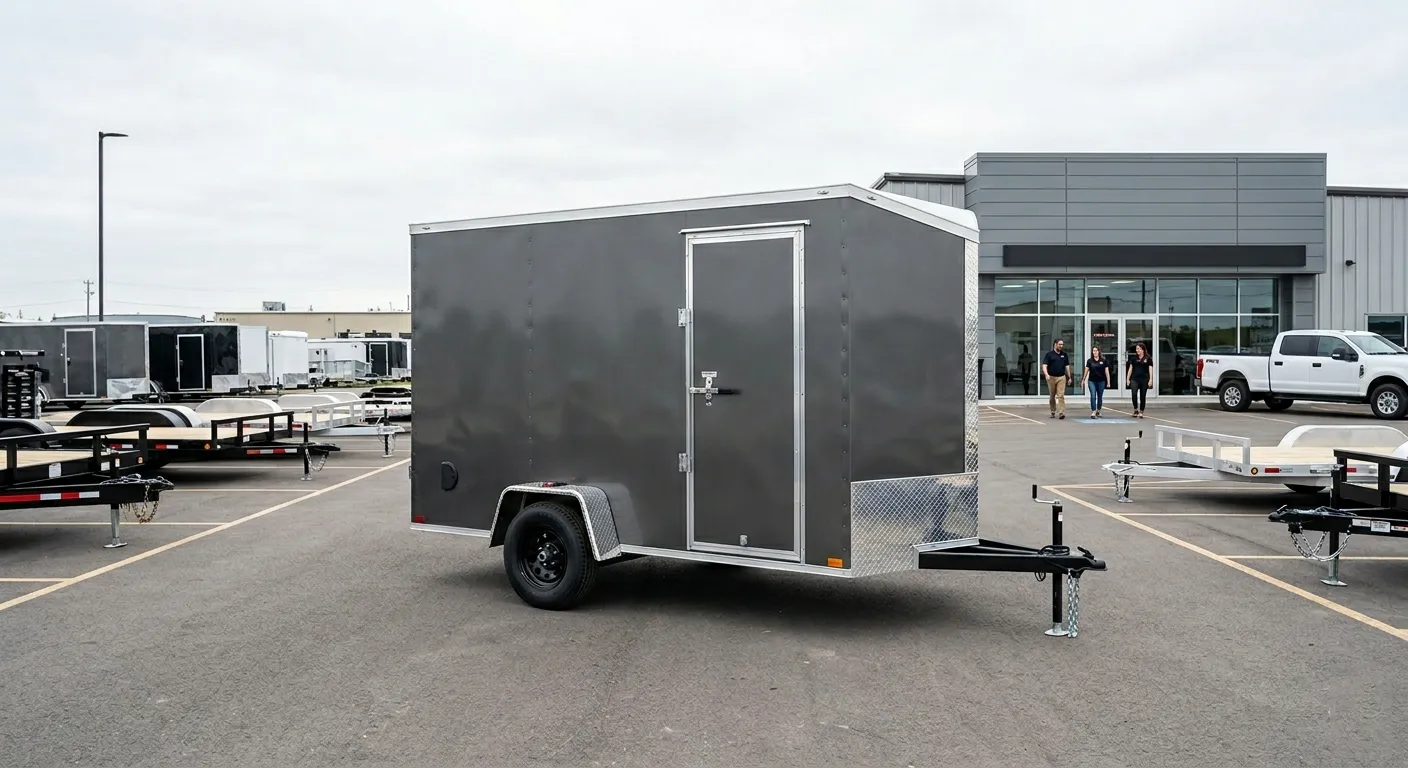
A 6x12 enclosed cargo trailer is one of the most practical trailer sizes for buyers who need secure cargo space without moving up to a large, heavy, harder-to-maneuver trailer. For many contractors, landscapers, small business owners, motorcycle riders, mobile service providers, and weekend haulers, the 6x12 size offers a strong balance of interior room, towing convenience, customization flexibility, and long-term usefulness.
But not every 6x12 enclosed trailer is built the same way.
A buyer can configure a 6x12 trailer as a simple single axle cargo hauler, a heavier-duty tandem axle unit, a work trailer with E-track and shelving, a motorcycle trailer with wheel chocks and D-rings, a landscaping trailer with a ramp door, or a mobile business setup with insulation, ventilation, electrical, lighting, and even air conditioning.
That is why choosing the right configuration matters just as much as choosing the size.
A 6x12 enclosed cargo trailer may look simple from the outside, but the right setup depends on what will be loaded, how often the trailer will be used, how heavy the cargo is, what vehicle will tow it, and whether the trailer is being used for work, recreation, storage, travel, or a business operation.
- Why the 6x12 Enclosed Cargo Trailer Is So Popular
- Is a 6x12 Enclosed Trailer Big Enough?
- Single Axle vs. Tandem Axle 6x12 Enclosed Trailers
- Understanding Weight, GVWR, Payload, and Towing Capacity
- Ramp Door vs. Barn Doors
- E-Track, D-Rings, Wheel Chocks, and Tie-Down Planning
- Insulation, A/C, Ventilation, and Electrical Options
- Extra Height: When It Makes Sense
- Best 6x12 Configurations by Use Case
- Can a 6x12 Enclosed Trailer Be Used for Landscaping?
- Can a 6x12 Enclosed Trailer Carry Motorcycles, ATVs, or UTVs?
- What to Ask Before Ordering a 6x12 Enclosed Cargo Trailer
- Why Factory-Direct Buying Matters
- Final Thoughts
Why the 6x12 Enclosed Cargo Trailer Is So Popular
The 6x12 enclosed trailer sits in a very useful middle ground. It is larger than compact enclosed trailers such as 5x8, 6x8, or 6x10 models, but it is still smaller and easier to manage than 7x14, 8.5x16, 8.5x20, or 8.5x24 trailers.
For many buyers, that makes the 6x12 a “do-it-all” size.
It provides enough floor space for tools, small equipment, lawn care machines, motorcycles, event supplies, boxes, inventory, coolers, camping gear, furniture, or trade materials. At the same time, it can usually still be parked in many driveways, stored more easily than larger trailers, and towed by properly equipped pickups and some SUVs.
A 6x12 enclosed trailer is especially popular because it protects cargo from weather, road debris, theft visibility, and sun exposure. Compared with an open utility trailer, the enclosed body gives business owners and recreational users more security and cleaner storage. Tools are not sitting exposed in a parking lot. Motorcycles are not being hit with road grime. Inventory is not getting wet during a storm. Landscaping equipment is not visible to everyone who passes by.
That protection is one of the biggest reasons buyers choose enclosed trailers in the first place.
Is a 6x12 Enclosed Trailer Big Enough?
For many buyers, yes. A 6x12 enclosed trailer is big enough for a wide range of work, business, and personal uses. But whether it is big enough for you depends on three things: cargo dimensions, cargo weight, and how much working room you need around the cargo.
A 6x12 trailer gives you roughly 72 square feet of floor space before accounting for wall thickness, V-nose shape, wheel wells, shelves, cabinets, tie-down systems, or interior add-ons. In real-world terms, that can be enough for one or more motorcycles, lawn equipment, toolboxes, boxes, event supplies, mobile business equipment, small furniture loads, or contractor tools.
For a landscaping business, a 6x12 can work well for push mowers, blowers, trimmers, small tools, gas cans, and handheld equipment. For larger zero-turn mowers, multiple machines, or commercial ride-on equipment, buyers need to measure carefully and may want to compare a 7x14 or larger trailer.
For motorcycle owners, a 6x12 is often a strong choice because the length gives enough room for secure tie-down angles, wheel chocks, gear, helmets, toolboxes, and ramps. For UTVs and side-by-sides, the answer depends heavily on machine width, length, height, tire size, roof accessories, and door opening dimensions.
For contractors, the 6x12 can be excellent if the goal is to organize tools, supplies, ladders, compressors, flooring materials, plumbing parts, electrical tools, or remodeling equipment. However, if the trailer will carry large sheets, long materials, multiple tool chests, or heavy machinery, the buyer should think carefully about axle capacity, payload, wall organization, and whether a longer trailer is more practical.
The best rule is simple: do not buy based on outside trailer size alone. Measure your largest item, confirm the interior dimensions, confirm the rear door opening, estimate your total cargo weight, and leave room for tie-down angles and future growth.
Single Axle vs. Tandem Axle 6x12 Enclosed Trailers
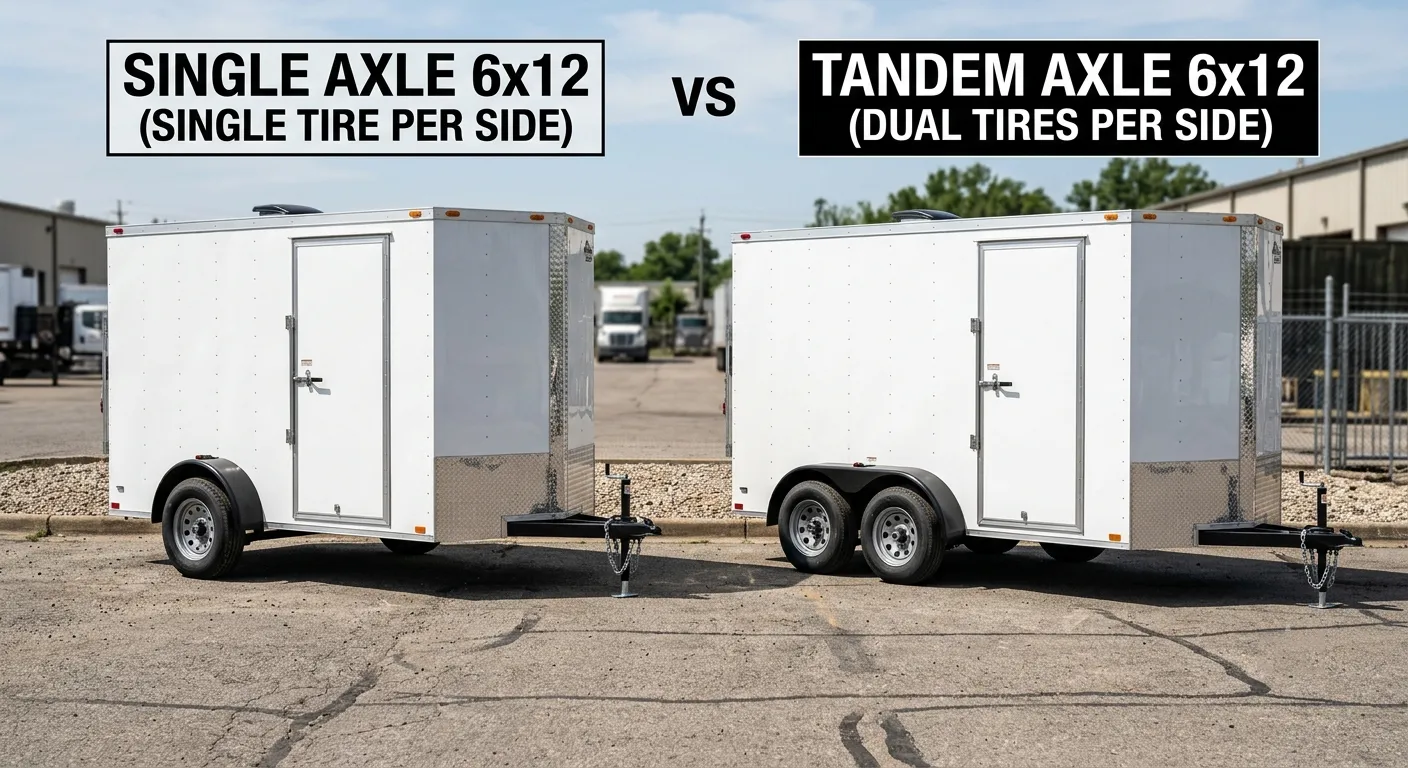
One of the biggest decisions buyers face is whether to choose a single axle or tandem axle 6x12 enclosed trailer.
A single axle 6x12 enclosed cargo trailer is usually the better fit for buyers who want a lighter, simpler, more affordable setup. It is often easier to maneuver, easier to back into tight spaces, and easier to maintain because it has fewer tires, hubs, brakes, and suspension components. For personal cargo, light business use, one motorcycle, small lawn care setups, tools, boxes, or weekend hauling, a single axle can be a practical choice.
A tandem axle 6x12 enclosed cargo trailer is usually the better fit for buyers who plan to haul heavier loads, travel longer distances, use the trailer daily for business, or want added stability. Tandem axle trailers often provide higher GVWR options, greater payload potential, more tire contact with the road, and better stability under heavier cargo. They can also be a smarter long-term choice for contractors, landscapers, mobile service businesses, and buyers who expect their cargo weight to increase.
The decision should not be based only on price. It should be based on loaded weight, towing frequency, road distance, braking needs, and business use.
Choose a single axle 6x12 if:
Choose a tandem axle 6x12 if:
A common mistake is buying a trailer for today’s smallest load instead of tomorrow’s real workload. If the trailer will support a growing business, a tandem axle may be worth considering even if the current cargo seems manageable.
Understanding Weight, GVWR, Payload, and Towing Capacity
Before buying a 6x12 enclosed cargo trailer, every buyer should understand four important terms: empty weight, GVWR, payload capacity, and towing capacity.
- Empty weight is how much the trailer weighs before cargo is loaded.
- GVWR, or Gross Vehicle Weight Rating, is the maximum total weight the trailer is rated to weigh when loaded. That includes the trailer itself plus cargo.
- Payload capacity is how much cargo the trailer can carry. It is calculated by subtracting the empty trailer weight from the GVWR.
- Towing capacity is the maximum weight your tow vehicle is rated to pull.
For example, if a trailer has a GVWR of 3,500 pounds and an empty weight of 1,200 pounds, the estimated payload capacity is about 2,300 pounds. If a tandem axle trailer has a 7,000-pound GVWR and an empty weight of 1,800 pounds, the estimated payload capacity may be around 5,200 pounds, depending on the specific build.
These numbers vary by manufacturer, axle package, materials, options, height, roof type, door type, flooring, and added accessories. That is why buyers should always verify the trailer’s actual manufacturer label and not rely only on general online estimates.
A buyer also needs to consider tongue weight, hitch rating, brake requirements, tire ratings, and load balance. A trailer that is within its GVWR can still tow poorly if the load is placed too far behind the axle. Poor weight distribution can create sway, instability, and unsafe handling.
For most buyers, the safest approach is to confirm:
A 6x12 enclosed trailer is very practical, but it must be matched correctly to the tow vehicle and cargo.
Ramp Door vs. Barn Doors
Door style is another major configuration decision.
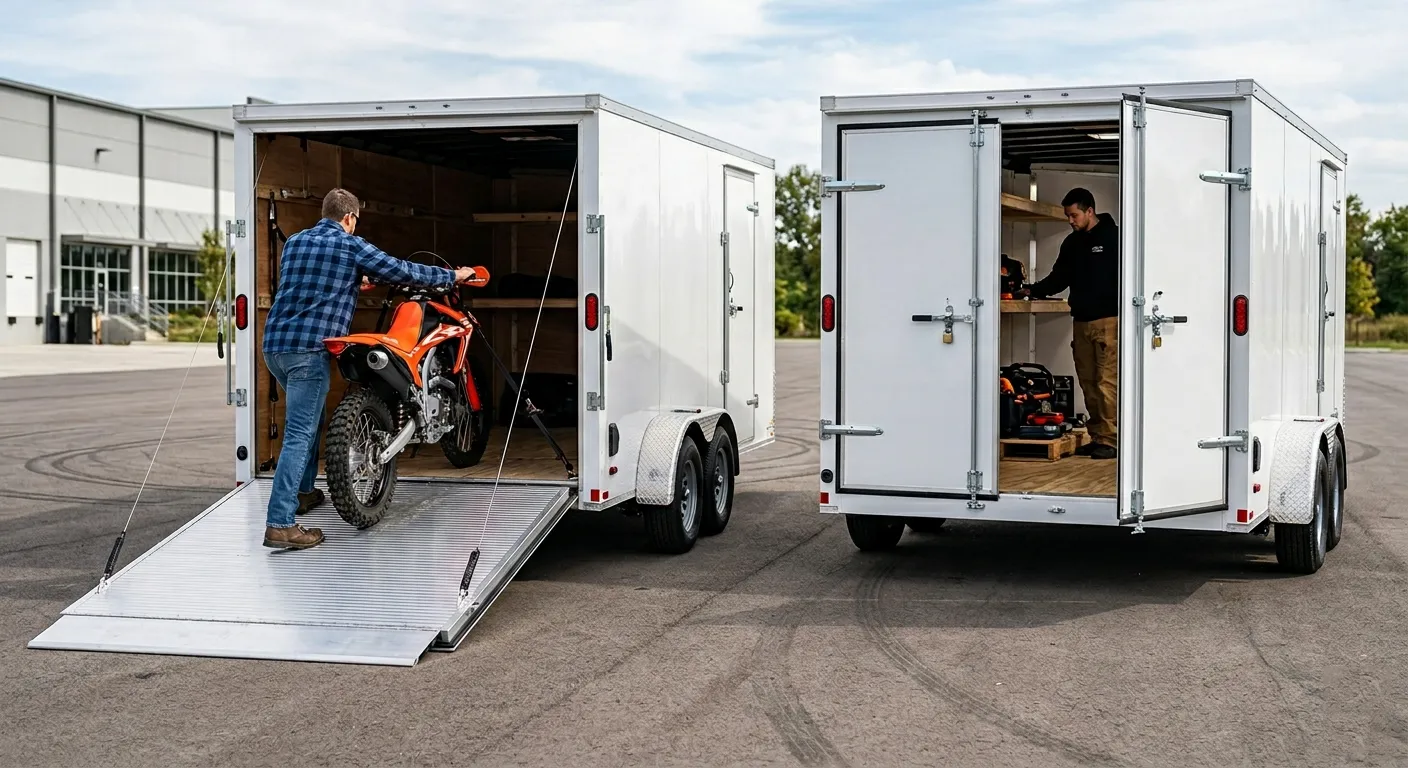
A ramp door is the best choice when the trailer will carry rolling equipment. This includes motorcycles, ATVs, lawn mowers, carts, pressure washers, wheeled toolboxes, generators, detailing equipment, and other cargo that is easier to roll than lift.
A ramp door makes loading and unloading faster, especially for solo operators. Landscapers, mobile detailers, motorcycle riders, event vendors, and contractors often prefer ramp doors because they reduce lifting and improve daily workflow.
However, ramp doors need open space behind the trailer. In tight parking lots, alleys, driveways, or storage areas, a ramp door may not always have enough room to fold down. Ramp doors can also add weight compared with barn doors, and the ramp rating should be checked before loading heavier equipment.
Barn doors are a strong choice for buyers who mostly load boxes, tools, supplies, shelving, parts, or inventory by hand. They swing open like double doors and usually require less rear clearance than a ramp door. They are also practical when backing up near a dock, wall, garage, or jobsite.
Choose a ramp door if:
Choose barn doors if:
Many buyers automatically choose a ramp door because it looks more versatile, but barn doors can be better for delivery, storage, and hand-loaded cargo. The right choice depends on the loading process, not just appearance.
E-Track, D-Rings, Wheel Chocks, and Tie-Down Planning
Interior cargo control is one of the most important parts of a good 6x12 enclosed trailer setup.
A trailer can be the right size and still be a poor fit if the cargo cannot be secured properly. Tools, motorcycles, mowers, boxes, and equipment should not be allowed to shift during turns, braking, acceleration, or rough roads.
D-rings are common fixed tie-down points. They work well for motorcycles, small equipment, and general cargo, but their placement is fixed. If the cargo changes often, fixed D-rings may not always line up with the best tie-down angle.
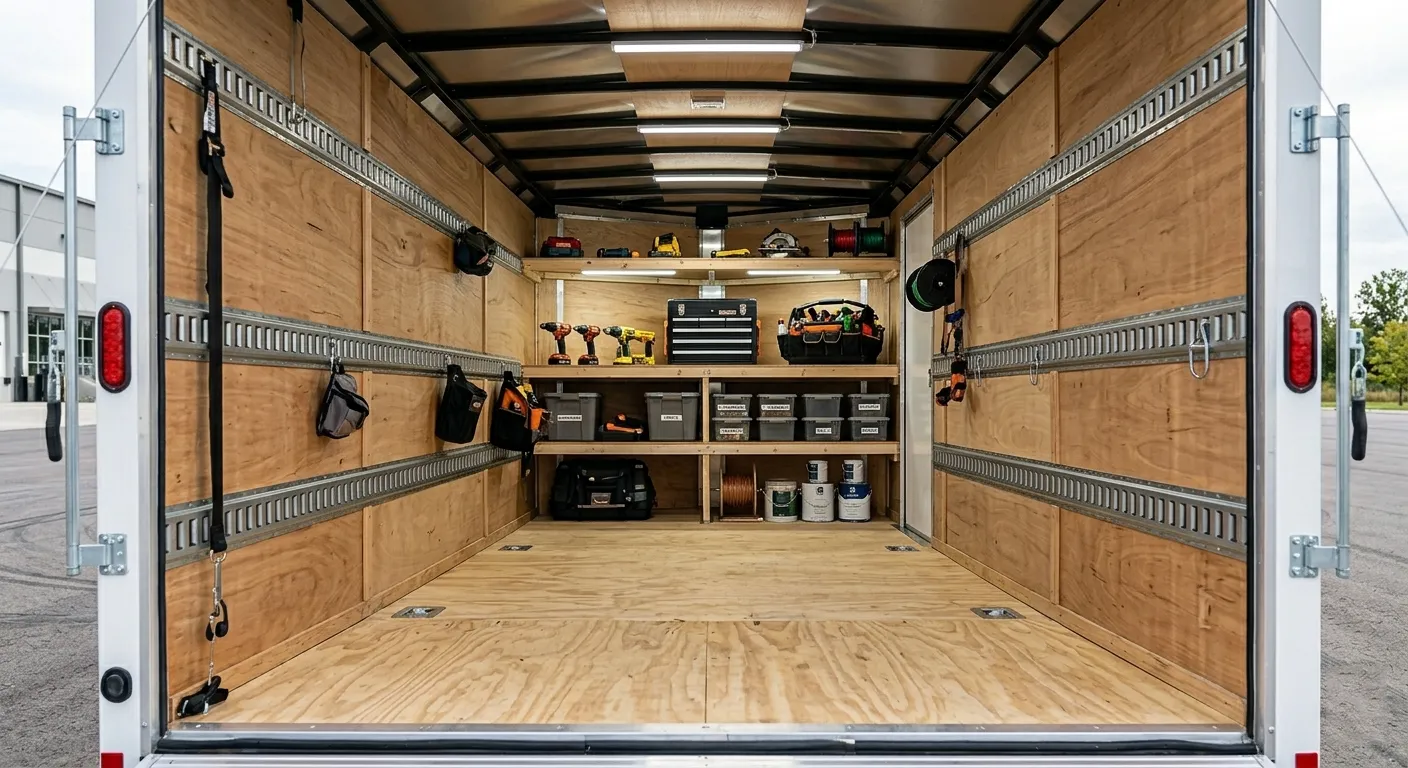
E-track is more flexible. It can be installed on floors or walls and allows adjustable tie-down points using E-track fittings, straps, rings, and hooks. This is especially useful for contractors, mobile businesses, powersports users, movers, and anyone who hauls different cargo from week to week.
For motorcycles, wheel chocks can help keep the front wheel positioned while straps secure the bike. For ATVs or UTVs, buyers should plan tie-down points around all four corners and confirm that straps have enough angle to hold the machine forward, backward, and side-to-side.
For landscapers, E-track or D-rings can help secure mowers, blowers, trimmers, fuel cans, toolboxes, and sprayers. For mobile businesses, wall-mounted track, shelves, cabinets, hooks, and tool racks can turn a 6x12 trailer into a rolling workspace.
A good tie-down plan should answer these questions:
A 6x12 trailer with well-planned tie-downs is safer, cleaner, and easier to use than a trailer with random anchor points.
Insulation, A/C, Ventilation, and Electrical Options
Some buyers need more than a basic cargo box. For certain uses, insulation, A/C, vents, and electrical packages can make a 6x12 enclosed trailer much more useful.
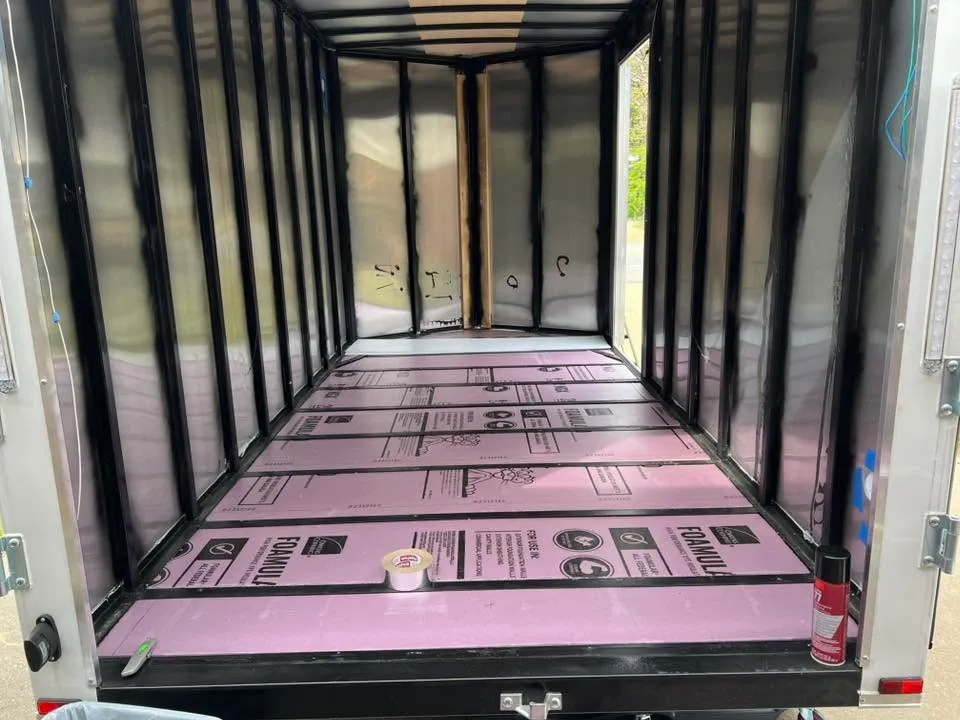
Insulation helps reduce heat transfer, improve comfort, and protect certain types of cargo from extreme temperature swings. It is especially useful in hot-weather states, for mobile businesses, or for trailers used as workspaces, vendor support units, detailing trailers, or equipment storage.
A/C can be useful if someone will spend time inside the trailer or if the trailer supports a mobile business. Mobile detailing, event support, tool storage, mobile repair, and vendor operations may benefit from air conditioning, especially in hot climates.
However, A/C is not just a plug-and-play decision. Buyers need to consider insulation quality, electrical service, generator or shore power needs, roof support, ventilation, BTU requirements, and how often the trailer will be occupied.
Ventilation is important even without A/C. Roof vents, side vents, and flow-through ventilation can help reduce heat and moisture buildup. This matters for landscaping tools, fuel odors, motorcycles, detailing chemicals, wet gear, and general cargo storage.
Electrical packages can support interior lights, outlets, battery systems, chargers, A/C units, and business equipment. A trailer used only for hauling boxes may not need much electrical support. A trailer used as a mobile workspace may need a much more detailed electrical plan.
Consider insulation, A/C, ventilation, or electrical upgrades if:
A basic trailer can haul cargo. A properly upgraded trailer can support a business.
Extra Height: When It Makes Sense
Extra height is one of the most overlooked 6x12 enclosed trailer options.
Standard interior height may be enough for boxes, tools, motorcycles, and basic cargo, but extra height can make a big difference for users who stand inside the trailer, load taller equipment, install shelving, or want a more comfortable workspace.
Extra height may be worth it if:
The tradeoff is that extra height may add weight, wind resistance, and cost. It can also affect how the trailer tows in crosswinds or at highway speeds. For daily business use, however, the comfort and usability often justify the upgrade.
Best 6x12 Configurations by Use Case
A smart way to choose a 6x12 enclosed trailer is to start with the use case first, then choose the axle, door, interior, and upgrade package.
1. Light Personal Hauling Setup
Best for: household cargo, weekend gear, small moves, storage, hobby use.
Recommended configuration:
This is a simple, affordable setup for buyers who do not haul heavy equipment every day.
2. Motorcycle Trailer Setup
Best for: motorcycles, dirt bikes, gear, helmets, tools, weekend rides.
Recommended configuration:
For motorcycle hauling, tie-down angles matter. The trailer should have enough space to secure the bike without forcing straps into poor positions.
3. Landscaping Trailer Setup
Best for: lawn care, push mowers, blowers, trimmers, fuel cans, hand tools.
Recommended configuration:
Landscapers should think carefully about weight. Mowers, fuel, sprayers, and tools can add up quickly.
4. Contractor Trailer Setup
Best for: electricians, plumbers, remodelers, flooring installers, HVAC techs, handymen.
Recommended configuration:
A contractor trailer should be organized around speed. The best setup lets the owner find tools quickly, secure expensive equipment, and keep the trailer balanced.
5. Mobile Detailing or Mobile Service Setup
Best for: detailing supplies, pressure washers, tanks, generators, vacuums, products, hoses.
Recommended configuration:
Water is heavy, so mobile detailing buyers must calculate payload carefully. A trailer that looks big enough may not have the right weight capacity once tanks and machines are loaded.
6. Event, Vendor, and Small Business Setup
Best for: tents, tables, chairs, displays, merchandise, food service support, event gear.
Recommended configuration:
For vendors, organization is often more important than raw size. A well-planned 6x12 can save time at every event.
Can a 6x12 Enclosed Trailer Be Used for Landscaping?
Yes, a 6x12 enclosed trailer can work very well for landscaping and lawn care, especially for smaller crews or businesses carrying compact equipment.
It can protect blowers, trimmers, fuel cans, push mowers, sprayers, and hand tools from rain and theft visibility. With racks, wall hooks, and E-track, it can become an organized mobile storage unit.
The key questions are:
A 6x12 is often a good starting point for lawn care, but buyers with large zero-turn mowers, multiple machines, or heavy commercial setups may need a larger tandem axle trailer.
Can a 6x12 Enclosed Trailer Carry Motorcycles, ATVs, or UTVs?
A 6x12 enclosed trailer is commonly used for motorcycles and may work for ATVs or some UTVs, but measurements are critical.
For motorcycles, the 12-foot length usually gives enough room for a bike, gear, and tie-down space. Multiple motorcycles may fit depending on handlebar width, angle, wheel chock placement, and interior layout.
For ATVs, a 6x12 can be a practical size if the ATV fits through the rear door and leaves enough room for tie-down access.
For UTVs and side-by-sides, buyers must check overall width, length, height, tire size, roof height, accessories, and door opening dimensions. Many side-by-sides are wide enough or tall enough that a wider or taller trailer may be needed.
Never assume based on model name alone. Measure the machine and confirm:
What to Ask Before Ordering a 6x12 Enclosed Cargo Trailer
Before ordering, buyers should ask these questions:
Answering these questions early helps buyers avoid under-building, over-building, or choosing options that do not match the real use case.
Why Factory-Direct Buying Matters
Factory-direct buying can help customers compare trailer sizes, axle setups, door styles, and custom options before committing to a build. For buyers who know what they need, factory-direct ordering can also make it easier to select the right configuration from the beginning instead of modifying the trailer later.
A buyer can start with the intended use, then build the trailer around that purpose. A landscaper may prioritize ramp access, racks, ventilation, and durable flooring. A contractor may want shelving, E-track, lighting, and extra height. A motorcycle owner may need a ramp door, wheel chocks, and tie-downs. A mobile business may need insulation, A/C, electrical, and interior layout planning.
The goal is not simply to buy a 6x12 enclosed trailer. The goal is to buy the right 6x12 enclosed trailer.
Final Thoughts
A 6x12 enclosed cargo trailer is popular because it is useful, manageable, and highly customizable. It can serve as a work trailer, business trailer, motorcycle trailer, landscaping trailer, storage trailer, event trailer, or general cargo hauler.
But the best 6x12 trailer is not the same for every buyer.
A single axle setup may be perfect for lighter cargo and occasional use. A tandem axle may be better for heavier business loads. A ramp door may be essential for rolling equipment, while barn doors may be better for hand-loaded cargo. E-track, D-rings, wheel chocks, ventilation, insulation, A/C, extra height, shelving, lighting, and electrical packages can all change how useful the trailer becomes.
The smartest buyers start with the cargo, then choose the configuration.
For contractors, landscapers, mobile service providers, recreational users, and small business owners, the 6x12 enclosed cargo trailer remains one of the most practical trailer sizes available. With the right build, it can protect valuable equipment, improve organization, simplify hauling, and support long-term business or personal use.
Ready to customize your perfect 6x12 enclosed cargo trailer?
Visit MakeMyTrailer.com