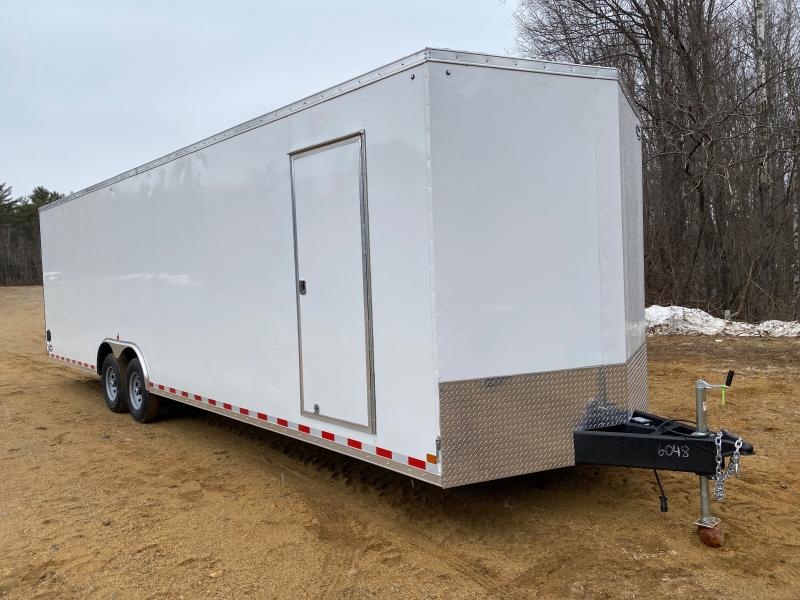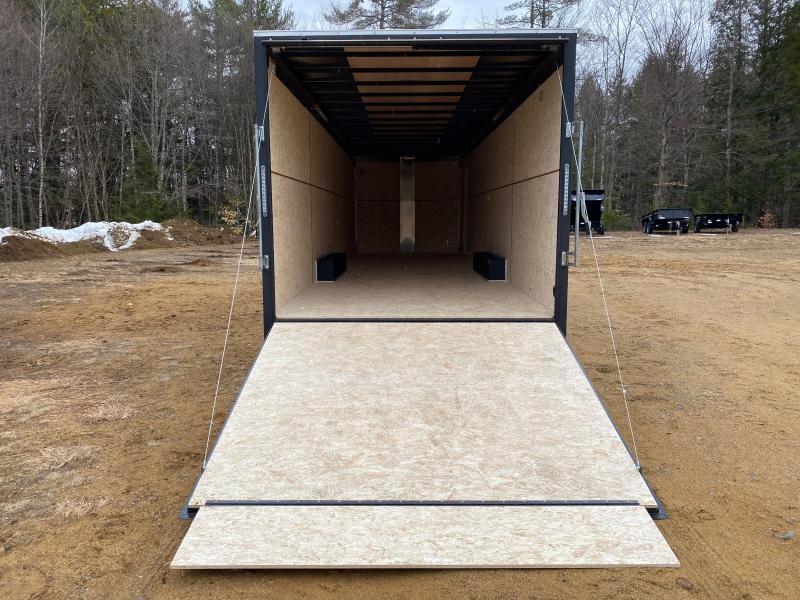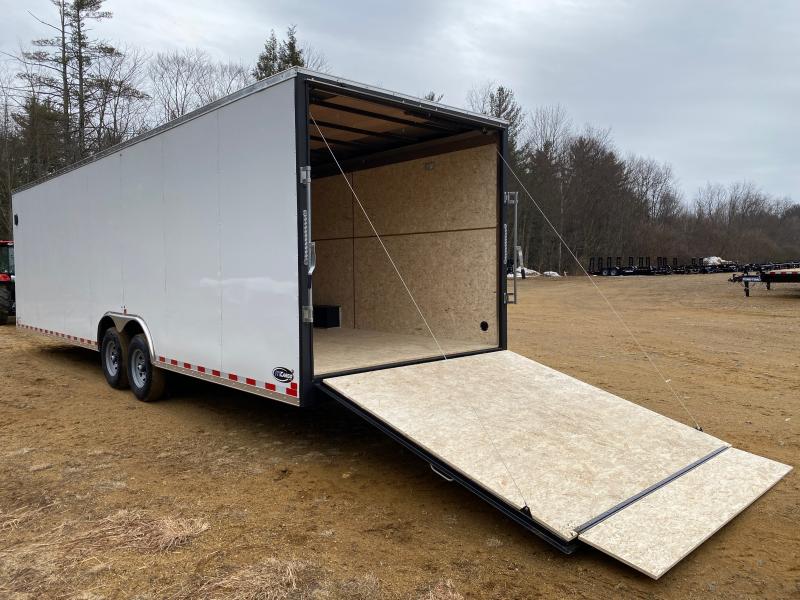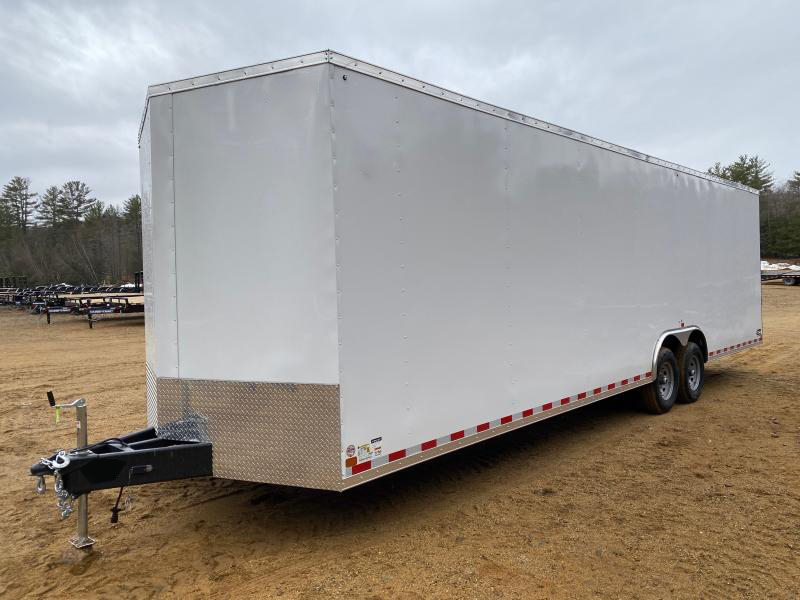



Overall Length: 33’6″ / 402 in (Breakdown: 30′ on the Box + 3’6″ on the Tongue) 20″ on the Vnose
Overall Width: 8’6″/ 102 in (Breakdown: 8’6″ on the Box)
Overall Height ( Diamond ): 8’4″ / 100 in (Breakdown: 7′ on the Box + 16″from the ground to the box)
Overall Height (Anvil): 7’10” / 94 in (Breakdown: 6’6″ on the Box + 16″from the ground to the box)
Overall Length: 29’9″ Box (Breakdown: Subtract 3″ which counts for rear door & framing) plus 20″ on the Vnose
Overall Width: 8′ Wall to Wall (Breakdown: Subtract 3″ (each wall) which counts for framing & Plywood)
Width Between Wheel Boxes: 81 inches (Breakdown: Subtract 7.5″ (each side) which counts for wheel boxes
Overall Height ( Diamond ): 7′
Overall Height (Anvil): 6’6″
Width: 90″ (Breakdown: Subtract 12″ (6 on each side) which counts for plywood & framing)
Height ( Diamond ): 78″ (Breakdown: Subtract 6″ which counts for plywood & framing)
Height (Anvil): 72″ (Breakdown: Subtract 6″ which counts for plywood & framing)
7-way Round plug
5x4.5 (5 Lug)
5200 lb Axles: 8 Ply
6000 lb Axles: 10 Ply
Screws are 4′ apart instead of being every 2′
It’s an asphalt undercoating paint
We developed a section exclusively for Custom Options where we show sample photos and explain most popular options:
Click Here for More Information.
Here are examples of some of the most popular Custom Options:
– Blackout Package
– Electrical Package
– Insulation Package
– Rubber Flooring
– Etracks
– D-rings
– Windows
– Extended Tongue
– Extra Height
– Ladder Racks
– Finished Interior (Metal/Vinyl)
– Air Conditioner
– Lighting Options
– Axle Upgrades
– Concession Window
– Special Door Options
– Cabinets
– Barn Doors


An 8.5x30 double axle enclosed trailer is more than just a box on wheels; it’s a significant investment in your business, hobby, or lifestyle. As one of the most versatile and popular sizes for cargo trailers, it serves as a mobile workshop, a car hauler for race day, or a secure transport for valuable equipment. But to truly unlock its potential, you must look beyond the steel frame and aluminum skin. Insulation is the single most effective upgrade you can make, transforming your enclosed cargo trailer from a simple storage unit into a high-performance, protected environment. The trailer market is robust, with the U.S. Aluminum Trailer Market projected to reach USD 893.05 Million by 2032, reflecting a growing demand for capable and customized hauling solutions. Making the smart choice on insulation ensures your investment is not only protected but maximized for years to come.
Introduction: Why Insulation is a True Game-Changer for Your 8.5x30 Double Axle Enclosed Trailer
Insulation fundamentally changes how your trailer performs. An uninsulated metal box is at the mercy of the elements, becoming an oven in the summer sun and an icebox in the winter cold. This dramatic temperature swing can damage sensitive cargo, create an uncomfortable working environment, and lead to destructive condensation. By adding a thermal barrier, you take control of the interior climate, creating a stable, predictable space that serves your specific needs.
Understanding the Unique Needs of an 8.5x30 Double Axle Enclosed Trailer
The sheer volume of an 8.5x30 trailer makes it particularly susceptible to temperature fluctuations. Its large surface area—across the roof, floor, and side walls—acts as a massive conductor for heat transfer. The robust construction, featuring a tandem axle for stability and a high trailer GVW (Gross Vehicle Weight Rating), means it’s designed to carry substantial loads over long distances. This makes climate control not a luxury, but a necessity for protecting the valuable assets inside, whether it’s a classic car, construction tools, or temperature-sensitive inventory.
More Than Just Protection: Boosting Your Trailer’s Functionality and Value
Proper insulation elevates your trailer’s utility far beyond simple transport. It enables new possibilities: a climate-controlled mobile office, a comfortable workshop for on-site jobs, or even a basic camper conversion for weekend trips. This added versatility directly translates to a higher resale value. When prospective buyers compare an insulated trailer to a standard model, the benefits of year-round usability, cargo protection, and a quieter, more professional environment make it a far more attractive asset.
The “Smart Choice”: Core Benefits of Insulating Your Enclosed Trailer
Making the decision to insulate is a strategic investment that pays dividends in functionality, comfort, and long-term value. The benefits extend far beyond simply keeping the interior a few degrees cooler or warmer, touching every aspect of how you use and maintain your trailer.
Understanding the Specific Needs of an 8.5x30 Double Axle Enclosed Trailer
This trailer size is a workhorse. Its tandem axle design provides superior stability for heavy loads, making it ideal for hauling vehicles or significant amounts of equipment. This professional-grade capability means the cargo inside is often high-value. Insulation addresses the primary vulnerability of any enclosed trailer: the lack of a thermal barrier. For an 8.5x30 model, this is amplified due to the large surface area that absorbs and radiates heat.
Energy Efficiency and Cost Savings
If you plan to use any form of heating or air conditioning, insulation is non-negotiable. It dramatically reduces the energy required to maintain a comfortable temperature, meaning your generator or shore power connection works less, saving fuel and reducing wear and tear on your HVAC unit. This efficiency is a direct cost saving over the life of the trailer. The growing global insulation market, expected to be valued at USD 74.69 Bn in 2025, underscores a worldwide trend towards energy efficiency in all types of structures, including mobile ones.
What You’ll Gain from This Guide: Helping You Make the Best Decision
This guide will equip you with the knowledge to select the right type of insulation for your specific needs, understand how it integrates with your trailer’s structure, and weigh the pros and cons of different installation methods. We will cover materials, key installation areas, and how insulation works with other custom options to create the perfect enclosed trailer.
Moisture Control and Preventing Condensation Damage
Temperature differences between the inside and outside of your trailer create condensation. This moisture can be catastrophic, leading to rust on the frame, delamination of plywood walls, mold growth, and damage to your cargo. Insulation, particularly closed-cell spray foam, creates a vapor barrier that keeps the warm, humid air from contacting the cold outer skin of the trailer, effectively eliminating condensation and protecting your investment from the inside out.
The “Smart Choice” Advantage: Key Benefits of Insulating Your Enclosed Trailer
Ultimately, the smart choice is about maximizing utility. Insulation provides temperature control for cargo safety, sound dampening for a more pleasant environment, moisture prevention for longevity, and energy efficiency for cost savings. It transforms a standard enclosed car trailer into a multi-purpose, high-value asset ready for any task.
Understanding Your Trailer’s Structure for Effective Insulation
Before choosing an insulation material, it’s crucial to understand the anatomy of your 8.5x30 trailer. The internal structure, from the floor cross members to the roof bows, directly influences which insulation types are most effective and how they should be installed.
Perfect Temperature Control for Your Cargo and Your Comfort
The goal of insulation is to create a thermal break between the exterior and interior. In summer, it slows the transfer of solar heat through the roof and side walls into the trailer. In winter, it keeps the cold out and retains any heat generated inside. This stability is critical for everything from preventing tools from rusting in humid conditions to protecting sensitive electronics from extreme temperature swings.
How Cross Members and Interior Height Impact Insulation Choices and Application
The steel frame of your trailer, including the floor cross members and wall studs, acts as a thermal bridge, conducting heat or cold directly through the structure. Effective insulation must address these areas. The spacing of these members will dictate whether pre-cut foam boards are a good fit or if a spray-on application is better. A higher interior height provides more space for thicker ceiling insulation without sacrificing headroom, a key consideration for comfort and functionality.
Smarter Energy Use and Real Cost Savings
A well-insulated trailer with a quality roof vent for air circulation can often maintain a tolerable temperature without any active climate control. When you do need to run an AC unit or heater, the system will cycle on and off far less frequently, leading to tangible savings. This is particularly important for those using their trailer as a mobile workspace or for long-haul transport.
Integrating Insulation with Existing or Future Interior Features
Consider how insulation will coexist with other features. If you plan to install Recessed Wall E-Track or Recessed Floor E-Track for cargo control, the insulation must be installed around these components without compromising its integrity. The same applies to electrical wiring for lights and outlets. Planning these custom options in advance ensures a clean, professional installation where all systems work together seamlessly.
Quieter Interior and a More Pleasant Environment
One of the most immediate and appreciated benefits of insulation is noise reduction. It significantly dampens road noise, vibrations, and sounds from the outside, creating a calmer, more focused environment inside. This is invaluable if you use your trailer as a mobile office, a study, or a workshop where concentration is key.
Spray Foam Insulation (Closed-Cell vs. Open-Cell)
Spray foam is often considered the premium choice for cargo trailers.
- Closed-Cell: This rigid foam offers a high R-value per inch, acts as an excellent vapor barrier to stop condensation, and adds structural rigidity to the side walls. It adheres directly to the trailer skin, sealing every crack and crevice for a complete air seal.
- Open-Cell: This foam is lighter and less expensive but has a lower R-value and is not a vapor barrier, meaning it can absorb moisture. For a trailer environment, closed-cell is almost always the superior and safer choice.
Effective Moisture Management to Prevent Condensation Damage
Proper moisture management is a two-part system: insulation and ventilation. Insulation prevents condensation from forming on the interior surfaces, while a roof vent allows humid air to escape. This combination is essential for preventing mold, mildew, and rust, thereby protecting both your cargo and the trailer itself.
Fiberglass Batts/Rolls
Fiberglass is a traditional and cost-effective insulation material. It is readily available and offers a decent R-value. However, for a trailer, it has significant drawbacks. It can absorb moisture if the vapor barrier is compromised, leading to mold and a loss of insulating properties. The constant vibration of road travel can also cause it to settle over time, creating uninsulated gaps.
Enhancing Resale Value and Versatility of Your Tandem Axle Trailer
An insulated trailer is a premium product. It signals to potential buyers that the trailer has been well-maintained and thoughtfully upgraded for maximum utility. This feature broadens its appeal to a wider range of buyers, from contractors to motorsports enthusiasts, ensuring you recoup a significant portion of your investment upon resale. The global insulation market’s projected growth to USD 127.70 billion by 2033 highlights the increasing value consumers place on thermally efficient spaces.
Hybrid Approaches: Combining Insulation Types for Optimal Performance
For a budget-conscious but effective solution, some owners use a hybrid approach. This might involve using rigid foam boards for the large, flat areas of the side walls and floor, which is a cost-effective DIY method, and then hiring a professional to apply spray foam to the ceiling and more complex corners to ensure a perfect air seal where it matters most.
Getting to Know Your Trailer’s Structure for Smart Insulation
A successful insulation project depends on a thorough understanding of your trailer’s construction. Every component, from the frame to the doors, presents a unique challenge and opportunity for creating a complete thermal envelope.
DIY vs. Professional Installation: Weighing Expertise, Cost, and Time
- DIY: Using rigid foam boards or fiberglass batts can be a cost-effective weekend project for a handy individual. It requires careful measuring, cutting, and sealing. With approximately 11.2 million households now owning an RV, many of whom are towable trailers, the DIY spirit is strong in this community.
- Professional: Spray foam insulation almost always requires professional installation due to the specialized equipment and safety precautions needed. While more expensive upfront, it provides a superior, seamless result that is often faster and more effective than any DIY method.
Key Areas to Insulate: Walls, Ceiling, and Floor
For complete climate control, you must insulate all six sides of the trailer. The ceiling is the most critical area for blocking solar heat gain. The side walls are the largest surface area. The floor is essential for preventing cold from radiating up from the ground, especially if you’ll be working or spending extended time inside. Don’t forget the front V-nose area, which has multiple angles and is best insulated with spray foam or meticulously cut foam boards.
Strategies for Addressing Thermal Bridging: Around Cross Members, Studs, and Frames
The metal frame of your trailer is a superhighway for heat. Simply placing insulation between the studs is not enough. To be truly effective, you should apply a layer of rigid foam board over the studs before installing the interior walls. This creates a “thermal break” that dramatically reduces energy transfer through the frame.
How Cross Members and Interior Height Influence Insulation Options and Installation
The depth of your wall studs and roof bows dictates the maximum thickness of insulation you can install. Standard depths are often 1.5 inches. Floor insulation must fit between or over the floor cross members without interfering with any undercarriage components. A trailer with a taller interior height is advantageous, as it allows for thicker ceiling insulation without compromising the feeling of an open, workable space.
Working with Electrical Wiring and Other Utilities Within Insulated Spaces
Plan your electrical layout before you insulate. Run all wiring for lights, outlets, and accessories like the 7-way Round plug connection first. With spray foam, the wiring will be permanently encased. With foam board or batts, you’ll need to cut channels for the wires to run through. Always ensure your wiring is properly shielded and secured to prevent any safety hazards.
Crucial Spots: Tackling Heat Transfer Around Doors and Openings
The ramp door and side door are major sources of heat loss and gain. While insulating the core of the doors is important, the most critical aspect is weatherstripping. Ensure you have high-quality, compressive seals around the entire perimeter of all doors to prevent drafts and complete your thermal envelope.
Conclusion
Choosing the right insulation for your 8.5x30 double axle enclosed trailer is a critical decision that transforms its functionality, protects your cargo, and enhances its long-term value. Whether you’re a contractor needing a reliable mobile workshop, a racer protecting a prized vehicle, or an entrepreneur with a mobile business, insulation is the foundation of a truly versatile and professional setup. By understanding the unique structural aspects of your tandem axle trailer—from its side walls and cross members to its ramp door and roof vent—you can make an informed choice between spray foam, rigid board, or other materials.
As a next step, assess your primary use case, climate, and budget. For maximum performance and moisture control, professional closed-cell spray foam is the premier solution. For a capable and budget-friendly DIY project, a meticulous installation of rigid foam board with attention to sealing all seams and addressing thermal bridging offers excellent results. Don’t forget to integrate your insulation plan with other custom options like E-Track, electrical systems, and interior finishing. By investing in a complete thermal envelope, you’re not just upgrading a piece of equipment; you are creating a reliable, comfortable, and efficient environment ready for any challenge.