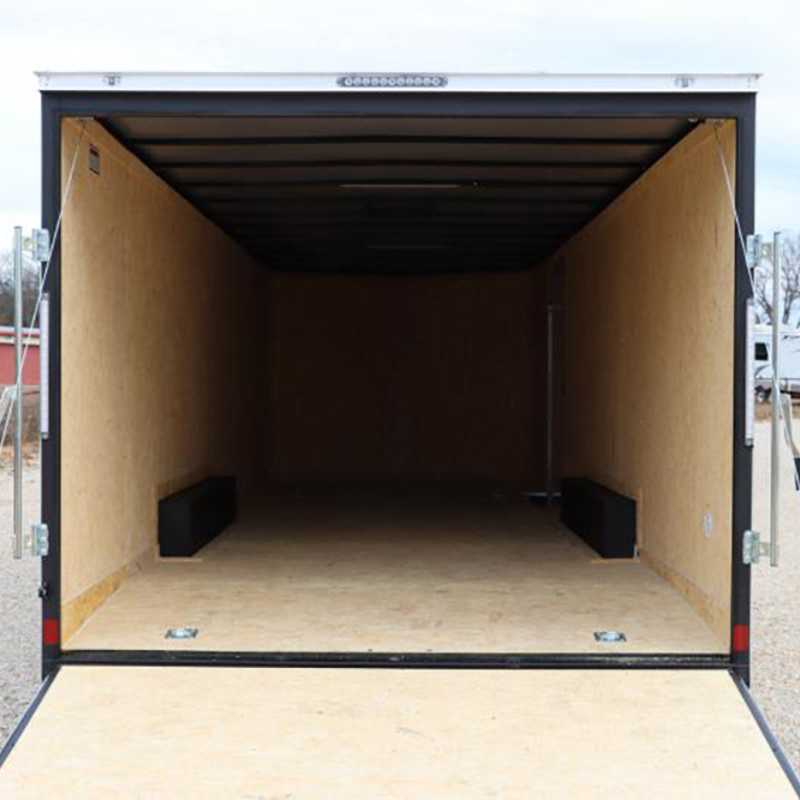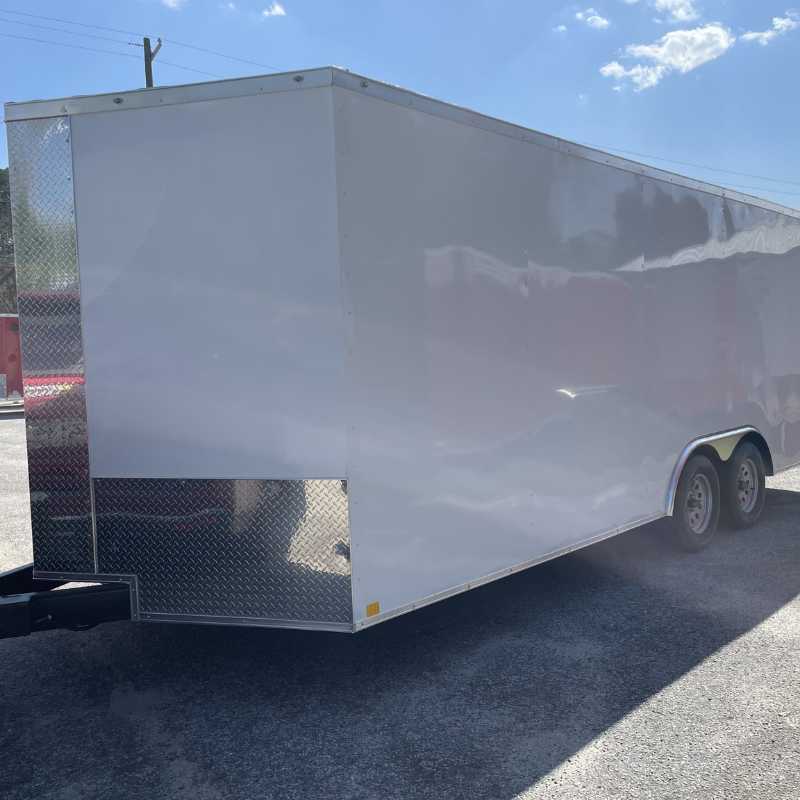



Overall Length: 25’6″ / 306 in (Breakdown: 22′ on the Box + 3’6″ on the Tongue) 20″ on the Vnose
Overall Width: 8’6″/ 102 in (Breakdown: 8’6″ on the Box)
Overall Height ( Diamond ): 8’4″ / 100 in (Breakdown: 7′ on the Box + 16″from the ground to the box)
Overall Height (Anvil): 7’10” / 94 in (Breakdown: 6’6″ on the Box + 16″from the ground to the box)
Overall Length: 21’9″ Box (Breakdown: Subtract 3″ which counts for rear door & framing) plus 20″ on the Vnose
Overall Width: 8′ Wall to Wall (Breakdown: Subtract 3″ (each wall) which counts for framing & Plywood)
Width Between Wheel Boxes: 81 inches (Breakdown: Subtract 7.5″ (each side) which counts for wheel boxes
Overall Height ( Diamond ): 7′
Overall Height (Anvil): 6’6″
Width: 90″ (Breakdown: Subtract 12″ (6 on each side) which counts for plywood & framing)
Height ( Diamond ): 78″ (Breakdown: Subtract 6″ which counts for plywood & framing)
Height (Anvil): 72″ (Breakdown: Subtract 6″ which counts for plywood & framing)
7-way Round plug
5x4.5 (5 Lug)
6 Ply
Screws are 4′ apart instead of being every 2′
It’s an asphalt undercoating paint
We developed a section exclusively for Custom Options where we show sample photos and explain most popular options:
Click Here for More Information.
Here are examples of some of the most popular Custom Options:
– Blackout Package
– Electrical Package
– Insulation Package
– Rubber Flooring
– Etracks
– D-rings
– Windows
– Extended Tongue
– Extra Height
– Ladder Racks
– Finished Interior (Metal/Vinyl)
– Air Conditioner
– Lighting Options
– Axle Upgrades
– Concession Window
– Special Door Options
– Cabinets
– Barn Doors

Introduction: Why the 8.5x22 Double Axle is Your Ideal Cargo Solution
Selecting the right enclosed cargo trailer is a significant investment for any business or individual. It’s not just about finding a box on wheels; it’s about choosing a reliable partner that can securely haul your valuable cargo, equipment, or vehicles for years to come. Among the myriad of options, the 8.5x22 double axle configuration stands out as a versatile and robust solution. This guide moves beyond simple specification lists to provide the crucial insights you need, empowering you to understand what “quality” truly means and how to select an 8.5x22 enclosed cargo trailer that perfectly aligns with your demands.
Defining the 8.5x22 Enclosed Cargo Trailer
The 8.5x22 designation refers to the trailer’s dimensions: 8.5 feet (102 inches) wide and 22 feet long. This size hits a sweet spot, offering substantial interior volume for contractors, landscapers, motorsports enthusiasts, and small businesses without being overly cumbersome to tow. An enclosed cargo trailer provides critical protection from weather and theft, making it superior to open trailers for securing valuable assets.
The Double Axle Advantage: Stability, Capacity, and Safety
The “double axle” (or tandem axle) design is fundamental to this trailer’s capability. Using two axles distributes the load more evenly, significantly enhancing stability, especially at highway speeds and in crosswinds. This design also dramatically increases the trailer’s weight-carrying capacity and provides a crucial safety redundancy; if one tire fails, the other on the same side helps maintain control, allowing you to pull over safely.
What “Quality” Truly Means in a Cargo Trailer
Quality isn’t just a marketing term; it’s a combination of superior materials, robust engineering, and meticulous construction. In a cargo trailer, it manifests in the thickness of the frame’s steel tubing, the type of suspension on the axles, the grade of plywood used for walls and flooring, the effectiveness of the water sealing, and the durability of the tires. A quality trailer is built to withstand the rigors of frequent use and harsh road conditions, ensuring longevity and a better return on your investment.
Step One: Assessing Your Needs – What Will Your Trailer Haul?
Before diving into specifications, the most critical step is to define your primary use case. The perfect trailer is one that meets your specific requirements for weight, volume, and accessibility. A clear understanding of your needs will guide every subsequent decision.
Determining Your Required Payload and Gross Vehicle Weight Rating (GVWR)
This is the most important calculation you will make. The Gross Vehicle Weight Rating (GVWR) is the maximum total weight a trailer can safely be, including the trailer’s own weight and the cargo inside. The payload capacity is what’s left for your cargo after subtracting the trailer’s empty weight from the GVWR. For example, if a trailer has a 10,000 lbs GVWR and weighs 3,500 lbs empty, its maximum payload is 6,500 lbs. Always overestimate your payload needs to ensure a safe margin and avoid overloading the axles.
Cargo Type Considerations: From Tools and Equipment to Vehicles (e.g., Motorcycle Trailers)
The type of cargo you plan to haul dictates key features. Contractors hauling tools and materials will prioritize durable Plywood Walls and flooring, along with systems like E-TRACK for securing miscellaneous items. Those transporting cars or motorcycles will need a sturdy ramp door with an extension flap for low-clearance loading and sufficient interior height. For those in states like Georgia with diverse business needs, from agriculture to film production, this versatility is key.
Frequency of Use, Travel Distances, and Terrain
How often and how far will you be towing? A trailer used daily for long-distance hauls requires more robust components—like premium Radial Tires and torsion axles—than one used for occasional local trips. If your routes involve rough or unpaved roads, a heavier-duty frame and a more forgiving suspension system become essential for protecting both the trailer and its contents.
The Foundation of Quality: Chassis, Axles, and Frame Construction
The underpinnings of an enclosed cargo trailer are its most critical components. A trailer’s strength, durability, and towing performance are directly tied to the quality of its chassis, frame, and axles.
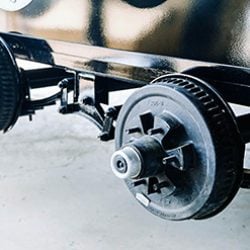
Understanding Axle Types: Torsion Axles vs. Leaf Spring Suspension
The two primary suspension systems for cargo trailers are leaf spring and torsion.
- Leaf Spring Axles: This is the traditional, cost-effective standard. They are robust and relatively simple to repair, using a stack of curved steel plates (springs) to absorb road shock.
- Torsion Axles: These offer a superior, smoother ride by using rubber cords inside the axle tube to cushion the load. This independent suspension action for each wheel reduces trailer bouncing and is gentler on sensitive cargo. While more expensive upfront, they require less maintenance.
Axle Capacity: Why 5200# Tandem Axles are Common and Crucial for an 8.5x22
For an 8.5x22 trailer, tandem 5200# axles are a highly recommended configuration. This setup provides a GVWR of around 9,990 lbs to 10,400 lbs, offering a substantial payload capacity suitable for hauling heavy equipment or vehicles. Cheaper 3500# axles (7000# GVWR) may suffice for lighter loads, but the 5200# AXLES provide a greater safety margin, better braking power, and increased longevity.
Robust Frame Construction: The Backbone of Durability
A trailer’s frame is its skeleton. Look for main frames constructed from 6″ or 8″ I-beams or tube steel, not lighter C-channel. The spacing of the crossmembers in the floor and the upright posts in the walls is also critical. A 16″ on-center spacing is the industry standard for high-quality trailers, providing superior rigidity and preventing flexing or warping under load.
Undercoating Protection: Why Asphalt Undercoating Paint Matters
The underside of a trailer is constantly exposed to road salt, water, and debris. A quality asphalt-based undercoating provides a thick, durable barrier against corrosion and rust. This simple feature can significantly extend the life of the frame and is a clear indicator of a manufacturer’s commitment to durability.
Coupler and Hitch: Ensuring a Secure and Compatible Connection
The coupler on the trailer’s tongue must be rated to handle the trailer’s GVWR. For an 8.5x22 trailer, a 2-5/16″ ball coupler is standard. Ensure it is a heavy-duty model and that your tow vehicle’s hitch system is rated appropriately for the trailer’s weight.
Wheels, Tires, and Brakes: Safety and Performance on the Road
The components that connect your trailer to the road are critical for safety. Skimping on wheels, tires, or brakes is a risk that is never worth taking.
Tire Selection: The Importance of Radial Tires, Ply Rating, and Size
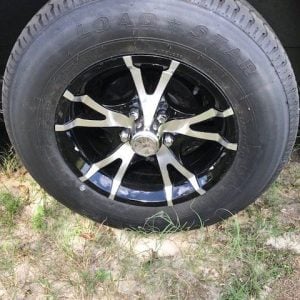
Always insist on Radial Tires. Compared to older bias-ply tires, radials run cooler, have a longer tread life, provide better fuel economy, and offer a smoother ride. Check the tire’s load range (e.g., Load Range E), which indicates its ply rating and weight-carrying capacity. Ensure the total capacity of all four tires exceeds the trailer’s GVWR.
Wheel Options: Steel Wheels vs. Aluminum Wheels for Durability and Aesthetics
- Steel Wheels: These are the workhorse standard—strong, durable, and inexpensive. They are ideal for heavy-duty commercial use.
- Aluminum Wheels: These offer a significant aesthetic upgrade and are lighter, which can slightly improve payload. They are also naturally corrosion-resistant.
Understanding Bolt Patterns (e.g., 5x4.5 (5 Lug)) and Their Significance
The bolt pattern determines how the wheel attaches to the hub. A common pattern for lighter axles is 5x4.5 (5 lugs on a 4.5″ diameter circle). Heavier axles, like the 5200# and 6000# models, typically use a 6-lug pattern, while 7000# axles use an 8-lug pattern. This is important for sourcing spare wheels and ensuring compatibility.
Essential Braking Systems: Electric Brakes for Control and Safety
For a trailer of this size and weight, electric brakes on both axles are a non-negotiable safety feature. These brakes are activated by an in-cab controller in your tow vehicle, providing proportional braking power that makes stopping smooth, controlled, and significantly shorter.
The 7-Way Round Plug: Your Trailer’s Electrical Lifeline
The 7-way round plug is the standard connector that links your tow vehicle to the trailer. It powers the electric brakes, taillights, brake lights, turn signals, and running lights. A properly wired and maintained plug is essential for safe and legal towing.
Exterior and Interior: Protecting Your Cargo and Enhancing Functionality
The “box” of the enclosed trailer is what protects your cargo. Its construction, materials, and design features directly impact durability, usability, and even fuel economy.
Exterior Siding: Options for Durability, Aesthetics, and Reduced Maintenance
Most cargo trailers use .024″ or .030″ thick aluminum siding. While .024″ is common, upgrading to .030″ or thicker aluminum provides better resistance to dents and “oil canning” (rippling).
The Advantages of a Screwless Exterior or Semi Screw Less Construction
A screwless exterior, where the aluminum panels are bonded to the frame with high-strength adhesive, offers a clean, sleek look ideal for applying graphics or wraps. More importantly, it eliminates the hundreds of potential leak points that screws create, enhancing the trailer’s water resistance and longevity.
Roof Construction and Advanced Water Sealing Techniques
A one-piece aluminum roof is a critical feature for preventing leaks. Look for trailers that use advanced sealing techniques and quality flashing around vents and seams. A leaky roof can quickly ruin both your cargo and the trailer’s interior plywood.
Optimizing Interior Space: Interior Height, Walls, and Flooring
Standard interior height is often 6’6″, which is adequate for many uses. However, opting for a 7′ or even 7’6″ interior height can be a game-changer for hauling taller items like UTVs or for creating a more comfortable workspace inside. The interior Walls and flooring should be made of 3/4″ plywood for the floor and 3/8″ plywood for the walls to ensure durability.
Plywood Walls and Alternative Interior Finishes for Enhanced Durability
Plywood Walls are the industry standard for good reason: they are strong, easy to repair, and provide a solid surface for mounting shelves, racks, and cargo management systems like E-TRACK. Some manufacturers may offer alternative finishes like aluminum or composite panels for a brighter, easier-to-clean interior.
V-Nose Design: Aerodynamics, Fuel Efficiency, and Extra Storage Space
A V-nose design tapers the front of the trailer, which improves aerodynamics and can lead to better fuel efficiency for your tow vehicle. It also adds a few feet of extra interior space at the front, perfect for installing cabinets or a small workbench.
Doors and Access: Convenience, Security, and Versatility
How you get your cargo in and out of the trailer is a crucial aspect of its day-to-day functionality. The right combination of doors enhances efficiency and security.
Rear Access Solutions: Spring Assisted Rear Ramp Door vs. Double Barn Doors
- Ramp Door: This is the most popular choice for those loading wheeled equipment like mowers, motorcycles, or cars. A spring-assisted ramp door is easy to lower and raise, and a built-in extension flap helps bridge the gap to the ground.
- Double Barn Doors: These are ideal for forklift loading or when you need to back the trailer up flush to a loading dock. They swing wide, are less mechanically complex, and are often preferred for pure freight hauling.
The Convenience of an RV Style Side Door
An RV style side door is a must-have feature. It allows you to access the front of the trailer without having to lower the rear ramp or open the barn doors. Quality side doors feature a secure flush lock and a separate deadbolt for added security, providing convenient and safe access to your enclosed cargo.
Conclusion
Choosing the right 8.5x22 double axle cargo trailer is a process of matching robust construction with your specific hauling needs. By moving beyond the sticker price and focusing on the core components of quality, you can make an informed decision that will serve you well for years.
Start by clearly defining your payload requirements to determine the necessary GVWR and AXLES. Scrutinize the frame construction, insisting on 16″ on-center spacing and a protective undercoating. Prioritize safety and performance with high-quality Radial Tires and electric brakes on both axles. Finally, select the features that will make your life easier, whether it’s the versatility of a ramp door, the convenience of an RV style side door, or the organizational power of an E-TRACK system.
By investing in a well-built enclosed cargo trailer with these key features, you’re not just buying a tool; you’re investing in peace of mind, security for your assets, and a durable partner for the road ahead.