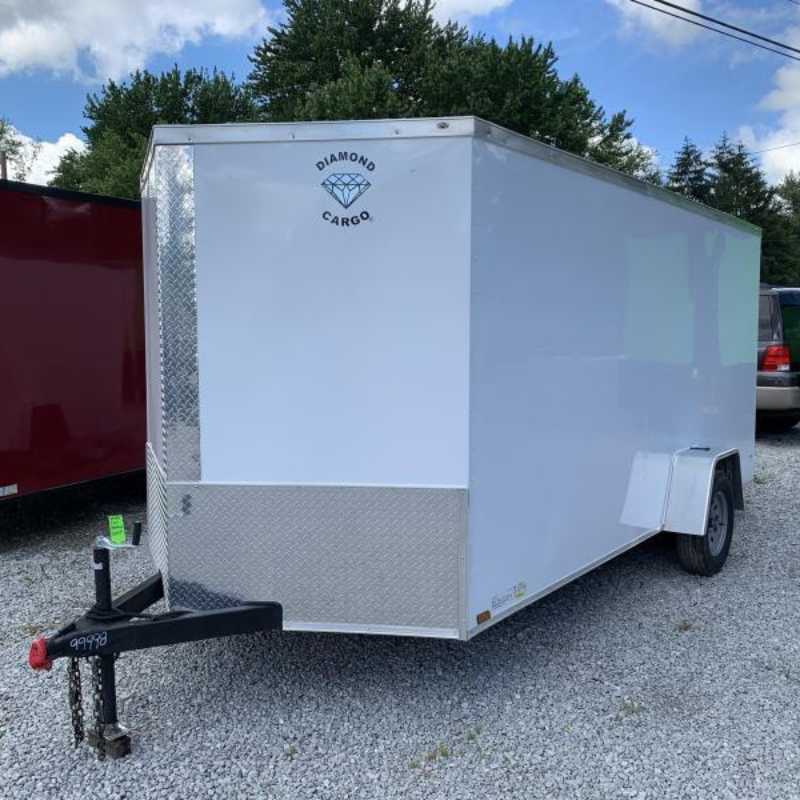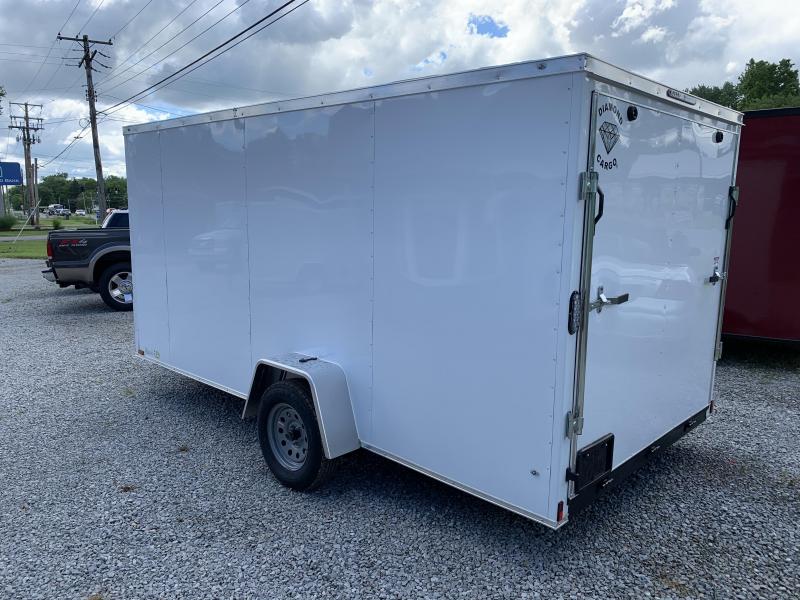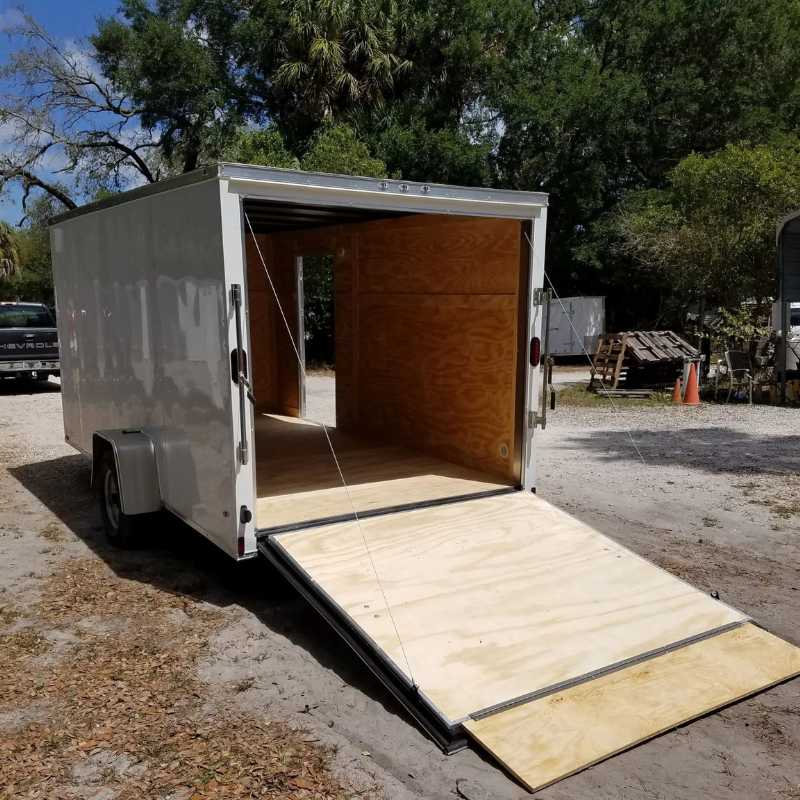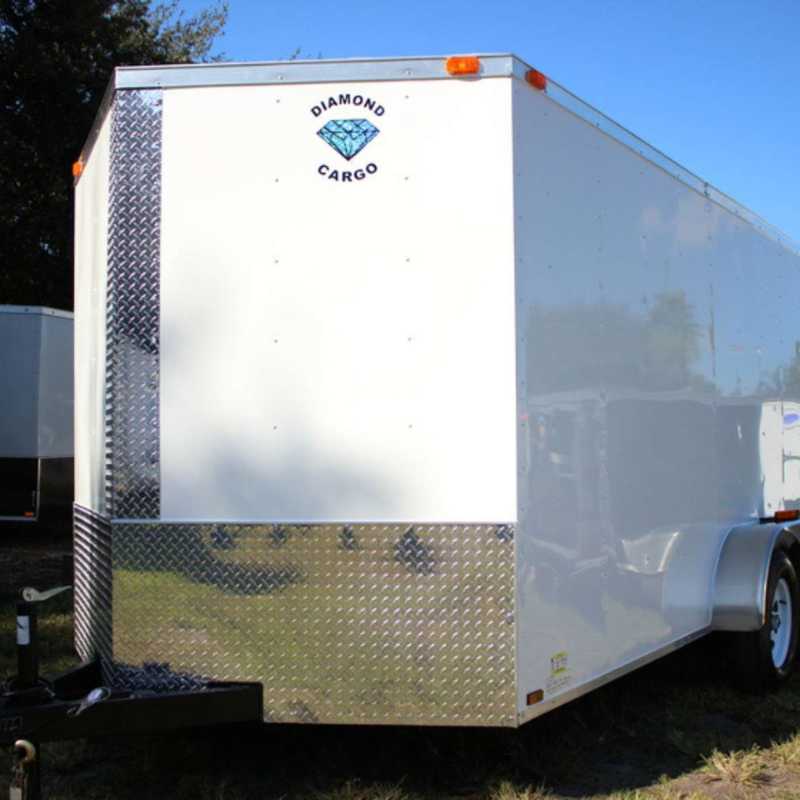



Overall Length: 15’6″ / 186 in (Breakdown: 12′ on the Box + 3’6″ on the Tongue) 20″ on the Vnose
Overall Width: 8’6″ / 102 in (Breakdown: 7′ on the Box + 9″ on each Fender)
Overall Height ( Diamond ): 8’4″ / 100 in (Breakdown: 7′ on the Box + 16″ from the ground to the box)
Overall Height (Anvil): 7’7″ / 91 in (Breakdown: 6’3″ on the Box + 16″ from the ground to the box)
Overall Length: 11’9″ Box (Breakdown: Subtract 3″ which counts for rear door & framing) plus 20″ on the Vnose
Overall Width: 6’8″ (Breakdown: Subtract 4″ (2″ on each side) which counts for plywood & framing)
Overall Height ( Diamond ): 7′
Overall Height (Anvil): 6’3″
Width: 74″ (Breakdown: Subtract 10″ (5 on each side) which counts for plywood & framing)
Height ( Diamond ): 78″ (Breakdown: Subtract 6″ which counts for plywood & framing)
Height (Anvil): 69″ (Breakdown: Subtract 6″ which counts for plywood & framing)
No it doesn’t but they’re available as a custom option.
Side Note: If the combined weight of the trailer and its load approaches or exceeds 3,000 pounds, many jurisdictions require brakes on the trailer. However, a 4x6 enclosed trailer, given its size, is unlikely to reach this weight limit when fully loaded, as they typically have a lower payload capacity.
Safety Considerations
Driving Conditions: If you plan to tow your trailer in hilly or mountainous areas, or if you’ll be driving in a lot of stop-and-go traffic, having electric brakes can significantly improve safety by reducing stopping distances and improving vehicle control.
Emergency Handling: Electric brakes can offer better control in emergency braking situations, reducing the risk of accidents.
Wear on Vehicle Brakes: Using a trailer with its own braking system can reduce wear and tear on your vehicle’s brakes, especially important for frequent towing or heavy loads.
4-way flat plug
5x4.5 (5 Lug)
6 Ply
Screws are 4′ apart instead of being every 2′
It’s an asphalt undercoating paint
We developed a section exclusively for Custom Options where we show sample photos and explain most popular options:
Click Here for More Information.
Here are examples of some of the most popular Custom Options:
– Blackout Package
– Electrical Package
– Insulation Package
– Rubber Flooring
– Etracks
– D-rings
– Windows
– Extended Tongue
– Extra Height
– Ladder Racks
– Finished Interior (Metal/Vinyl)
– Air Conditioner
– Lighting Options
– Axle Upgrades
– Concession Window
– Special Door Options
– Cabinets
– Barn Doors


Transporting valuable goods, sensitive equipment, or perishable items presents a significant challenge: vulnerability to the elements. Extreme heat can degrade chemicals and warp electronics, while freezing temperatures can ruin liquids and damage delicate materials. For businesses and individuals who rely on transporting such cargo, maintaining a stable internal environment isn’t a luxury—it’s a necessity. The global need for controlled transport is expanding rapidly; the refrigerated transport market was valued at USD 19.6 billion in 2024 and is projected to reach USD 29.3 billion by 2033, as noted by the IMARC Group. This growth underscores the critical importance of climate control.
A standard enclosed cargo trailer offers basic protection from rain and theft, but it acts like an oven in the summer and an icebox in the winter. The thin metal walls offer minimal resistance to ambient temperatures, putting your enclosed cargo at risk. This is where a specialized solution becomes essential. The 7x14 single axle insulated trailer is engineered specifically to solve this problem, providing a manageable, efficient, and climate-controlled environment on wheels. This guide will delve into every aspect of these versatile trailers, exploring how they master climate control to offer unparalleled protection for your most important assets.

Your Comprehensive Guide to 7x14 Single Axle Insulated Trailers: Master Climate Control and Protect Your Cargo
Introduction: Why Climate Control is Crucial for Your Cargo
Climate control is the practice of actively and passively managing the temperature and humidity within an enclosed space. For a cargo trailer, this means creating a buffer against the external environment, ensuring the interior remains within a safe, stable range regardless of whether you’re driving through a summer heatwave or a winter cold snap.
Why a Standard Enclosed Trailer Might Not Be Enough
A standard enclosed trailer is essentially a metal box. It provides security and shelter but does little to regulate temperature. On a sunny day, the interior can quickly become dangerously hot, while cold weather can cause contents to freeze. This lack of control can lead to irreversible damage, financial loss, and compromised product integrity.
Introducing the 7x14 Single Axle Insulated Trailer: Your Smart Climate-Controlled Solution
The 7x14 single axle insulated trailer is a purpose-built solution. Its size offers a generous payload capacity while the single axle design provides excellent maneuverability, making it ideal for a wide range of applications. Most importantly, its core feature—insulation—transforms it from a simple hauling container into a protective, climate-stabilized environment.
What You’ll Discover in This Comprehensive Guide
This guide breaks down the science and practical application of insulated trailers. We will explore the fundamental components that enable superior climate control, from insulation materials to active heating and cooling systems. You will learn how intelligent design choices, robust construction, and critical safety features come together to create the ultimate solution for protecting your cargo.
What Makes a Trailer “Insulated”? The Core Concept
An “insulated” trailer is one where materials with low thermal conductivity are integrated into the walls, ceiling, and often the floor. This creates a thermal barrier that significantly slows the transfer of heat between the inside of the trailer and the outside world.
Understanding Insulation: The Core of Climate Control
Insulation is the cornerstone of any climate-controlled system. It doesn’t generate heat or cold; it simply resists the movement of heat. In the summer, it keeps external heat out. In the winter, it keeps the internal warmth in. This fundamental principle is what allows for the efficient management of the trailer’s interior temperature.
What Exactly Makes a Trailer “Insulated”?
A truly insulated trailer features a comprehensive thermal envelope. This includes insulation within the wall cavities, a fully insulated ceiling to combat solar heat gain, and often insulated flooring. The quality of the insulation and the completeness of its application by the production team during the building process are what separate a high-performance trailer from a standard one.
Exploring Common Insulation Materials and Their Thermal Performance (R-Values)
Insulation’s effectiveness is measured by its R-value—the higher the R-value, the greater its resistance to heat flow. Common materials used in a cargo trailer include:
- Rigid Foam Board (EPS/XPS): Offers good R-value per inch, moisture resistance, and structural integrity.
- Spray Foam Insulation: Creates a complete air seal, filling every gap and crevice for superior thermal and moisture protection.
- Fiberglass Batts: A traditional option, though it can be less effective if it becomes compressed or moist.
How Insulation Works to Maintain Stable Internal Temperatures (Master Climate Control)
By slowing heat transfer, insulation drastically reduces the workload on any active heating or cooling system. It keeps the conditioned air inside longer, meaning an air conditioner or heater runs less frequently. This efficiency is critical, as refrigeration units in insulated trailers can consume approximately 40% less fuel than those in non-insulated models, leading to significant operational savings.
Beyond Temperature: Added Benefits for Sound Dampening and Moisture Control
The benefits of insulation extend beyond just temperature regulation. The same materials that block thermal energy also absorb sound waves, creating a quieter interior environment—ideal for mobile workshops or event spaces. Furthermore, when paired with a vapor barrier, insulation helps control condensation, protecting your enclosed cargo from moisture damage, mold, and mildew.
The Role of Insulation in Building a Superior Trailer
Insulation is not an afterthought; it is integral to the construction of a superior trailer. During the building process, the production team carefully fits insulation panels or applies spray foam before the interior walls, like durable plywood walls, are installed. This ensures a tight, continuous thermal barrier for maximum effectiveness.
Advanced Monitoring and Control Systems for Precision Climate Management
To truly master climate control, many users opt for advanced systems. Digital thermostats allow you to set and maintain a precise temperature, while remote sensors can provide real-time data on both temperature and humidity, ensuring your cargo is always within its ideal range.
Mastering Active Climate Control Systems
While insulation provides passive resistance, active systems give you direct control. These systems add or remove heat as needed to maintain a set temperature, transforming your trailer into a truly climate-controlled space.
Key Active Components: Heating, Ventilation, and Air Conditioning (Vents and AC)
The most effective climate control setups combine insulation with active systems. This includes roof-mounted air conditioning units for cooling, electric heat strips or propane heaters for warmth, and strategically placed vents to manage airflow and prevent humidity buildup.
Advanced Monitoring and Control Systems for Precise Climate Management
Modern trailers can be equipped with sophisticated control panels linked to thermostats and sensors. These systems automate the function of the HVAC units, engaging them only when necessary to maintain the desired environment, thereby optimizing power consumption and efficiency.
Powering Your Climate Control: Reliable Electrical Packages and Power Solutions (Electrical Package)
Active climate control systems require power. A comprehensive electrical package is essential, often including an external power inlet (shore power), interior outlets, and pre-wiring for generators. This ensures you have reliable energy to run your AC, heaters, and lighting whether you’re parked or on the move.
Sealing the Envelope: Critical Role of Doors, Gaps, and Weatherstripping
Even the best insulation is undermined by air leaks. High-quality weatherstripping around the ramp door and side entry door is critical. Ensuring all seams, joints, and penetrations are properly sealed is a key step in the building process to create an airtight envelope, preventing conditioned air from escaping and outside air from intruding.
Passive Climate Control Strategies and Intelligent Trailer Design
Beyond active systems, smart design choices can significantly enhance a trailer’s thermal performance. These passive strategies work continuously without consuming energy, making your climate control efforts more efficient and effective.
The Impact of Trailer Color and Exterior Finishes on Heat Management (Trailer Color)
The choice of trailer color has a tangible effect on interior temperature. Lighter colors, such as white or silver, reflect a significant amount of solar radiation, helping to keep the trailer cooler in sunny conditions. Darker colors absorb more heat, which can be a disadvantage in hot climates but a minor benefit in cold ones.
Strategic Ventilation for Natural Airflow and Temperature Regulation
Proper ventilation is crucial for preventing heat and moisture buildup. Non-powered roof vents can allow hot air, which naturally rises, to escape. Side wall vents can create cross-ventilation, promoting natural airflow that helps regulate temperature and reduce condensation without requiring electrical power.
Sealing the Envelope: The Importance of Doors, Gaps, and Weatherstripping
Reiterating its importance in passive design, a well-sealed envelope is paramount. Every gap around a ramp door, side door, window, or vent is a potential point of thermal loss. Meticulous sealing and high-quality gaskets are hallmarks of a well-constructed insulated trailer, ensuring the passive benefits of insulation are maximized.
Protecting Your Cargo: Real-World Applications of Climate Control
The true value of a 7x14 single axle insulated trailer is demonstrated in its diverse applications. It provides a secure, mobile environment for a wide array of temperature-sensitive goods, safeguarding investments and ensuring product quality.
Safeguarding Sensitive Electronics, Equipment, and Scientific Instruments
From IT equipment and audio/visual gear to delicate scientific instruments, electronics are highly susceptible to damage from extreme temperatures and humidity. A climate-controlled trailer ensures this valuable equipment is transported in an environment that prevents condensation, overheating, and cold-induced failures.
Transporting Perishable Goods, Food Items, and Beverages with Confidence
For caterers, mobile food vendors, or specialty producers, maintaining the cold chain is non-negotiable. An insulated trailer equipped with refrigeration can keep food and beverages at safe temperatures, preventing spoilage and ensuring compliance with health regulations. The demand for such capabilities is a driver behind the projected 9.14% CAGR for reefer units through 2030, according to Mordor Intelligence.
Preserving Art, Antiques, and Collectibles from Environmental Stress
Artwork, antique furniture, and other collectibles can be irreparably damaged by fluctuations in temperature and humidity, which can cause materials to crack, warp, or grow mold. An insulated trailer provides the stable environment needed to transport these priceless items without risking environmental stress.
Protecting Tools, Supplies, and Chemicals: Extending Their Lifespan and Preventing Degradation
For contractors and tradespeople, an enclosed cargo trailer often serves as a mobile workshop. Climate control protects expensive power tools from rust and battery damage. It also prevents paints, caulks, adhesives, and other chemicals from freezing or overheating, ensuring they remain effective and ready for use, ultimately extending their lifespan and saving money.

Conclusion
A 7x14 single axle insulated trailer is far more than a standard enclosed trailer; it’s a sophisticated tool designed for the critical task of cargo protection. By combining a robust main frame, a versatile single axle design for maneuverability, and a comprehensive climate control system, it offers a secure and stable environment for your most valuable assets. The foundation of this system is high-performance insulation, which works in tandem with active heating and cooling, strategic ventilation, and a tightly sealed envelope to master the interior climate.
From the durability of its plywood walls and the convenience of a ramp door to the essential safety provided by electric brakes, every component is chosen to enhance performance and reliability. Whether you are transporting sensitive electronics, perishable goods, or expensive tools, investing in a properly insulated trailer mitigates the risk of accidents and damage caused by environmental extremes. When considering your next cargo trailer, look beyond basic storage and choose a solution that actively protects. Explore the available trailer options, from a tailored electrical package to protective asphalt undercoating paint, and work with a production team that understands how to build a trailer that truly safeguards your cargo for the road ahead.