

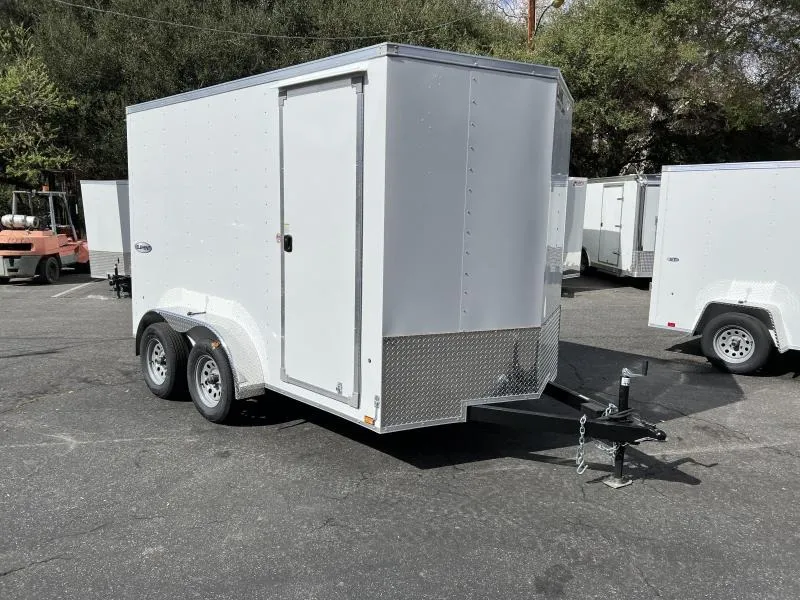
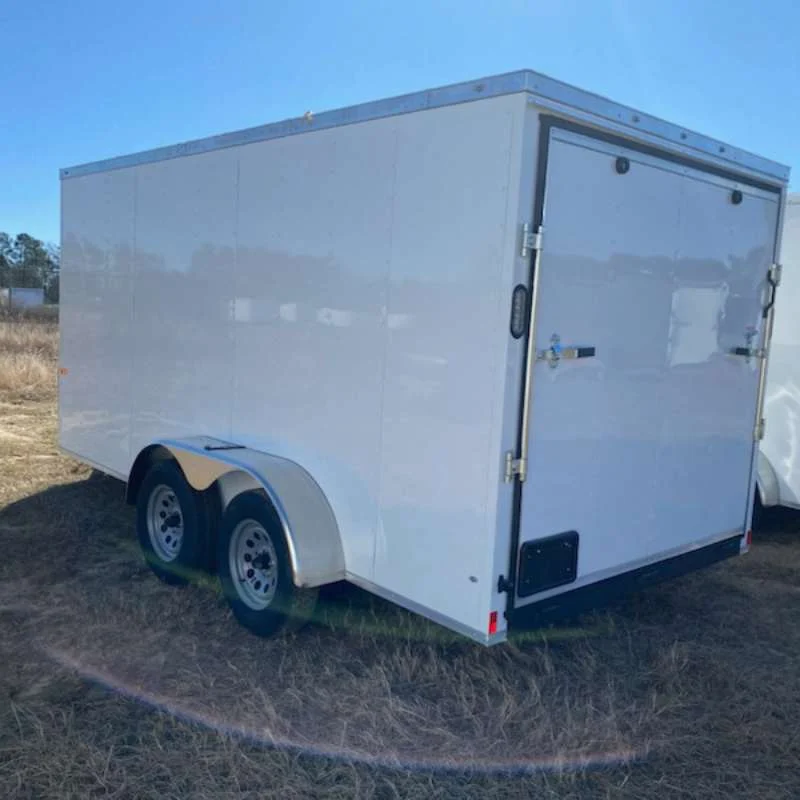
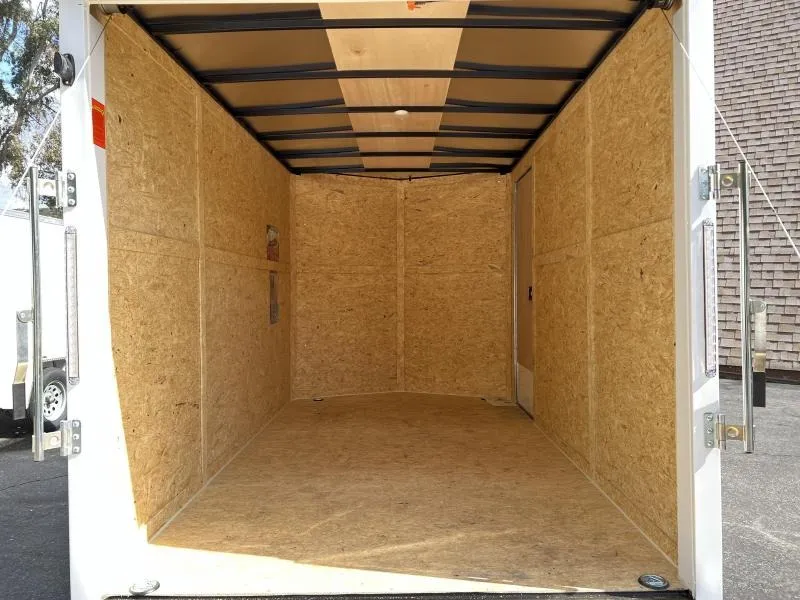
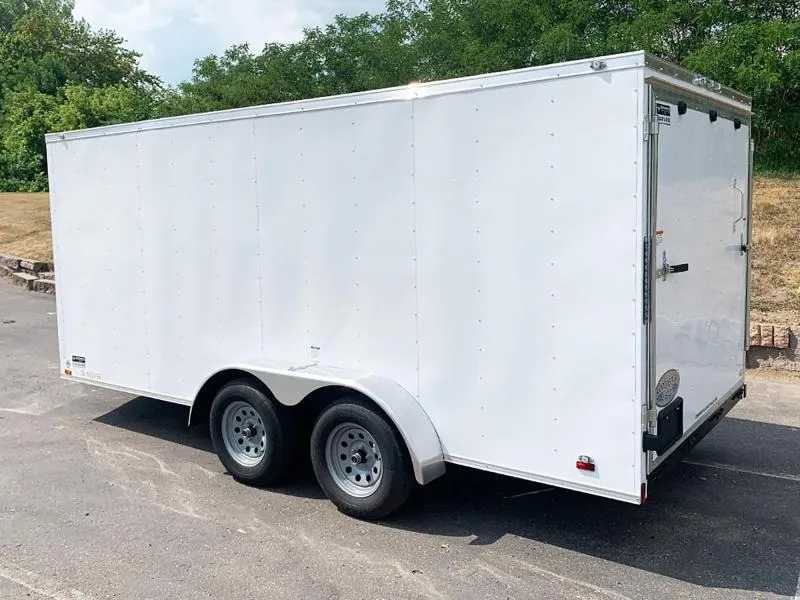
The 7x14 double axle barn door trailer is more than just a box on wheels; it’s a versatile workhorse for contractors, a secure mobile storage unit for businesses, and a reliable partner for powersports enthusiasts. This specific configuration strikes a perfect balance between substantial capacity and manageable maneuverability, making it one of the most popular choices in the cargo trailer market. The demand for such utility is clear, with the broader automotive trailer market projected to grow by USD 7.5 billion between 2023 and 2028. However, to truly harness its capabilities, owners must move beyond a surface-level understanding and master its core principles: Gross Vehicle Weight Rating (GVWR), interior height, and construction quality.
This guide is designed to be your definitive resource, transforming you from a mere user into a master of your equipment. We will deconstruct the essential specifications that define your trailer’s performance, safety, and longevity. By understanding these elements, you can ensure every haul is safe, efficient, and well within the legal and physical limits of your trailer.
Why Mastering GVWR, Height, and Construction Matters for Every Owner
Ignoring the technical details of your enclosed cargo trailer is a costly mistake. Overloading, miscalculating clearance, or overlooking poor construction can lead to catastrophic failures, from axle damage and tire blowouts to dangerous swaying on the highway. A deep understanding of GVWR prevents these safety hazards and protects you from legal penalties. Appreciating the nuances of interior height ensures the trailer you own, or plan to buy, can actually accommodate your specific cargo needs. Finally, recognizing quality construction means investing in a durable asset that will provide reliable service for years, rather than a liability that constantly requires repairs.

The Appeal of the 7x14 Double Axle Enclosed Cargo Trailer
The 7x14 tandem axle platform is the sweet spot for many users. It’s large enough to carry significant loads—think UTVs, landscaping equipment, or a contractor’s entire toolkit—yet it remains nimble enough to be towed by a standard heavy-duty pickup or SUV without requiring a commercial driver’s license. The enclosed design offers unparalleled protection from weather and theft, while the signature rear barn doors provide wide, forklift-friendly access that is ideal for loading pallets and bulky equipment. It is a versatile, secure, and highly functional tool for a wide range of applications.
Understanding Your Trailer’s Core Identity: The 7x14 Double Axle Design
At its heart, the identity of your trailer is defined by its dimensions and running gear. The “7x14” designation refers to its approximate interior width and length, while “double axle” points to its robust foundation. This combination is not arbitrary; it’s engineered to provide a specific level of stability and capacity that single-axle trailers simply cannot match.
Why Mastering GVWR, Height, and Construction Matters for Every Owner
Within the context of this specific design, mastery becomes even more critical. The 7x14 size invites heavier and more substantial loads, making an understanding of GVWR paramount to avoid overwhelming the frame and suspension. The tandem axle configuration, while providing stability, requires proper weight distribution to function correctly. The construction must be robust enough to handle the stresses that a trailer of this size will endure over thousands of miles. Failing to grasp these concepts means failing to use the trailer as it was intended.
The Strength of the Double Axle (Tandem Axle) Configuration
The use of a double axle, or tandem axle, is a defining feature that brings several key advantages. First, it significantly increases the trailer’s weight-carrying capacity. Second, it enhances stability at highway speeds, reducing the tendency to sway. Most importantly, it adds a layer of safety and redundancy; in the event of a tire blowout, the second tire on that side can support the load temporarily, allowing the driver to pull over safely—a scenario that is far more dangerous with a single axle.
What You’ll Learn in This Comprehensive Guide
This guide will dissect the three pillars of trailer mastery. We will start by demystifying GVWR and payload capacity. Next, we will explore the practical implications of interior height and how it affects usability. Finally, we will examine the critical construction components—from the frame and axles to the exterior skin and roof—that separate a high-quality, long-lasting enclosed trailer from its inferior counterparts.
Unlocking the Power of GVWR: Gross Vehicle Weight Rating Explained
The single most important specification for any trailer is its Gross Vehicle Weight Rating (GVWR). This number, determined by the manufacturer and displayed on the trailer’s VIN plate, represents the absolute maximum weight the trailer can safely be, including its own empty weight (curb weight) plus the weight of all the cargo you put inside it. It is not a suggestion; it is a critical safety and legal limit.
Understanding Your Trailer’s Core Identity: The 7x14 Double Axle Design
The GVWR for a 7x14 double axle trailer is typically 7,000 pounds. This figure is derived from the capacity of its core components, most notably the two 3,500-pound axles. Understanding this rating is fundamental to using the trailer safely and effectively.
Calculating Your Usable Payload Capacity (GVWR – Trailer Empty Weight)
Your actual hauling ability is the payload capacity. To find it, you must subtract the trailer’s empty weight from its GVWR. For example, if your 7x14 trailer has a GVWR of 7,000 lbs and weighs 2,200 lbs empty, your maximum payload capacity is 4,800 lbs. Never exceed this number.
Decoding “7x14”: Dimensions and Practical Space
The “7x14” measurement provides a baseline for the interior floor space, roughly 98 square feet. However, always check the exact interior dimensions, as wall thickness can vary. The V-Nose front, a common feature, can add valuable extra space at the front of the trailer, perfect for shelving or securing smaller items.
Components Supporting Your GVWR: A Closer Look
Several components work together to support the GVWR. The tandem axles are the primary load bearers. The frame’s main rails and floor crossmembers provide the structural backbone. The ball coupler must be rated for the GVWR, and the RADIAL TIRES have specific load ratings that must collectively meet or exceed the axle ratings.
The Strength of the Double Axle (Tandem Axle) Configuration
The tandem axle system is the key to achieving a 7,000 lb GVWR on this size of trailer. Each axle is typically rated for 3,500 lbs, combining to support the total weight. This setup also necessitates reliable electric brakes on both axles to ensure adequate stopping power for a fully loaded trailer.
Maximizing Your Trailer’s Vertical Space: Understanding Interior Height
While length and width define the footprint, the interior height dictates the volume and versatility of your enclosed cargo trailer. It determines whether you can stand up comfortably inside, fit tall equipment like a UTV with a roll cage, or stack boxes efficiently.
The Advantage of an Enclosed Cargo Trailer for Versatility and Protection
The enclosed nature of these cargo trailers is their primary advantage, offering security and protection from the elements. Interior height is a key multiplier of this advantage. A taller trailer can serve as a mobile workshop, a storage space for tall machinery, or even a basic conversion for recreational use, dramatically expanding its utility.
Standard and Custom Interior Height Options for 7x14 Trailers
A standard interior height for a 7x14 trailer is often 6 feet 6 inches (78 inches). This is adequate for many applications and allows most people to walk inside without ducking. However, many manufacturers, like Diamond Cargo, offer options for increased height, such as 7 feet (84 inches), which is highly recommended for those hauling UTVs or needing maximum vertical storage.
Unlocking the Power of GVWR: Gross Vehicle Weight Rating Explained
It’s important to remember that adding options like extra height increases the trailer’s empty weight, which in turn slightly reduces your usable payload capacity. This trade-off must be considered when configuring a custom trailer to ensure you remain within your GVWR.
Navigating Clearance Challenges: Garage Doors, Overpasses, and Drive-Thrus
A taller trailer comes with the responsibility of being aware of its overall height. Standard garage doors are typically 7 or 8 feet high, meaning a trailer with a 7-foot interior height plus the height of the frame and roof vents may not fit. You must always be mindful of overpasses, bridges, and even low-hanging tree branches. According to some sources, the maximum overall trailer height is often between 13 feet 6 inches and 14 feet, but local restrictions can vary significantly.
What is GVWR and Why It’s the Most Critical Specification
Just as GVWR dictates your maximum load, overall height dictates your maximum clearance. Both are non-negotiable limits that ensure safety—one for the road and suspension, the other for navigating the physical world.
The Anatomy of a Durable Build: Construction Essentials for Longevity
The long-term value of an enclosed trailer is determined by the quality of its construction. Two trailers may share the same dimensions and GVWR, but their lifespan and performance can differ dramatically based on the materials and engineering hidden beneath the surface.
Calculating Your Usable Payload Capacity (GVWR – Trailer Empty Weight)
A well-built trailer using stronger, albeit heavier, materials like a tube steel frame and thicker plywood walls will have a higher empty weight, slightly reducing payload. This is a worthwhile trade-off, as a flimsy, lightweight frame is far more likely to fail under a load that approaches the maximum GVWR.
Floor Construction: The Backbone of Your Cargo
The floor is your cargo’s primary support. Look for sturdy floor crossmembers made of tube steel, spaced 16 inches on-center. This is significantly stronger and more durable than the 24-inch spacing found on cheaper models. The flooring itself should be high-quality 3/4″ plywood, which provides a solid, durable surface.
The Dangerous Realities and Legal Ramifications of Overloading
Poor construction exacerbates the dangers of overloading. An overloaded trailer with a weak frame or insufficient crossmembers is at high risk of structural failure. Given that a significant percentage of deaths in large vehicle crashes involve tractor-trailers, as noted by the IIHS and Munley Law, ensuring your trailer is structurally sound and properly loaded is a critical safety responsibility.
The Roof System: Your First Line of Defense
A trailer’s roof must defend against the elements. A one-piece aluminum or Galvalume roof is preferable as it eliminates seams where water can penetrate. Quality construction also includes a vapor barrier between the steel roof bows and the aluminum skin to prevent galvanic corrosion. Proper ventilation, through plastic sidewall vents, is also crucial to prevent moisture buildup inside.
Components Supporting Your GVWR: A Closer Look
High-quality construction components are essential for a reliable GVWR. Torsion axles, for instance, provide a smoother ride and better shock absorption than standard leaf springs, reducing stress on the entire frame and your cargo. A robust A-frame tongue, a heavy-duty manual crank tongue jack, and a properly welded ball coupler are all part of a system built for durability.
What to Look for: Quality Materials and Craftsmanship in an Enclosed Trailer
When inspecting a trailer, look for an aluminum exterior that is at least .030 inches thick to resist denting and waving. A screwless exterior offers a clean look and fewer points for moisture to enter. Check the welds on the frame for consistency and penetration. Inside, ensure the plywood walls are securely fastened. Features like bright dome lights, a reliable 7 way Bargman plug for the electrical connection, and an accessible side door, often an RV door style with a latch, are all hallmarks of a thoughtfully constructed trailer.
Best Practices for Safe Loading and Optimal Weight Distribution
Owning a well-built trailer is only half the battle; loading it correctly is essential for safe towing. Improper weight distribution is a primary cause of dangerous trailer sway and loss of control. The golden rule is to place 60% of your cargo’s weight forward of the trailer’s axles, with the remaining 40% behind them. This ensures proper tongue weight—typically 10-15% of the total trailer weight—which is crucial for stability. Heavier items should be centered left-to-right and secured firmly to prevent shifting during transit. The full-width access provided by double barn doors makes it easier to position heavy, palletized items correctly over the axles.

Conclusion
Mastering your 7x14 double axle barn door trailer is an investment in safety, efficiency, and the longevity of your equipment. It requires moving beyond the sticker price and understanding the critical interplay between GVWR, height, and construction. By grasping the non-negotiable limits of your Gross Vehicle Weight Rating and accurately calculating your payload, you ensure every trip is both legal and safe. By considering interior height, you choose a trailer that truly fits your needs while remaining aware of clearance limitations. And by prioritizing quality construction—from the 16-inch on-center floor crossmembers and torsion axles to the seamless Galvalume roof and durable RADIAL TIRES—you secure an asset that will perform reliably for years.
Your enclosed cargo trailer is a powerful tool. By applying these essential insights, you can unleash its full potential, transforming it from a simple container into a dependable partner for your work or passion. Before your next purchase or your next haul, take the time to view details, inspect the build quality, and plan your load. This diligence is the hallmark of a responsible and proficient trailer owner.