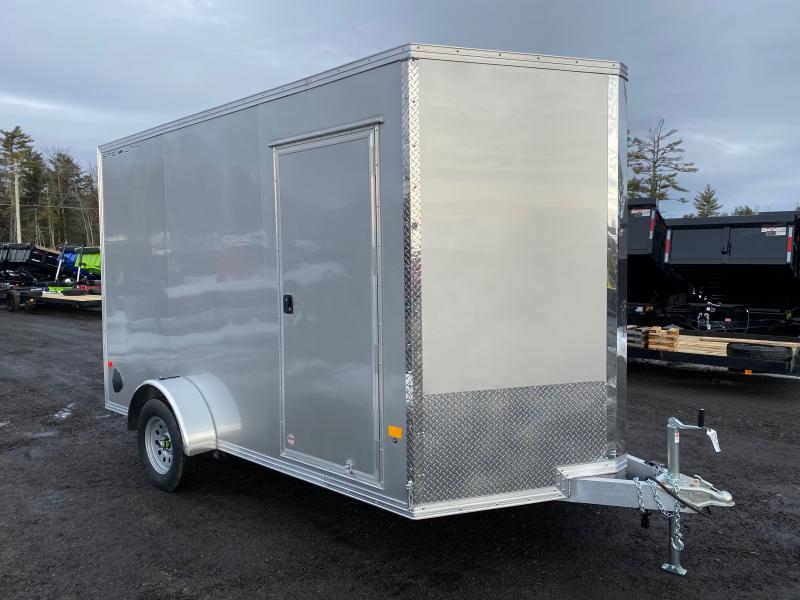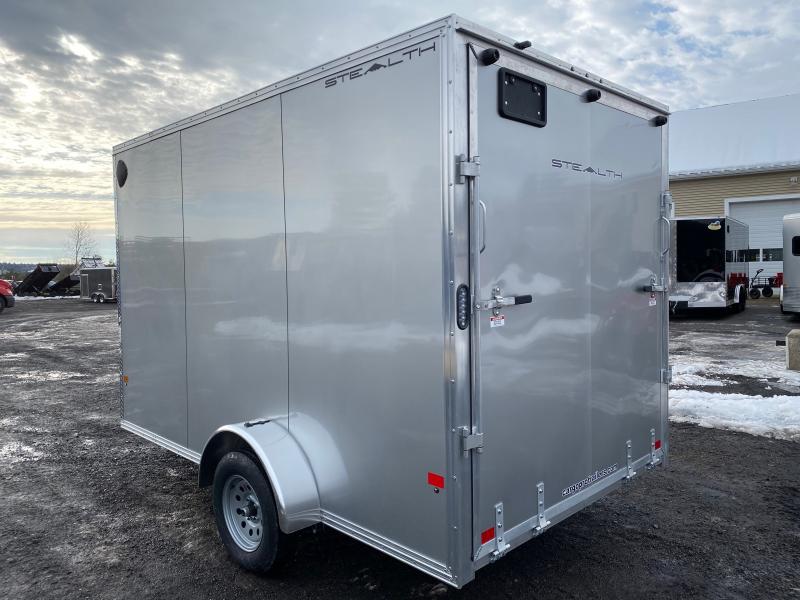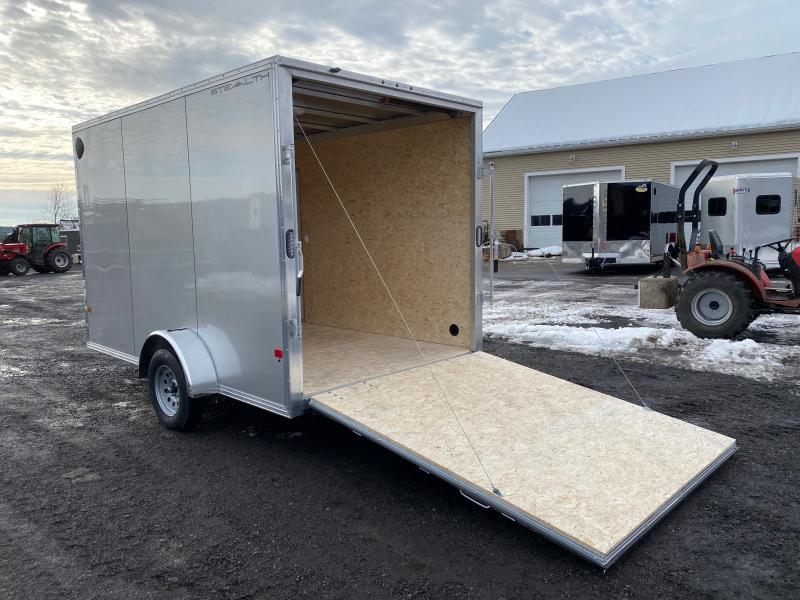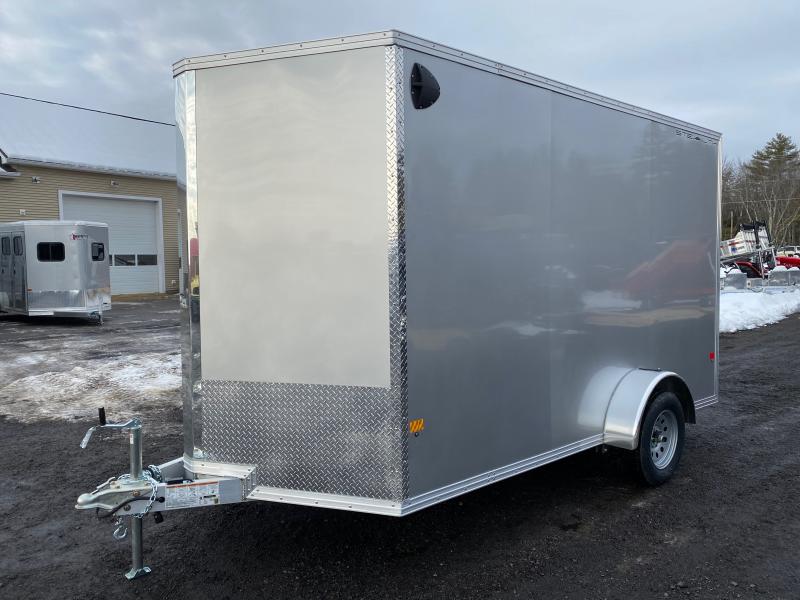


Overall Length: 15’6″ / 186 in (Breakdown: 12′ on the Box + 3’6″ on the Tongue) 20″ on the Vnose
Overall Width: 8’6″ / 102 in (Breakdown: 7′ on the Box + 9″ on each Fender)
Overall Height ( Diamond ): 8’4″ / 100 in (Breakdown: 7′ on the Box + 16″ from the ground to the box)
Overall Height (Anvil): 7’7″ / 91 in (Breakdown: 6’3″ on the Box + 16″ from the ground to the box)
Overall Length: 11’9″ Box (Breakdown: Subtract 3″ which counts for rear door & framing) plus 20″ on the Vnose
Overall Width: 6’8″ (Breakdown: Subtract 4″ (2″ on each side) which counts for plywood & framing)
Overall Height ( Diamond ): 7′
Overall Height (Anvil): 6’3″
Width: 74″ (Breakdown: Subtract 10″ (5 on each side) which counts for plywood & framing)
Height ( Diamond ): 78″ (Breakdown: Subtract 6″ which counts for plywood & framing)
Height (Anvil): 69″ (Breakdown: Subtract 6″ which counts for plywood & framing)
No it doesn’t but they’re available as a custom option.
Side Note: If the combined weight of the trailer and its load approaches or exceeds 3,000 pounds, many jurisdictions require brakes on the trailer. However, a 4x6 enclosed trailer, given its size, is unlikely to reach this weight limit when fully loaded, as they typically have a lower payload capacity.
Safety Considerations
Driving Conditions: If you plan to tow your trailer in hilly or mountainous areas, or if you’ll be driving in a lot of stop-and-go traffic, having electric brakes can significantly improve safety by reducing stopping distances and improving vehicle control.
Emergency Handling: Electric brakes can offer better control in emergency braking situations, reducing the risk of accidents.
Wear on Vehicle Brakes: Using a trailer with its own braking system can reduce wear and tear on your vehicle’s brakes, especially important for frequent towing or heavy loads.
4-way flat plug
5x4.5 (5 Lug)
6 Ply
Screws are 4′ apart instead of being every 2′
It’s an asphalt undercoating paint
We developed a section exclusively for Custom Options where we show sample photos and explain most popular options:
Click Here for More Information.
Here are examples of some of the most popular Custom Options:
– Blackout Package
– Electrical Package
– Insulation Package
– Rubber Flooring
– Etracks
– D-rings
– Windows
– Extended Tongue
– Extra Height
– Ladder Racks
– Finished Interior (Metal/Vinyl)
– Air Conditioner
– Lighting Options
– Axle Upgrades
– Concession Window
– Special Door Options
– Cabinets
– Barn Doors


Introduction: Why the 7x12 Single Axle Anvil Cargo Trailer?
When searching for the perfect enclosed cargo trailer, the sheer number of options can be overwhelming. Yet, for a significant number of users—from small business owners and contractors to weekend adventurers and motorsport enthusiasts—the 7x12 single axle Anvil cargo trailer consistently emerges as a top contender. It represents a sweet spot in the world of cargo trailers, offering a blend of features that cater to a wide array of hauling needs.

The Ideal Balance: Size, Maneuverability, and Capacity
The 7x12 dimensions provide a generous 84 square feet of floor space, ample room for tools, equipment, motorcycles, or household goods. What makes this size particularly appealing is its pairing with a single axle configuration. This design choice enhances maneuverability, making it easier to navigate tight job sites, crowded event parking lots, or residential driveways. A single axle enclosed trailer is lighter than its tandem axle counterparts, which can translate to better fuel economy for your tow vehicle and a lower overall purchase price.
Anvil Trailers: A Brand Built for Durability and Value
Anvil Trailers has carved out a strong reputation as a manufacturer that delivers robust, reliable products without an exorbitant price tag. Known for their sturdy steel tube frame construction and attention to practical features, Anvil provides a trailer built for real-world use. This focus on durability and value ensures that your investment is not just in a temporary hauling solution, but a long-term asset for your business or personal projects.
What to Expect from This Ultimate Guide
This guide is designed to be your comprehensive resource for selecting the ideal 7x12 single axle enclosed cargo trailer from Anvil. We will move beyond a simple list of specifications to explore the critical factors you must consider. From understanding your payload requirements and deconstructing essential features to exploring customization options and safety protocols, our goal is to empower you with the knowledge to make an informed and confident purchasing decision.
Understanding Your Needs: The Foundation of Your Choice
Before diving into features and specifications, the most crucial step is a thorough assessment of your own requirements. A trailer is a tool, and its effectiveness is measured by how well it performs the specific job you have for it.
Defining Your Primary Use Cases
Start by clearly identifying what you will be hauling. Are you a landscaper needing to transport mowers and blowers? A contractor carrying power tools and materials? A motorcycle enthusiast heading to the track? Or do you need a versatile trailer for occasional moving and general-purpose tasks? Your primary use dictates the importance of certain features. For example, someone hauling tall items like refrigerators will prioritize interior height, while someone transporting a heavy vehicle will focus on ramp door capacity and floor-mounted tie-downs.
Calculating Your Payload Needs: More Than Just a Number
One of the most critical calculations is your payload capacity. This is not simply the total weight the trailer can hold; it’s the Gross Vehicle Weight Rating (GVWR) minus the trailer’s empty weight (curb weight). A standard 7x12 single axle trailer often has a GVWR of 2990 lbs or 3500 lbs. If the trailer weighs 1,400 lbs empty, your maximum payload is 1,590 lbs or 2,100 lbs, respectively. Meticulously list the weights of all cargo you intend to carry simultaneously. Always leave a safety margin of 15-20% to avoid overloading, which is not only illegal but also poses a significant safety risk by overstressing the axle, tire components, and braking system.
Single Axle vs. Tandem Axle: Why 7x12 Single Axle is Right for You
For a 7-foot wide trailer, the 12-foot length is a common point where buyers consider a tandem axle. However, the single axle enclosed cargo trailer offers distinct advantages. Its lighter weight and reduced rolling resistance contribute to better towing efficiency. The primary benefit is superior maneuverability; pivoting and backing a single axle trailer into tight spots is significantly easier. For payload requirements under approximately 2,500-3,000 lbs, the single axle is often the more practical and cost-effective choice. It simplifies maintenance with only two tires and one set of brakes to service.
Essential Exterior Features and Construction Quality
The durability and longevity of your cargo trailer are determined by the quality of its construction and materials. Anvil trailers are known for their robust build, but it’s important to know what to look for in the exterior.
The Foundation: Robust Construction for Lasting Performance
The chassis is the backbone of your trailer. Anvil typically uses a strong steel tube main frame, which offers superior rigidity compared to C-channel or I-beam frames found on some budget models. Pay attention to the spacing of the crossmembers in the floor and the uprights in the walls (e.g., 16″ or 24″ on-center). Closer spacing provides greater strength and prevents flexing of the floor and walls under heavy loads. A well-built trailer will also feature a sturdy A-frame tongue, which connects to the tow vehicle and is critical for stability.
Roofing and Exterior Paneling: Protection from the Elements
Your trailer’s exterior is its first line of defense. Anvil often utilizes a one-piece aluminum roof, a premium feature that minimizes the potential for leaks by eliminating seams. The exterior skin is typically .024 or .030 gauge aluminum, or an upgraded composite material like PolyCor, which is known for its resistance to dents and “oil canning” (waviness). Ensure the paneling is securely fastened with screws rather than adhesive alone for long-term durability.
Access and Loading: Doors Designed for Functionality
Functional doors are essential for an enclosed cargo trailer. The 7x12 Anvil model typically comes standard with a rear ramp door, often with spring assistance to make it easy to lift and lower. An extension flap is a valuable addition that bridges the gap between the ramp and the ground. Equally important is the side door, usually a 32-inch or 36-inch RV-style door. This provides quick access to your cargo without needing to lower the main ramp. Look for a secure flush lock and a bar lock for added security, as well as a door hold-back to keep it open.
Aesthetics and Protection: Details That Matter
While functionality is key, protective and aesthetic details enhance the trailer’s value. A standard feature on most quality cargo trailers is a 24-inch stone guard on the front, which protects the exterior from rocks and road debris kicked up by the tow vehicle. Aluminum fenders are another quality indicator, offering corrosion resistance and durability. The overall fit and finish, including clean welds and sealed seams, speak to the manufacturer’s attention to detail.
Wheels and Tires: Rolling with Confidence
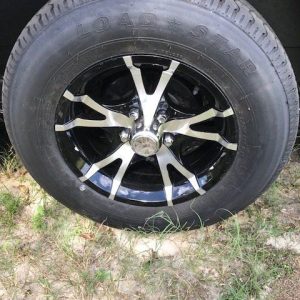
The connection to the road is through the wheels and tires. The 7x12 single axle models are typically equipped with 15-inch radial tires. Radial tires are superior to bias-ply tires as they run cooler, have a longer tread life, and provide a smoother ride. Always check the load rating of the tire to ensure it meets or exceeds the axle’s capacity. A quality tongue jack is also essential for easily hitching and unhitching the trailer, especially when loaded.
Interior Features: Maximizing Utility and Comfort
The interior of your trailer should be as functional and durable as its exterior. It’s the workspace where you load, secure, and unload your valuable cargo.
Interior Dimensions and Usable Space (Interior Height)
While the exterior is 7x12, the usable interior dimensions will be slightly less due to wall thickness. The most critical dimension to verify is the interior height. A standard height is often around 6’3″ (75 inches), which is sufficient for many tasks. However, if you plan to transport taller items like UTVs or need to work comfortably inside the trailer, opting for an increased height (e.g., 6’6″ or 7′) is a wise investment. This customization significantly enhances the trailer’s versatility.
Securing Your Cargo: Essential Tie-Downs
Properly securing your cargo is a legal and safety imperative. Most Anvil trailers come standard with several floor-mounted D-rings. Evaluate if the standard quantity and placement are sufficient for your needs. For hauling motorcycles, you may need specific wheel chocks and additional D-rings. For securing boxes or equipment, consider adding E-Track or L-Track systems to the walls and floor. These systems offer infinitely adjustable tie-down points, providing maximum flexibility for securing diverse types of cargo.
Lighting and Electrical Systems
Good interior lighting is a necessity, not a luxury. A standard 12V dome light provides basic illumination, but you may want to add a second one or upgrade to brighter LED strip lighting for better visibility. The exterior lighting should be all-LED for longevity and brightness. The trailer connects to your vehicle via a wiring harness (typically a 7-way plug) that powers the running lights, brake lights, and turn signals. Ensure this system is properly wired and all lights are functional.
Ventilation and Climate Control
An enclosed space can build up heat and fumes. A simple roof vent or side vents can provide crucial airflow, which is especially important if you are transporting anything with a fuel engine or working inside the trailer. Some models offer a “Therma-Cool” ceiling liner, which helps to regulate the interior temperature, keeping it cooler in the summer and warmer in the winter, protecting both your cargo and yourself from extreme temperatures.
Towing and Safety Considerations: Driving with Your Anvil Trailer
Owning a trailer involves more than just loading it up; it requires a commitment to safe towing practices. Understanding your equipment and how to handle it on the road is paramount.
Understanding Trailer Brakes: A Critical Safety Component
Most 7x12 single axle trailers with a 3500 lb GVWR come equipped with electric brakes. These are a critical safety feature that assists your tow vehicle in stopping the combined weight. Electric brakes require a brake controller to be installed in your tow vehicle’s cab. This device allows you to adjust the trailer’s braking effort and can be manually activated in an emergency, making it an indispensable tool for safe towing.
Vehicle Control and Emergency Braking with a Single Axle Trailer
A single axle trailer is generally stable, but it’s important to understand its handling characteristics. Proper weight distribution is key; aim to place about 60% of the cargo weight forward of the axle and ensure about 10-15% of the total trailer weight is on the tongue. This prevents trailer sway. In an emergency braking situation, a properly functioning brake controller will apply the trailer brakes in sync with your vehicle, helping to maintain a straight line and reduce stopping distances.
Matching Your Tow Vehicle: Capacity and Compatibility for Your 7x12
Before purchasing any trailer, consult your tow vehicle’s owner’s manual to confirm its maximum towing capacity. This figure must be greater than the trailer’s GVWR. Ensure your vehicle has the appropriate hitch receiver and that your hitch ball is the correct size (typically 2″ or 2-5/16″) and weight rating for the trailer’s coupler. Never exceed your vehicle’s towing limits.
Driving Conditions: Tips for Safe Towing
Towing changes your vehicle’s dynamics. Allow for longer stopping distances, make wider turns to avoid clipping curbs, and reduce your speed, especially in windy conditions or on downhill grades. Be mindful of the added length and height when changing lanes and navigating under low-clearance obstacles. Regular checks of tire pressure, lug nuts, and lights before every trip are essential safety habits.
Stabilizer Jacks: Enhancing Stability When Parked
While not a standard feature on all models, rear stabilizer jacks are a highly recommended upgrade. When you are parked and loading or unloading heavy cargo, especially with a ramp door, these jacks prevent the trailer from tipping backward when it’s unhitched from the tow vehicle. They provide a stable, safe platform for all loading activities.
Customization and Upgrades: Tailoring Your Anvil to Perfection
While a standard Anvil trailer is highly capable, customization allows you to create a tool perfectly suited to your specific needs, increasing its efficiency and value.
Beyond the Basics: Popular Custom Options
Common upgrades can transform your trailer. Consider adding extra interior height for more headroom or taller cargo. Upgrading to a heavier-duty ramp door may be necessary for vehicles. Electrical packages can add 110V power outlets and fluorescent or LED lights for a mobile workshop. Aluminum wheels can enhance appearance and reduce weight. Ladder racks, windows, and upgraded flooring materials are other popular choices that add significant functionality.
Understanding Anvil’s Pro Series and Anvil Tough Designations
When browsing inventory, you may see different series or package designations. These often bundle popular upgrades together. For example, a “Pro Series” might include a thicker exterior metal, a more robust frame, radial tires, and additional D-rings as a standard package. Understanding these designations can help you quickly identify a trailer that already has the features you’re looking for, often at a better price than adding them individually.
The Purchasing Process: From Selection to Ownership
Armed with a clear understanding of your needs and the features of a 7x12 Anvil trailer, you are ready to move forward. The final step is to navigate the purchasing process to secure the perfect hauler for your future projects. Start by researching reputable dealers who have a good inventory and positive customer reviews. Don’t hesitate to inspect a trailer in person; check the welds, the quality of the seals, the function of the doors, and the overall fit and finish.
Clarify the final price, ensuring it includes any necessary fees, taxes, and title costs. Inquire about the manufacturer’s warranty and what it covers. By following the steps outlined in this guide—from defining your needs and understanding the core components to prioritizing safety and considering key upgrades—you are well-equipped to select and purchase a 7x12 single axle Anvil cargo trailer that will serve you reliably for years to come. Your new trailer is more than just a box on wheels; it’s a key to unlocking greater efficiency and new possibilities for your work or hobbies.