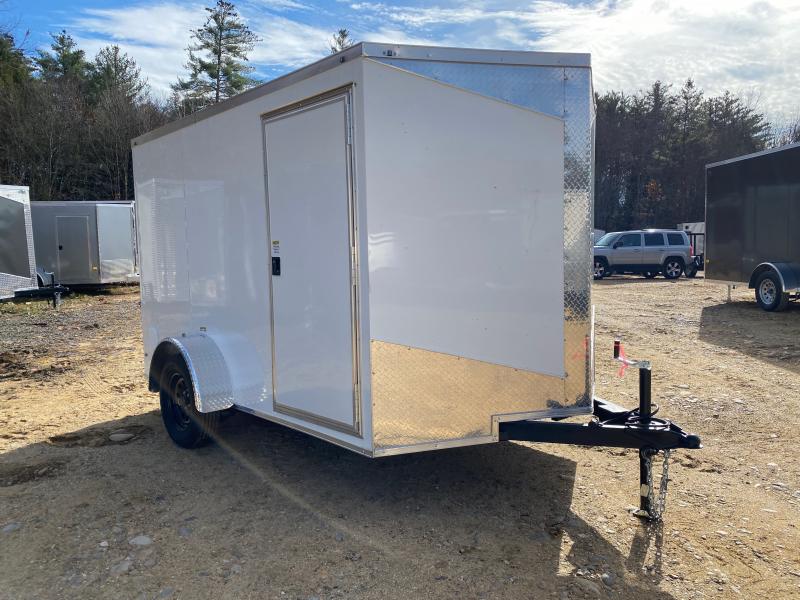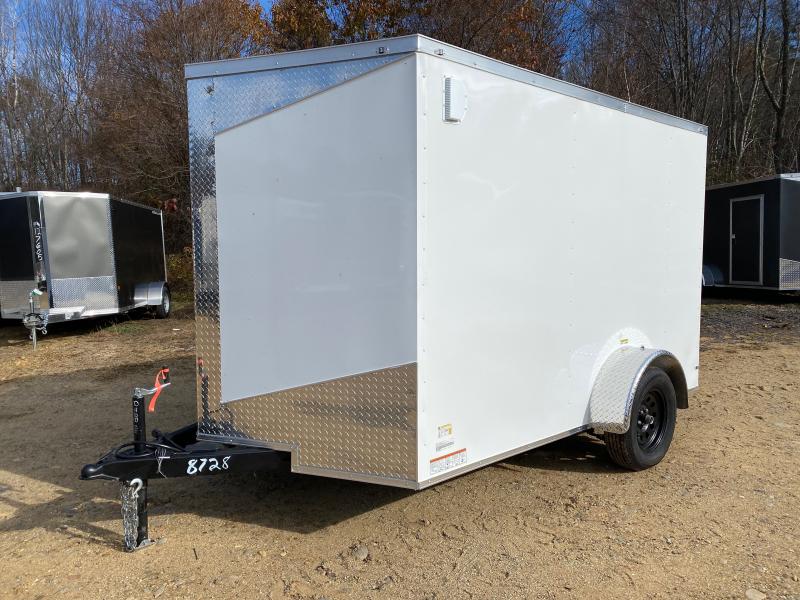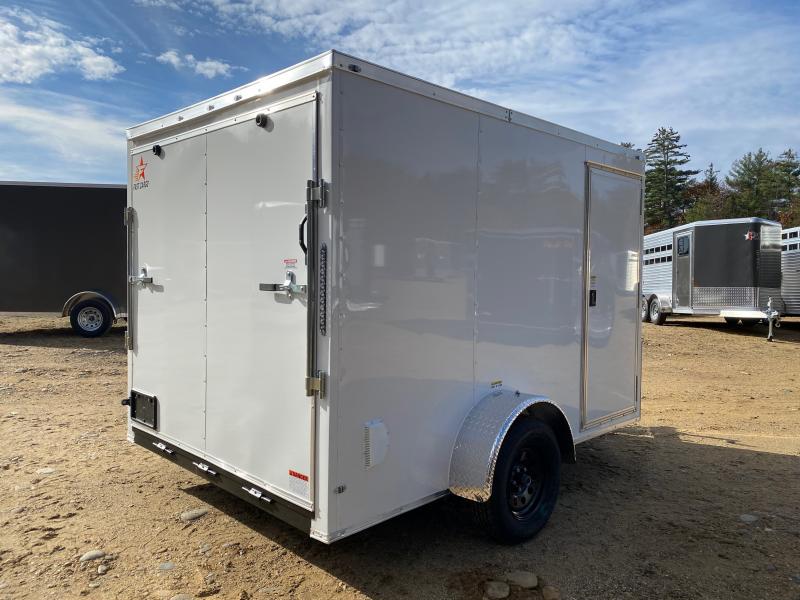



Overall Length: 13’6″ / 162 in (Breakdown: 10’on the Box + 3’6″ on the Tongue) 20″ on the Vnose
Overall Width: 8’6″ / 102 in (Breakdown: 7′ on the Box + 9″ on each Fender)
Overall Height: 7’7″ / 91 in (Breakdown: 6’3″ on the Box + 16″ from the ground to the box)
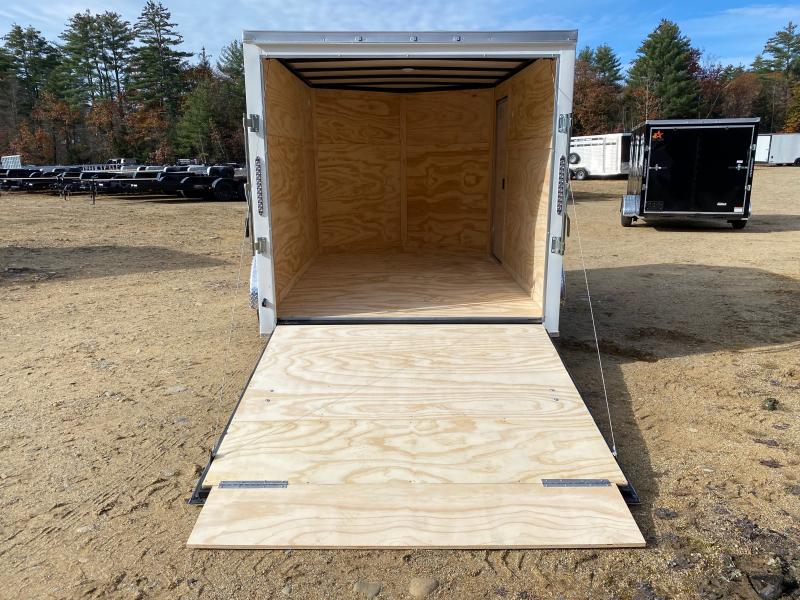
Overall Length: 9’9″ Box (Breakdown: Subtract 3″ which counts for rear door & framing) plus 20″ on the Vnose
Overall Width: 6’8″ (Breakdown: Subtract 4″ (2″ on each side) which counts for plywood & framing)
Overall Height: 6’3″
Width: 74″ (Breakdown: Subtract 10″ (5 on each side) which counts for plywood & framing)
Height: 69″ (Breakdown: Subtract 6″ which counts for plywood & framing)
No it doesn’t but they’re available as a custom option.
Side Note: If the combined weight of the trailer and its load approaches or exceeds 3,000 pounds, many jurisdictions require brakes on the trailer. However, a 4x6 enclosed trailer, given its size, is unlikely to reach this weight limit when fully loaded, as they typically have a lower payload capacity.
Safety Considerations
Driving Conditions: If you plan to tow your trailer in hilly or mountainous areas, or if you’ll be driving in a lot of stop-and-go traffic, having electric brakes can significantly improve safety by reducing stopping distances and improving vehicle control.
Emergency Handling: Electric brakes can offer better control in emergency braking situations, reducing the risk of accidents.
Wear on Vehicle Brakes: Using a trailer with its own braking system can reduce wear and tear on your vehicle’s brakes, especially important for frequent towing or heavy loads.
4-way flat plug
5x4.5 (5 Lug)
6 Ply
Screws are 4′ apart instead of being every 2′
It’s an asphalt undercoating paint
We developed a section exclusively for Custom Options where we show sample photos and explain most popular options:
Click Here for More Information.
Here are examples of some of the most popular Custom Options:
– Blackout Package
– Electrical Package
– Insulation Package
– Rubber Flooring
– Etracks
– D-rings
– Windows
– Extended Tongue
– Extra Height
– Ladder Racks
– Finished Interior (Metal/Vinyl)
– Air Conditioner
– Lighting Options
– Axle Upgrades
– Concession Window
– Special Door Options
– Cabinets
– Barn Doors

When your hauling needs go beyond simply moving items from A to B, a standard enclosed trailer might not cut it. You need a solution that protects, preserves, and performs under any condition. The growing demand for specialized hauling solutions is reflected in the broader industry, with the Truck Trailers Market Size projected to reach USD 105 billion by 2030. This guide is for those who understand that the value of their cargo demands more than a basic box on wheels. We’re diving deep into the world of 7x10 single axle insulated trailers to help you determine if this versatile workhorse is the perfect match for your business or passion.
Introduction: Beyond Basic Cargo – Why Insulated Matters
Introduction: More Than Just Cargo – Why Insulation is a Game-Changer
Insulation transforms a simple enclosed cargo trailer into a controlled environment. It’s not just about keeping things hot or cold; it’s about creating a stable buffer against the outside world. This stability protects sensitive items from temperature swings, mitigates damaging condensation, and even provides a quieter, more solid feel on the road. For many, this upgrade is the difference between delivering goods in perfect condition and facing potential loss.
Introducing the 7x10 Single Axle Insulated Trailer: Your Specialized Solution
The 7x10 single axle trailer hits a sweet spot of capacity and maneuverability. It’s large enough to handle significant loads—from landscaping equipment to a mobile workshop’s worth of tools—yet compact enough to be towed by a wide range of vehicles and navigated into tight spaces. Adding insulation to this already popular configuration creates a highly specialized tool ready for a diverse range of demanding applications.
Is a regular enclosed trailer really enough for what you haul? Let’s explore why an insulated trailer might be the specialized solution you need.
Consider what you transport. Are you a caterer with temperature-sensitive food? A contractor with expensive electronics and tools susceptible to moisture damage? An artist moving delicate canvases? A standard enclosed trailer offers basic protection from rain and theft, but it’s essentially a metal box that bakes in the summer and freezes in the winter. An insulated trailer provides a crucial layer of defense that preserves the integrity and value of your cargo.
The Unbeatable Benefits of Insulation: Protecting Your Precious Cargo
Introducing the 7x10 Single Axle Insulated Trailer: Your Smart, Specialized Solution
Opting for an insulated model is a strategic investment in your assets. It’s a specialized solution designed for those who can’t afford to compromise on the condition of their cargo. This smart choice pays dividends by preventing costly damage, expanding the range of items you can safely transport, and providing peace of mind regardless of the weather forecast.
Condensation Control: Keeping Contents Dry and Damage-Free
One of the most underestimated threats inside a trailer is condensation. Rapid temperature changes cause moisture to form on the interior walls and ceiling, dripping onto your valuable contents. This can lead to rust on tools, damage to electronics, and mold or mildew growth. Insulation helps maintain a more stable interior temperature, drastically reducing the potential for condensation and keeping your cargo dry and secure.
Who Needs This Guide? We’ll Help You Find Your Ideal Trailer Match!
This guide is for anyone whose cargo is sensitive to environmental changes. This includes small business owners like caterers, photographers, and mobile technicians; contractors who store tools and equipment in their trailer year-round; and hobbyists transporting everything from classic motorcycles to temperature-sensitive collectibles. We’ll break down the features to help you find your perfect match.
Potential for Energy Efficiency: Optimizing Future Climate Control
If you plan to add a heating or cooling unit to create a true climate-controlled space—perhaps for a mobile office or camper conversion—insulation is non-negotiable. An insulated shell dramatically reduces the energy required to maintain a desired temperature, saving you money on fuel or battery power and making your climate control system far more effective.
The Amazing Benefits of Insulation: Keeping Your Valuable Cargo Safe and Sound
Beyond temperature and moisture, insulation adds a layer of structural rigidity and sound dampening to the trailer. The panels absorb vibrations and reduce road noise, resulting in a quieter towing experience. This added solidity also contributes to the overall durability and feel of the enclosed trailer, making it a more pleasant and secure environment for your goods.
Specific Cargo Types Requiring Insulation: Food, Electronics, Art, Medical Supplies, and More
Certain items demand the protection an insulated trailer provides. Caterers and food vendors must maintain safe food temperatures. Technicians and IT professionals need to protect sensitive electronics from extreme heat and moisture. Art galleries and musicians must shield delicate artwork and instruments from damaging humidity swings. Even medical supply companies rely on insulated transport to maintain the efficacy of their products.
Temperature Control: Shielding Your Goods from Extreme Weather
The Versatility of the 7x10 Footprint: Compact Yet Capacious
The 7x10 size offers roughly 70 square feet of floor space, a highly versatile footprint. It’s an ideal platform for hauling a UTV, setting up a mobile concession stand, or organizing a contractor’s mobile tool crib. This balance of space and manageable size is what makes it a top choice for so many different users.
Condensation Prevention: Keeping Everything Dry and Damage-Free
To reiterate a critical point, insulation is your best defense against interior moisture. By moderating the temperature difference between the interior air and the trailer’s skin, it prevents the “sweating” that can ruin cardboard boxes, corrode metal, and compromise sensitive materials. This single benefit can save thousands of dollars in damaged goods over the life of the trailer.
Ideal Towing Experience for the 7x10 Single Axle
A 7x10 single axle trailer is designed for an easy towing experience. Its manageable weight and size don’t require a heavy-duty truck, making it accessible to a wider range of users with SUVs or light-duty pickups. The single axle design allows for tighter turns and easier backing, which is invaluable when maneuvering in residential driveways or crowded job sites.
Sound Reduction: Enjoy a Quieter, More Stable Hauling Experience
A non-insulated cargo trailer can be a rattle-prone echo chamber on the highway. Insulation panels absorb sound waves from the road and wind, creating a noticeably quieter ride. This not only makes the towing experience more pleasant but also reduces the vibration and noise transferred to your cargo, adding another layer of subtle protection.
Built to Last: Key Structural and Durability Features for Insulated Trailers
Potential for Energy Savings: Smart Climate Control for the Future
The investment in an insulated trailer is an investment in future efficiency. The entire truck trailer manufacturing industry in the US is a testament to this forward-thinking, having grown to an estimated $17.6 billion in 2025. By choosing an insulated model, you are future-proofing your trailer for potential climate control upgrades, ensuring any system you install will operate efficiently and cost-effectively.
Steel vs. Aluminum Trailer Frames: Performance and Weight Considerations
Most enclosed cargo trailers utilize a robust steel frame for maximum strength and durability. However, an all-aluminum trailer is a premium option that offers significant weight savings and natural corrosion resistance. While steel frames are exceptionally strong, an aluminum trailer can be easier to tow and may offer a slightly higher payload capacity due to its lower curb weight.
Who Can Benefit Most? Key Uses for an Insulated Trailer
The applications are nearly limitless. Landscapers protect temperature-sensitive plants and chemicals. Mobile dog groomers create a comfortable workspace for pets. Food vendors, a rapidly growing sector with the global mobile food vending trailer market valued at $2.5 billion USD in 2024, rely on insulation for food safety. Contractors also benefit, as the construction trailer market is projected to reach $13.19 billion by 2031.
Exterior Shell: Weatherproofing and Protecting the Insulation
The outer layer is the first line of defense. A quality aluminum exterior provides a durable, rust-resistant skin. Look for features like a one-piece galvalume roof, which offers superior corrosion resistance and eliminates seams where water could potentially enter. This robust shell protects the critical insulation layer from the elements, ensuring long-term performance.
What Needs Insulation? Perfect for Food, Electronics, Art, Medical Supplies, and So Much More!
If your cargo’s value, function, or safety can be compromised by heat, cold, or moisture, you need insulation. This includes everything from cases of wine and pharmaceutical supplies to vintage furniture and high-end audio equipment. An insulated trailer expands your capabilities, allowing you to transport a wider variety of goods with confidence.
Underbody Protection: Why Asphalt Undercoating Paint Matters
The trailer’s undercarriage faces a constant assault from road debris, salt, and water. A thorough application of asphalt undercoating paint on the frame provides a vital protective barrier. This coating helps prevent rust and corrosion from forming on the steel frame, significantly extending the structural integrity and lifespan of your investment.
Understanding the 7x10 Single Axle Advantage: Size, Easy Handling, and Efficiency
The single axle trailer design offers distinct advantages in the 7x10 size. It has fewer tires and moving parts, meaning lower maintenance costs compared to a tandem axle. Its lighter weight contributes to better fuel efficiency for the tow vehicle, and its superior maneuverability makes it the perfect choice for users who need to navigate tight urban or residential environments.
Seamless Access and Secure Storage: Doors, Ramps, and Interior Utility
The Versatile 7x10 Footprint: Surprisingly Spacious, Remarkably Compact
Don’t let the compact classification fool you; a 7x10 trailer offers ample room for a variety of tasks. With smart organization, you can fit an impressive amount of equipment, inventory, or recreational gear. Its interior height often allows for standing room, making it a viable mobile workspace or changing room for events.
Ramp Door: For Equipment, ATVs, and Rolling Cargo
A ramp door is essential for anyone loading wheeled items. From lawnmowers and motorcycles to dollies and tool carts, a spring-assisted ramp door makes loading and unloading heavy items a safe, one-person job. This feature is a must-have for landscapers, powersports enthusiasts, and delivery businesses.
Single Axle Strength: Maneuver with Ease and Save on Costs
Modern single axle designs are built to be robust. A high-quality axle, such as a leaf spring or a smoother-riding torsion axle, can handle significant weight. The axle capacity, often rated at 3500 lbs or more, is the foundation of the trailer’s payload capacity. This strength, combined with the cost savings and ease of handling, makes the single axle configuration a powerful choice for this size class.
Conclusion
Choosing the right enclosed trailer is a significant decision, and the 7x10 single axle insulated model represents a pinnacle of versatility, protection, and efficiency. It’s more than just a hauler; it’s a strategic tool designed to safeguard your valuable assets from the elements. By understanding the critical benefits of insulation—from temperature stability and condensation prevention to sound dampening—you can see why it’s an essential feature for a vast range of applications.
The key is to match the trailer’s features to your specific needs. Consider the advantages of a torsion axle for a smoother ride, the convenience of a side entry door for quick access, and the utility of a ramp door for heavy equipment. Whether you’re a contractor protecting thousands of dollars in tools, a caterer ensuring food safety, or a hobbyist transporting cherished gear, this trailer offers a robust and reliable solution. Take the time to evaluate custom options, from interior finishing to specialized packages like the Tailwind Appearance Package, to create a trailer that works as hard as you do. Your perfect match is out there, ready to hit the road and protect what matters most.